Industries Served

Modular Solutions for Every Sector

From multi-family residential and hospitality to healthcare, education, and emergency response, our modular building system delivers tailored solutions across 12+ industry sectors. Each industry benefits from the same core advantages: speed, quality, sustainability, and cost certainty.

Our Expertise

Industry-Specific Modular Solutions

Each sector has unique requirements. We bring deep domain knowledge to every project, ensuring compliance, efficiency, and optimal outcomes.
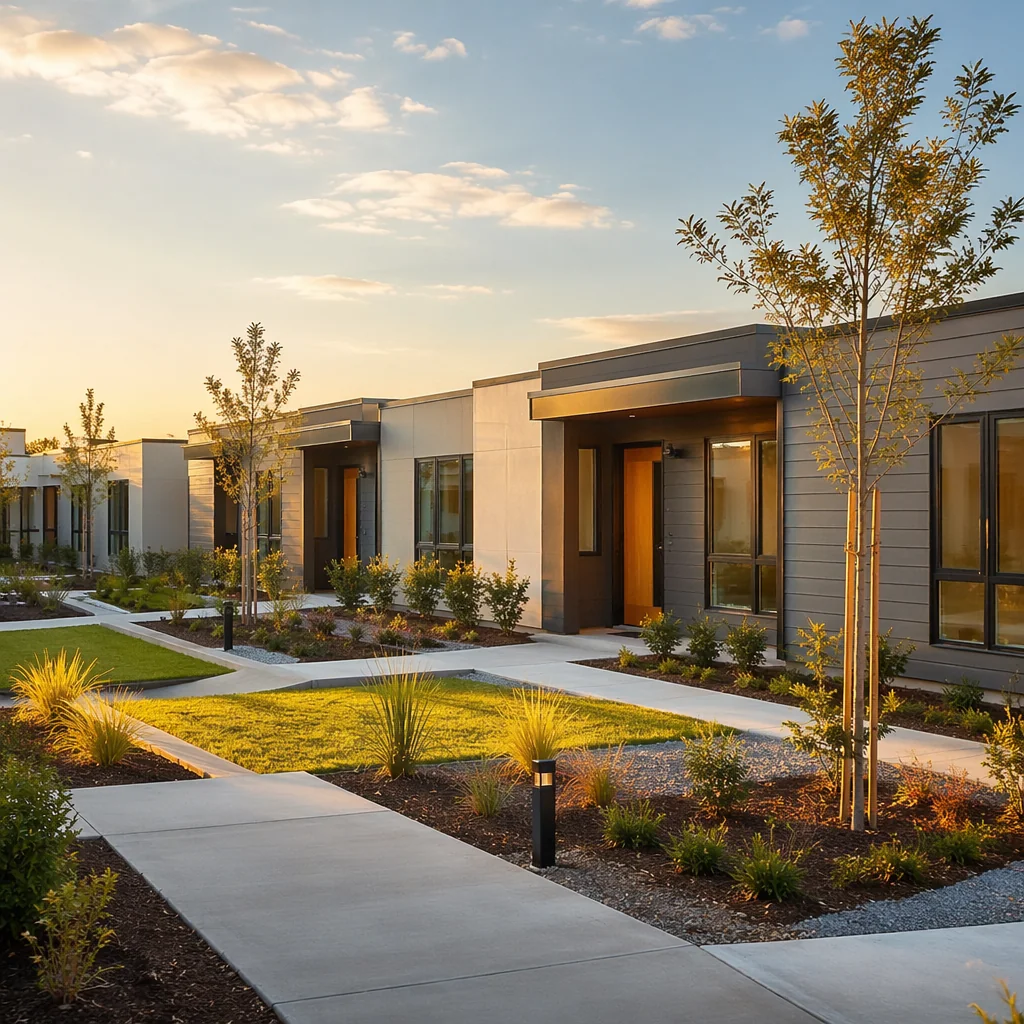
Modern 5-story modular apartment building with clean facade and balconies

Multi-Family Residential

Apartment buildings, build-to-rent developments, and student housing, from 20-unit workforce blocks to 200-unit luxury complexes.

Explore Residential →
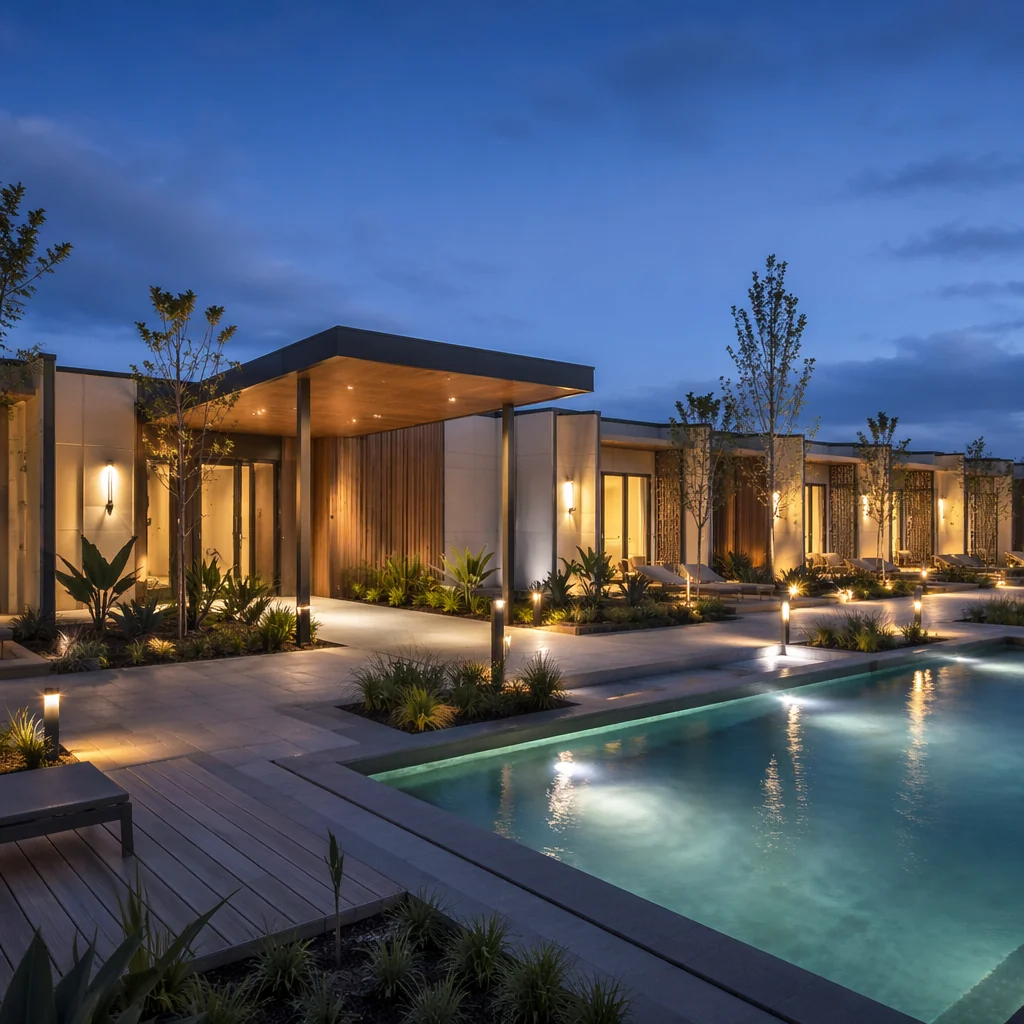
Modern 6-story modular hotel building with sleek facade at dusk

Hospitality

Hotels, resorts, and extended-stay properties. Speed-to-revenue is critical, we deliver brand-compliant rooms 50% faster.

Explore Hospitality →
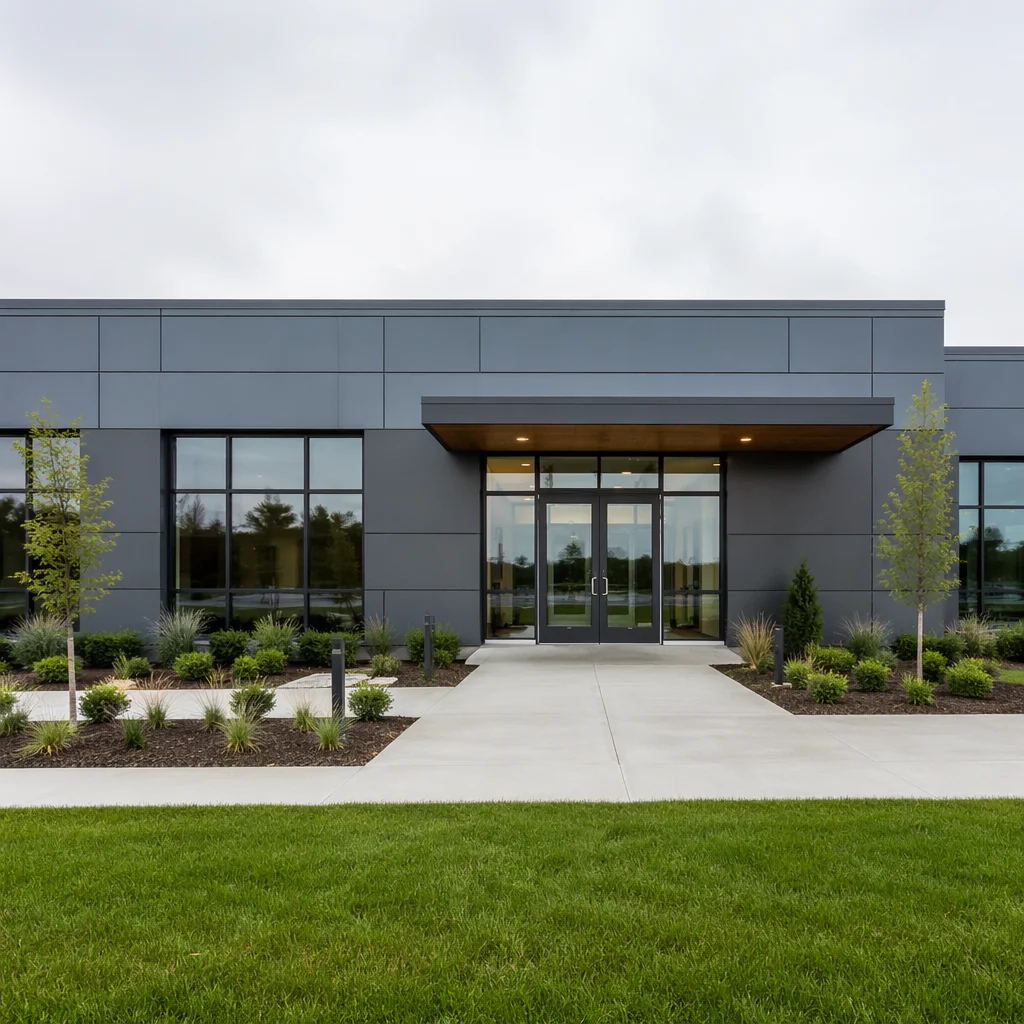
Contemporary 3-story modular office building with glass curtain wall

Commercial Office

Corporate headquarters, flexible workspaces, and business parks. Scalable, relocatable, and built for the future of work.

Explore Commercial →
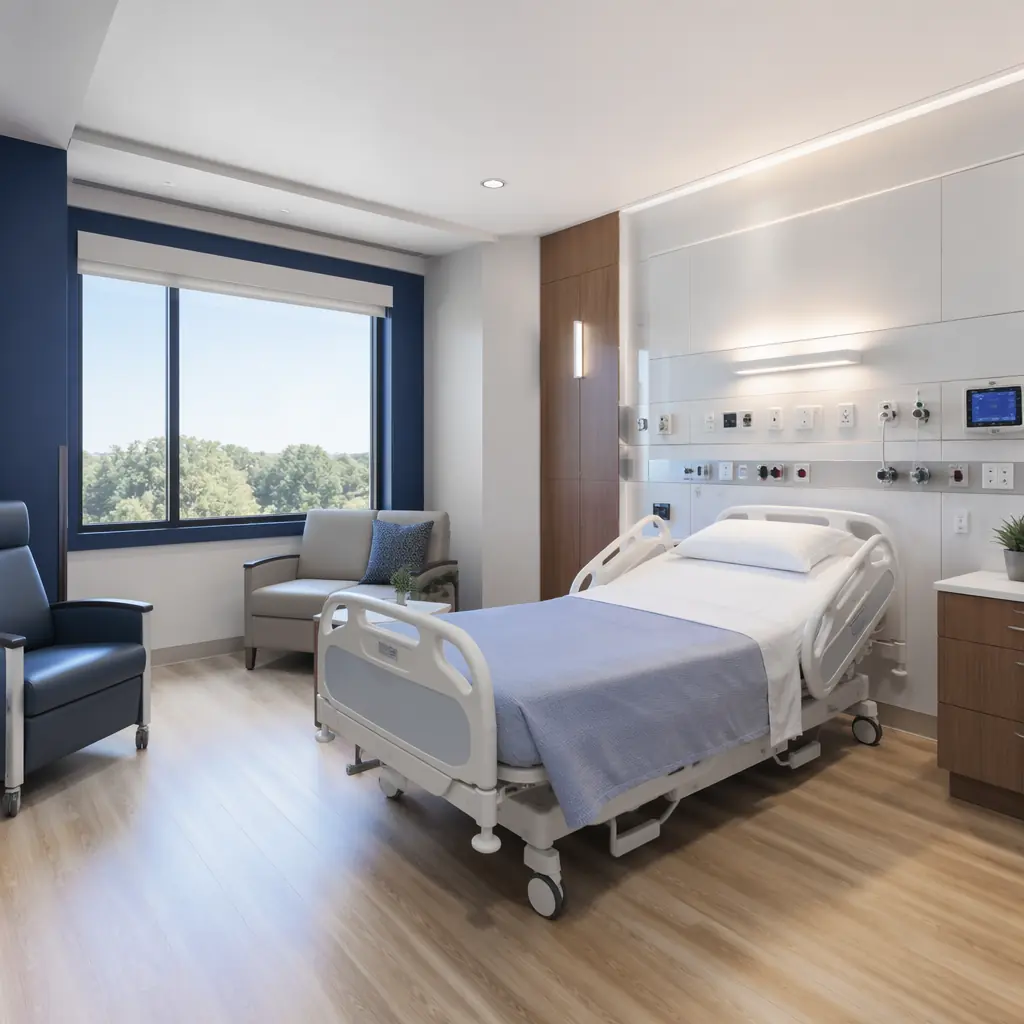
Clean modern modular healthcare facility with clinical environment

Healthcare

Hospitals, clinics, diagnostic centres, and senior care facilities. HTM-compliant, sterile environments delivered on accelerated timelines.

Explore Healthcare →
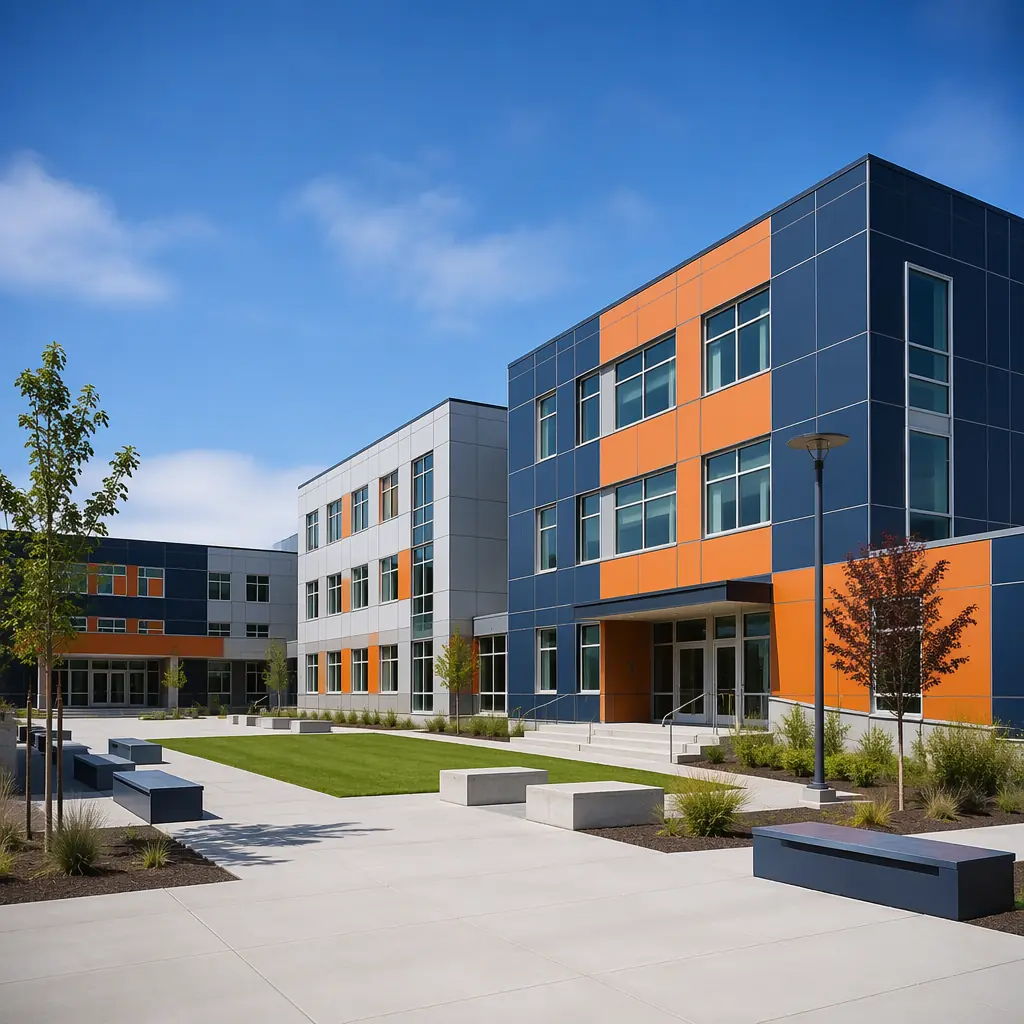
Modern modular school building campus with outdoor learning spaces

Education

Schools, university housing, and training centres. Rapid deployment to meet academic year deadlines without compromising learning environments.

Explore Education →
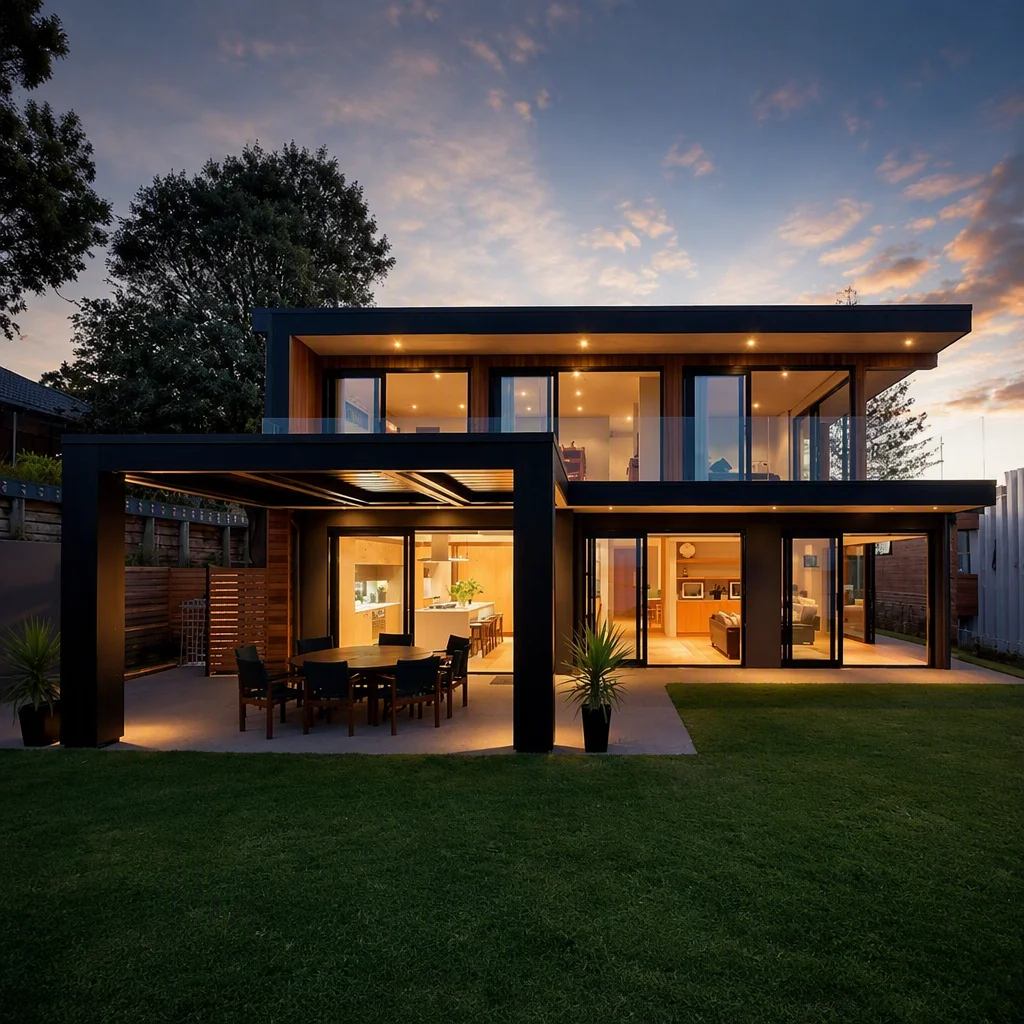
Single-story modular senior living community home with covered outdoor living

Senior Living

Independent living, assisted living, memory care, and CCRC communities. Designed for dignity, accessibility, and quality of life.

Explore Senior Living →
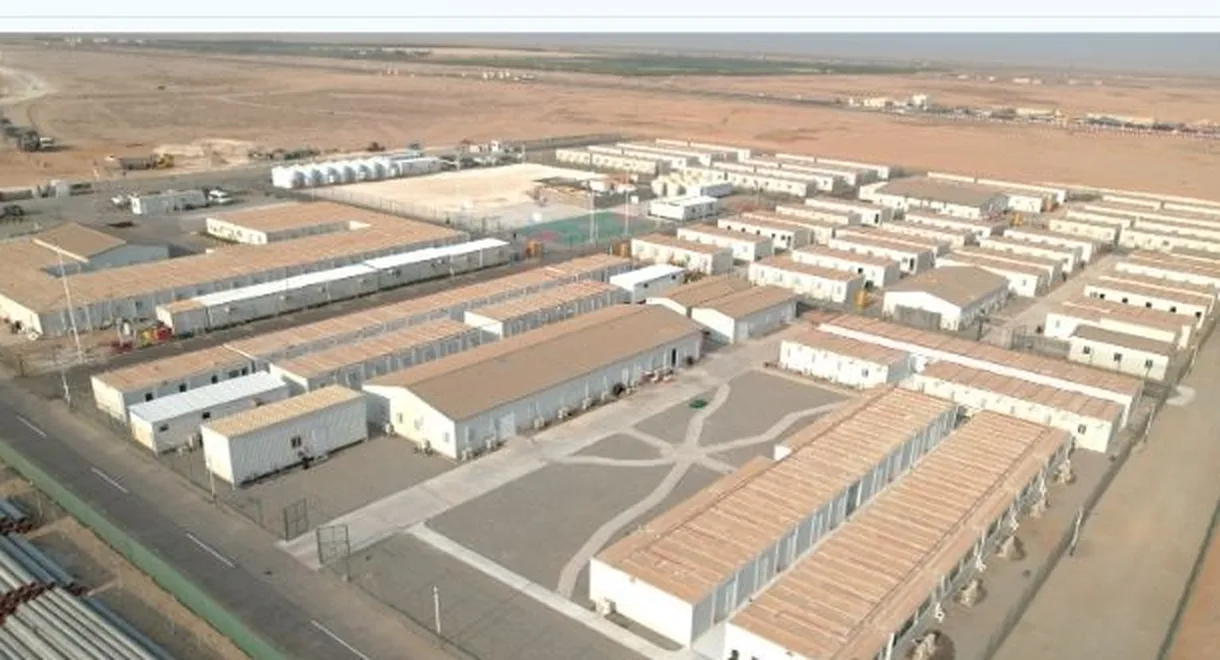
Aerial view of a desert workforce camp made of modular container buildings

Workforce & Remote Camp Housing

Worker camps, mining sites, and remote energy projects need housing fast. Container-based modules ship flat or complete and are craned onto light foundations.

Explore Volumetric Systems →
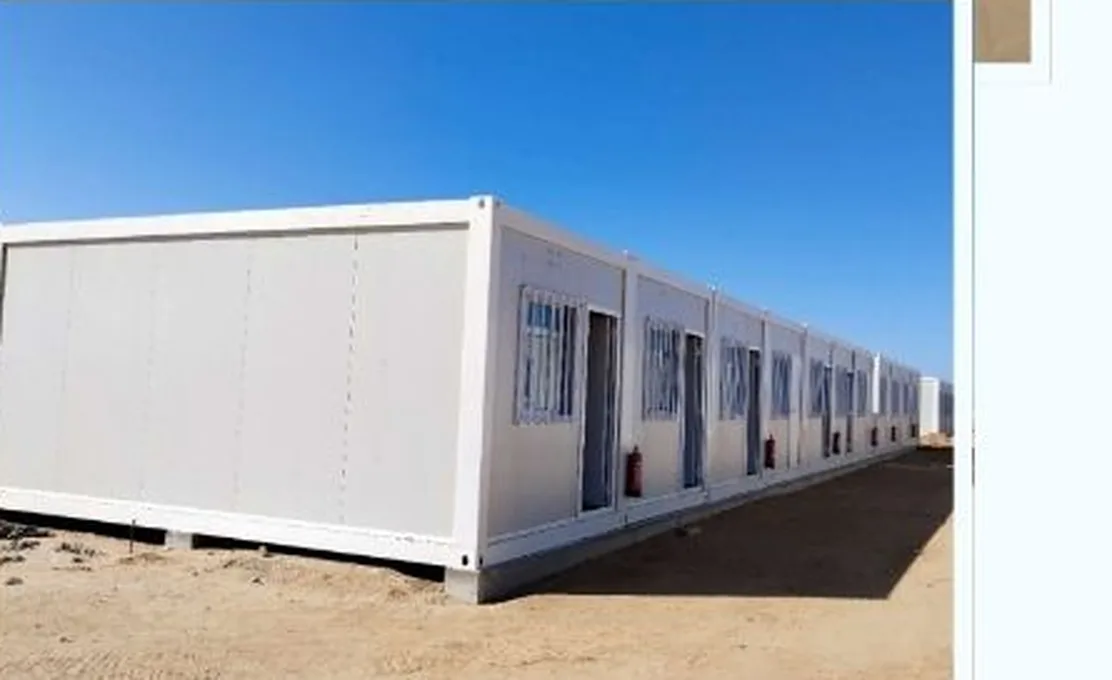
Modular site office units installed in line on a desert construction site

Site Offices & Logistics Pods

Site offices, visitor centres, and logistics pods: plug-and-play facilities that move with the project and arrive in weeks, not months.

Explore Hybrid Systems →
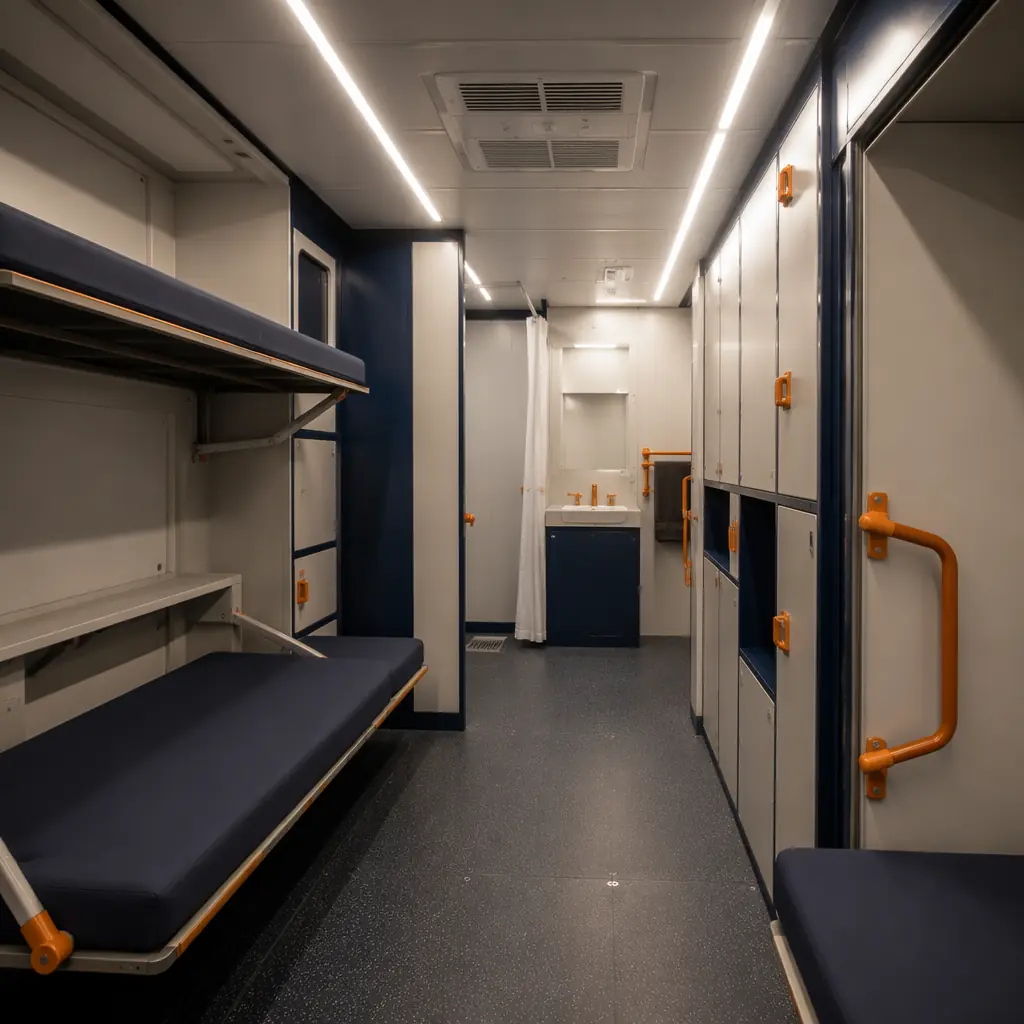
Modular emergency housing and military barracks unit

Defence & Emergency

Military barracks, emergency housing, and disaster relief shelters. Rapidly deployable, durable, and built for the most demanding conditions.

Explore Defence →
Cross-Sector Advantage

Why Modular Wins Across Sectors

Regardless of industry, modular construction delivers four universal benefits that transform project outcomes.

Speed

Concurrent site preparation and factory production cut total project duration by 50%. A 100-bed hospital ward can be operational in 6 months from approval, not 14.

Quality

Factory-controlled production with documented quality management ensures every module meets exact specifications. Critical for sectors like healthcare where tolerances are tight.

Sustainability

70% less construction waste and 30% lower embodied carbon compared to traditional methods. Modules designed for disassembly and reuse support circular economy principles.

Cost Certainty

Fixed-price contracts, fewer weather delays, and reduced on-site labour translate to 15–20% savings. Predictable budgets, no surprise variations.

0 Sectors Served
0 Continents
0 Projects Delivered
0 Year Track Record
Sector Engineering

One Structure, Eleven Different Specifications

Sector work is not a marketing label on the same building. It is a different set of governing clauses, a different module geometry, and a different inspection regime. The table below is how the same light-gauge steel system is re-specified sector by sector.

Sector What actually changes Governing reference Typical module geometry
Healthcare & clinical Medical gas routing, sealed penetrations, lead-lined imaging walls, 6 air changes per hour in isolation rooms HTM 00 series, NFPA 99, local health authority plan review 3.6 × 8.4 m × 3.0 m clear height; 350 mm service ceiling void
Education Durability ratings, acoustic separation between teaching spaces, sprinkler coverage per room, threshold-free egress Local education facility standards, NFPA 13, ADA / Part M accessibility Wider bays, 9.0 m clear span classrooms, corridor modules pre-fitted
Senior living Wheelchair turning radius, nurse-call backbone, door widths, grab-rail blocking in wet areas ADA / Part M, state assisted-living licensing rules, STC 55 between units Single-storey preferred; 4.2 m wet-wall modules for bathrooms
Defence & emergency Blast and fragmentation resistance, standoff distance, no exterior service penetrations, blackout capability UFC 4-010-01 standoff criteria, ISO 3008-1 fire test for loadbearing panels Hardened frames, flight-configurable modules, forklift-spreadable foundations
Industrial & energy Hazardous-area classification, elevated equipment loads, corrosion category, thermal cycling IEC 60079 zoning, ISO 12944 corrosivity categories, Q355B structural steel Long-span plant rooms, skid-mounted equipment rooms, open-frame modules
Hospitality Brand standard compliance, acoustic separation, floor-level plumbing alignment, room-to-corridor interface Franchise brand prototype book, IBC 2021 with local supplements, STC 55 / IIC 52 3.6 × 8.4 m guest module, wet wall on module edge for stacking

The discipline that matters is the order of operations. Sector requirements have to be frozen into the module drawing before the first panel is cut, because a change to a medical gas route or a door width after panel fabrication is not a drawing revision. It is a reworked module. Our standard gate is a signed specification freeze, and we do not release panels before it is signed.

Budget Planning

Delivered Module Cost Ranges by Sector

These are factory-gate-to-installed ranges for the module package, excluding foundations, site utilities, and site-specific permits. They are planning figures with the spread we actually see, not a single headline number.

Sector Module package, USD per m² What drives it up Programme, months to first usable
Workforce & site accommodation 900 – 1,400 Number of wet modules, generator and tank autonomy 3 – 5
Commercial office 1,300 – 2,100 Glazing ratio, curtain wall, lift core inclusion 5 – 8
Education 1,400 – 2,200 Clear-span classrooms, science lab services, sports hall span 5 – 9
Hospitality 1,500 – 2,400 Brand standard, finish level, public area modules vs guest modules 6 – 10
Senior living 1,600 – 2,600 Nurse call, accessible wet rooms, licensing inspection cycles 7 – 11
Healthcare 1,900 – 3,200 Medical gas, imaging shielding, clean room finishes, plan review length 8 – 14

The programme column is not proportional to the cost column, and that surprises buyers. Healthcare costs roughly twice what workforce accommodation costs per square metre, but it takes three times as long to reach first usable, and most of that extra time is approval and inspection, not fabrication. We can build a hospital ward in the same factory weeks we build a camp block. What we cannot compress is the health authority plan review, and any supplier who promises otherwise has not worked under one. For the underlying numbers behind these ranges, see modular construction cost per square foot, and for the cost of getting the quality gate wrong see the developer ROI guide.

Verification

Certifications Held, and What Each One Actually Covers

Sector buyers ask for certificates and then rarely check the scope. Here is the full list with what each document proves and where its limit is.

Document What it proves Where its limit is
ICC-ES ESR-5348 Light-gauge steel framing system evaluated against IBC / IRC 2021, including California and Los Angeles supplements Covers the structural system, not the fit-out. Sector finishes need separate approval.
Intertek WH Fire Test, ISO 3008-1 Loadbearing steel stud panel fire performance under a recognised fire test standard Applies to the tested panel build-up. Substituting insulation voids it.
SGS CPR Certificate, EN 14350 Light gauge steel framing conformity for the European market Framing only. European projects still need local building control sign-off.
SGS steel test report, Q355B Chemical composition and mechanical properties of the structural steel supplied into modules A mill-batch document. Ask for the batch matching your project.
ISO 9001:2015, ISO 14001, ISO 45001 Certified quality, environmental, and occupational health management across the production bases Proves a system exists. It does not prove your inspection plan was followed. Use FAT for that.
CQC Green Building Materials + CQC Steel Products China Quality Certification for the materials and steel products entering the build-up A material-level certificate, not a building-level one.

Two honest notes for anyone comparing suppliers. First, the near-universal quality claim in this industry is a first-pass yield in the high nineties, ours is 99.7%, and that is three modules held back per thousand, not a perfect record. We tell buyers the held count rather than the percentage, because the count is the part you can audit on site. Second, several of these certificates are held in the name of our partner production entities, including Ningbo DeepBlue Smarthouse and Yibing Qiaoer Housing, rather than in the MODURA name. We state that openly because it appears in the document header and you will notice it. The scope of what each certificate covers, and which entity it sits with, is covered in more detail on our quality page.

Straight Answer

If You Need a Sector We Have Not Built In

We publish sector pages for the industries where we hold reference projects and repeat specification knowledge. That is a narrower list than the sectors we can actually serve.

Two further groups are worth a specific mention because their deadline is set by someone other than the client. Fire and ambulance stations have to be replaced inside a funding window, and academic buildings have to be ready before term starts, so both tend to go modular precisely because the date cannot move. If your sector has a fixed opening date set by statute or by an academic calendar, see modular fire station construction and university academic buildings.

Where the site has no labour, no grid, and no road access for a normal build, the module becomes the only practical unit of delivery. Marine and energy work adds a corrosion category and a transport constraint that most sector buyers never encounter, covered in offshore and marine platform modules and heavy industrial construction.

Three sectors deserve a specific read before you brief us, because their constraints are the ones that most often catch out first-time modular buyers: a life-sciences unit has to be commissioned, not just built (modular labs and research facilities); a clinical unit has to pass plan review before a panel is cut (mobile medical units); and a high-risk facility may need a blast rating that the tested panel build-up simply does not reach (blast-resistant modular construction). We would rather say that in week one than in month nine.

If your sector is not listed, send the specification and the governing clauses rather than a general enquiry. We will tell you within a week whether it is a fit, what it would cost to prove it out, and what we would need to inspect. Request a sector feasibility review.

Which Sector Is Yours?

Our team brings sector-specific expertise to every project. Tell us your industry and requirements, and we will prepare a detailed proposal within 5 business days.

Get a Free Quote