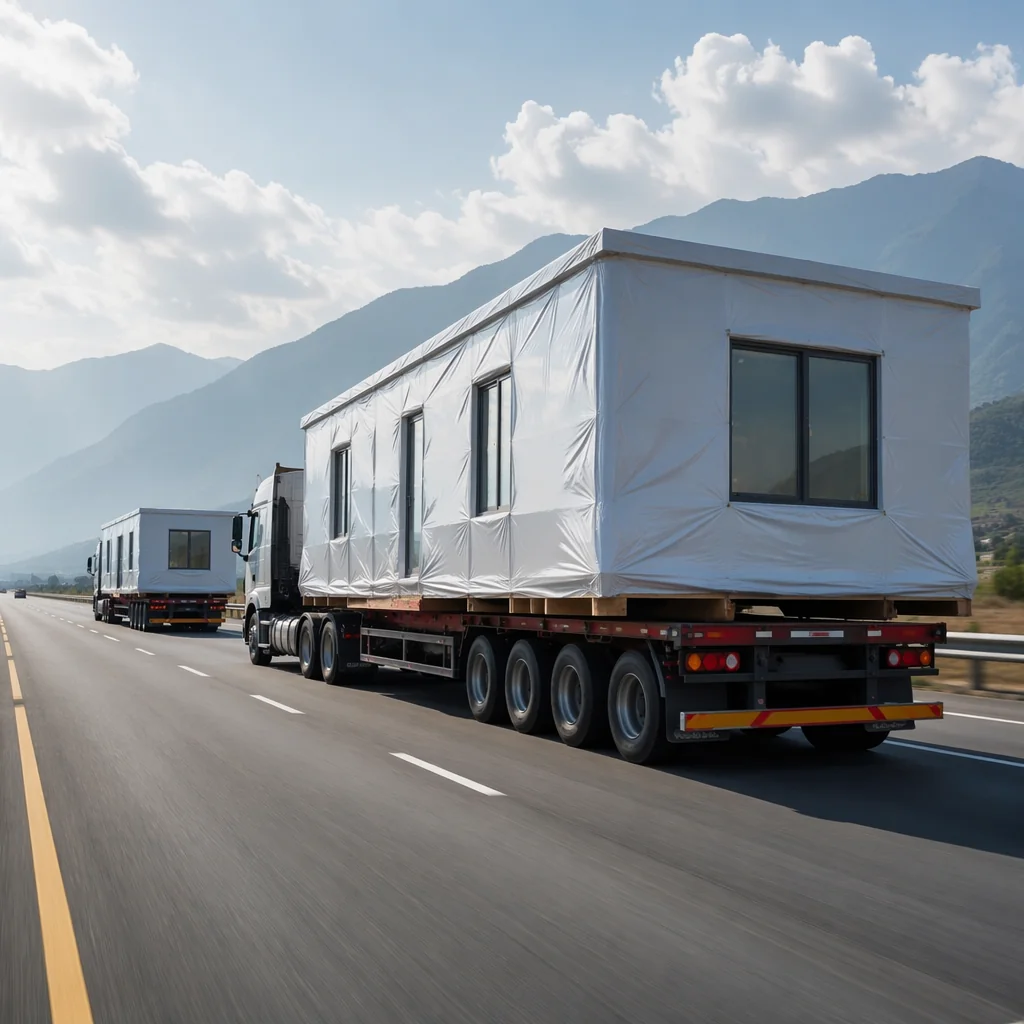
MODURA is a modular construction company built on a network of certified manufacturing partners and licensed engineering teams. We deliver apartments, hotels, offices, and institutional buildings across the US, Europe, and the Asia-Pacific.
MODURA began with a simple observation: construction was the last major industry still building things by hand, outdoors, subject to weather and delays. We believed there was a better way, the way cars, airplanes, and electronics are made. In a factory. With precision tooling. With quality control at every step.
| Site-built practice | What replaces it in a MODURA program | Why it matters to the client |
|---|---|---|
| Weather-dependent schedule | Production runs in a climate-controlled bay, 24 stations per module, two shifts | Winter and monsoon no longer move the handover date |
| Individual trades called to site | MEP rough-in and finishes completed inline, tested at station before the module closes | No return visits for services that could not be reached after closing |
| Site foreman judgement | Documented inspection gate at every workstation, signed off against the issued drawing revision | Two identical modules cannot be built to two different standards |
| Progress assessed monthly | Digital production log with photo evidence per module serial number | Progress is visible from a desk, not only from a site visit |
| Tolerances decided on the slab | Dimensional control held in the jig; site work is connection and closing, not adjustment | Facade, wet areas, and lift shafts line up on first assembly |
The same discipline applies to the commercial side. A fixed-price proposal is only meaningful if the boundary between the two parties' scopes is stated the same way in every document. That boundary is published on the how it works page and repeated row by row in the next section.
Today, MODURA works with established modular manufacturers, verified production lines, documented quality control, and engineering teams in East Asia and Europe. Our buildings house families, host travelers, and provide workplaces for thousands of people worldwide.
We bring manufacturing discipline to construction. Every module passes documented inspection gates at every workstation, with records traceable to the serial number. Quality is not inspected in, it's engineered in.
We build for the planet as much as for people. 70% less waste, 30% lower carbon, and buildings designed for disassembly. Sustainability isn't a feature, it's the foundation of modular thinking.
We don't just deliver buildings, we deliver certainty. Fixed-price contracts, guaranteed timelines, and transparent communication from day one. Your success is our success.
We continuously invest in engineering, new materials, automation, BIM integration, and sustainable technologies. The modular industry is evolving, and we intend to lead it.
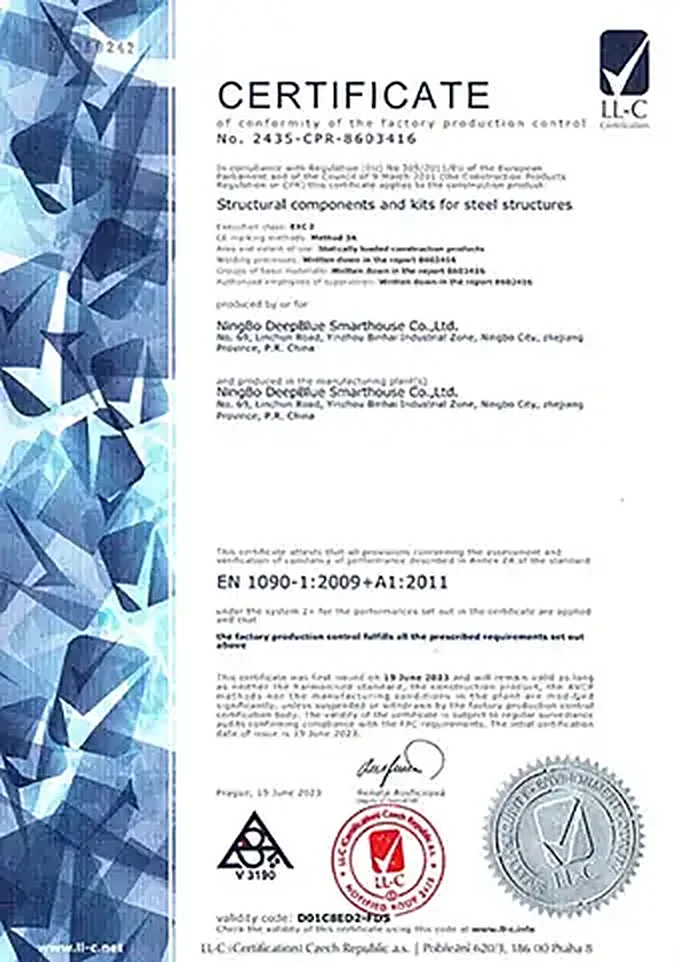
Certifications below are held by MODURA’s manufacturing partners and are individually verifiable at the issuing body.

LGS framing system - IBC/IRC 2021 + CA/LA supplements
Holder: Ningbo DeepBlue Smarthouse (MODURA LGS partner)

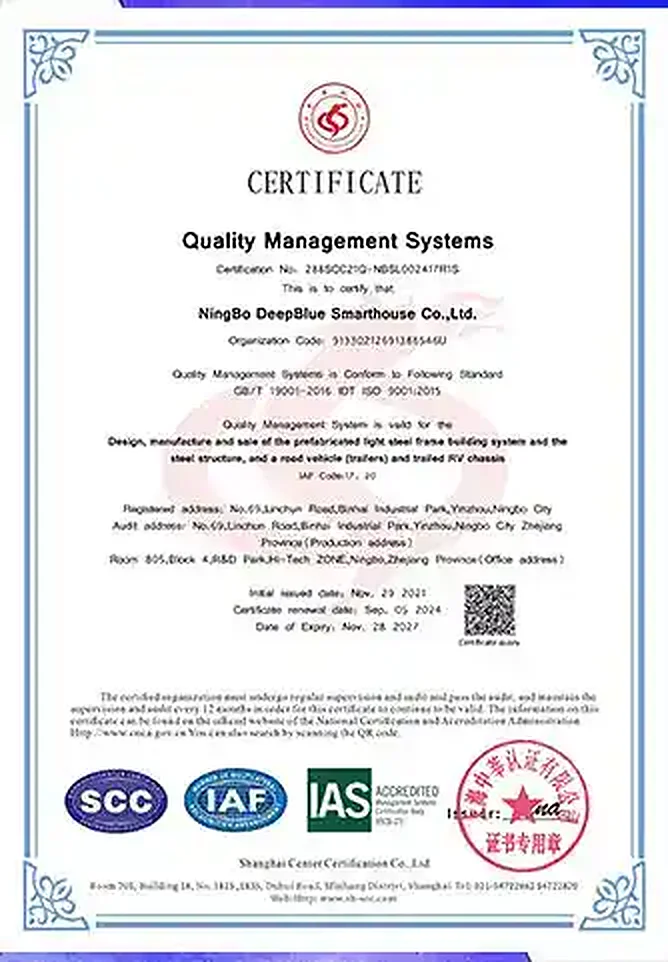
Quality management systems
Holder: Ningbo DeepBlue Smarthouse

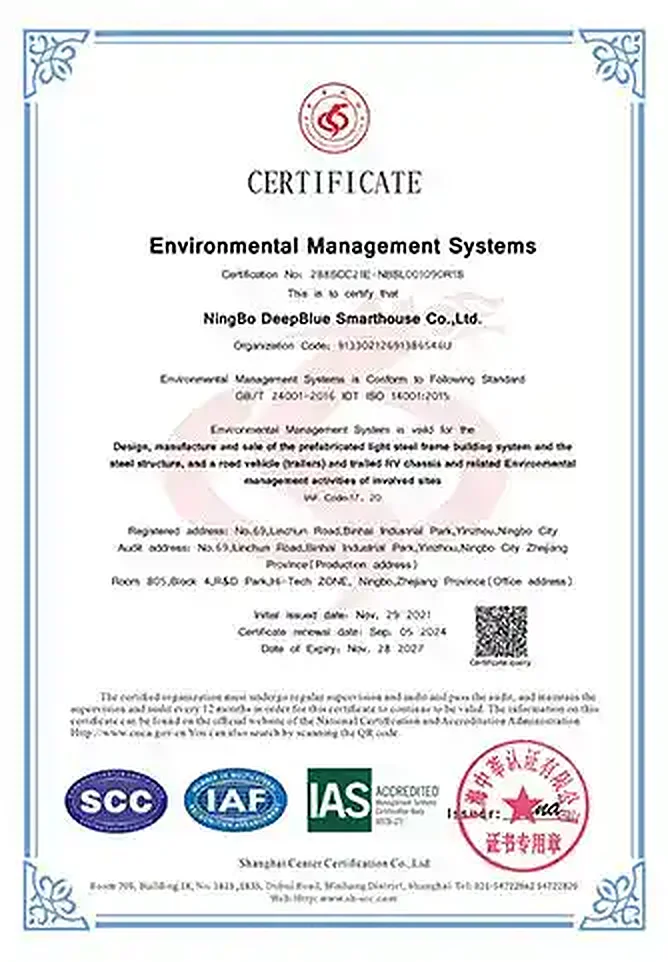
Environmental management systems
Holder: Ningbo DeepBlue Smarthouse

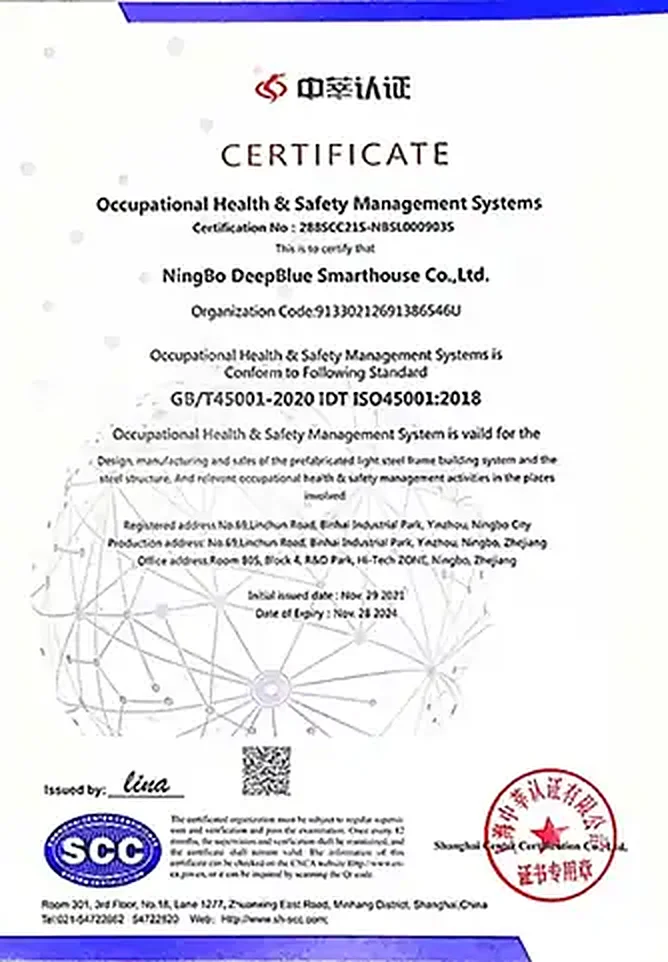
Occupational health and safety management
Holder: Ningbo DeepBlue Smarthouse

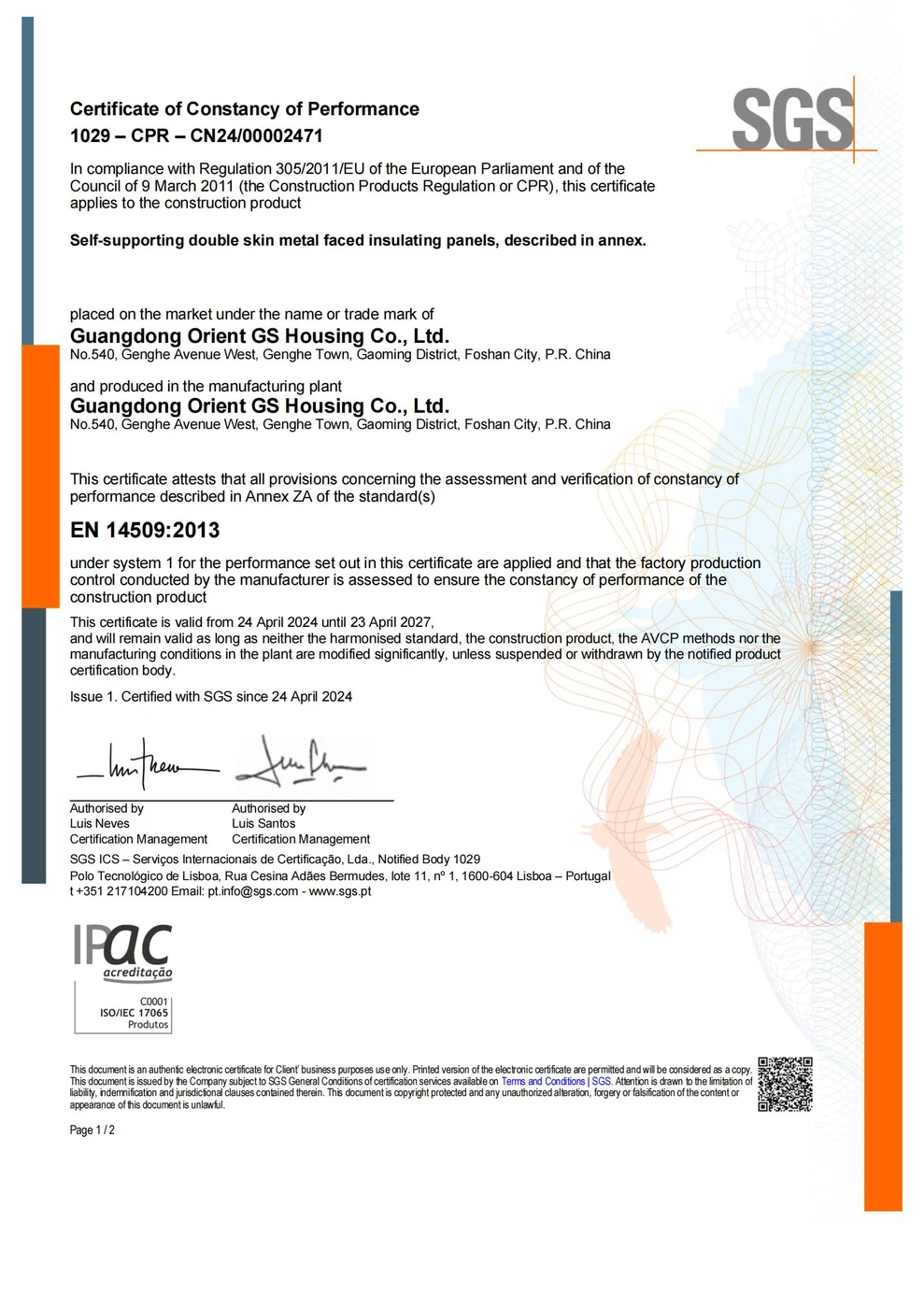
Constancy of performance, EN 14350 - light gauge steel framing
Holder: Yibing Qiaoer Housing (MODURA container-module partner)

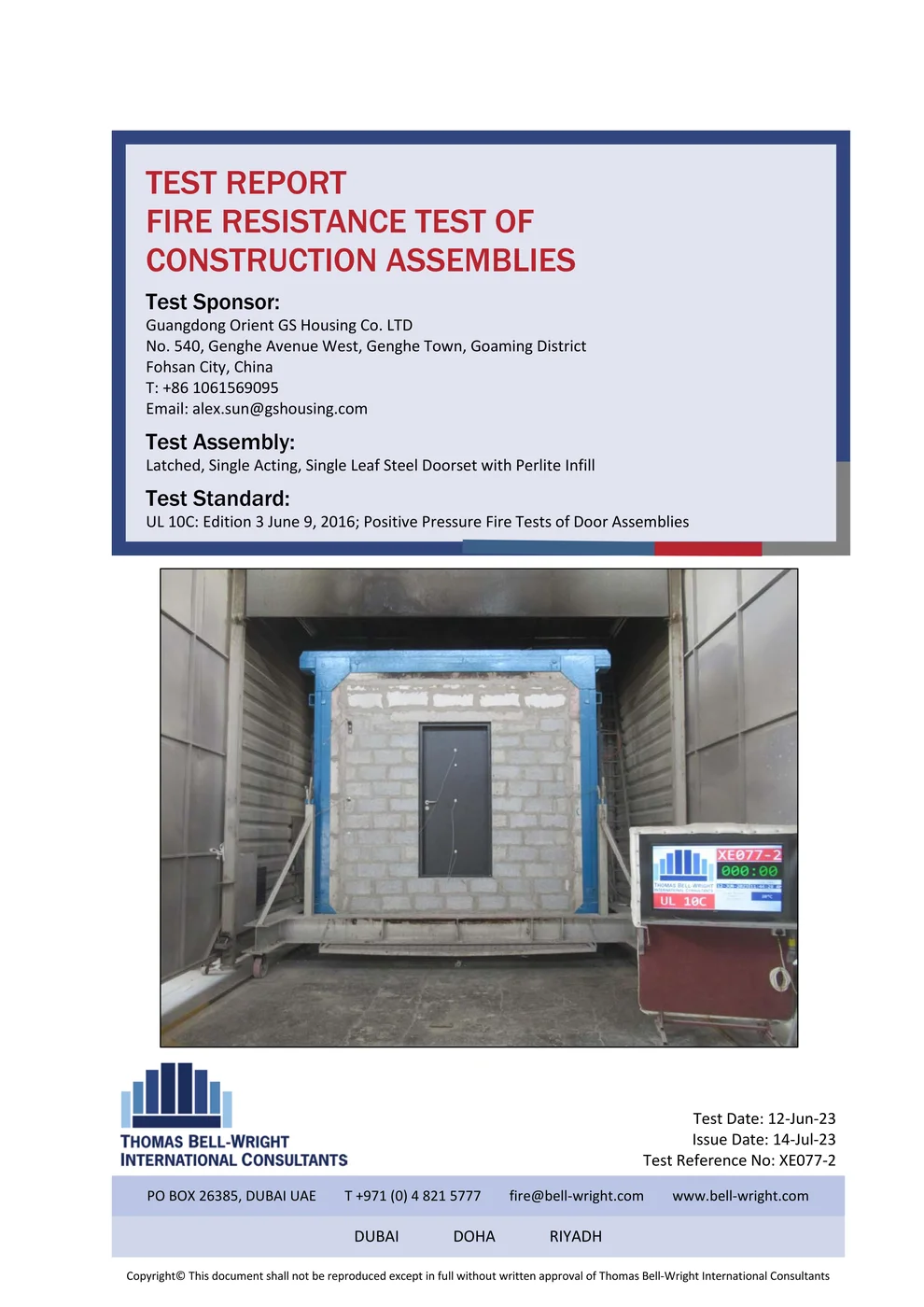
Fire resistance test, loadbearing steel stud panel (ISO 3008-1)
Holder: Yibing Qiaoer Housing (MODURA container-module partner)

Q355B structural steel chemical composition analysis
Holder: Yibing Qiaoer Housing (MODURA container-module partner)

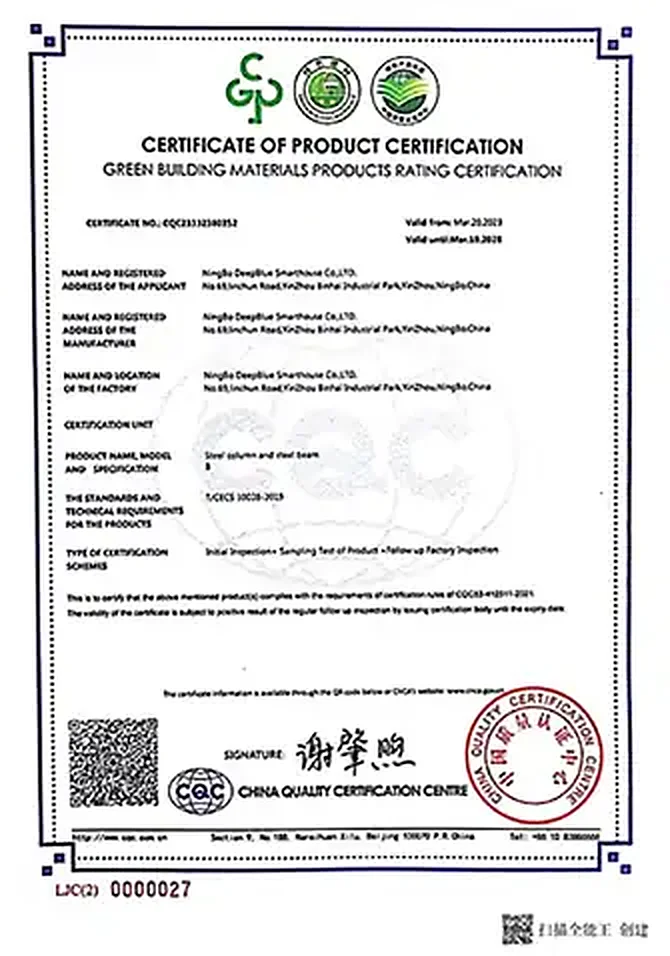
China Quality Certification product certification
Holder: Ningbo DeepBlue Smarthouse

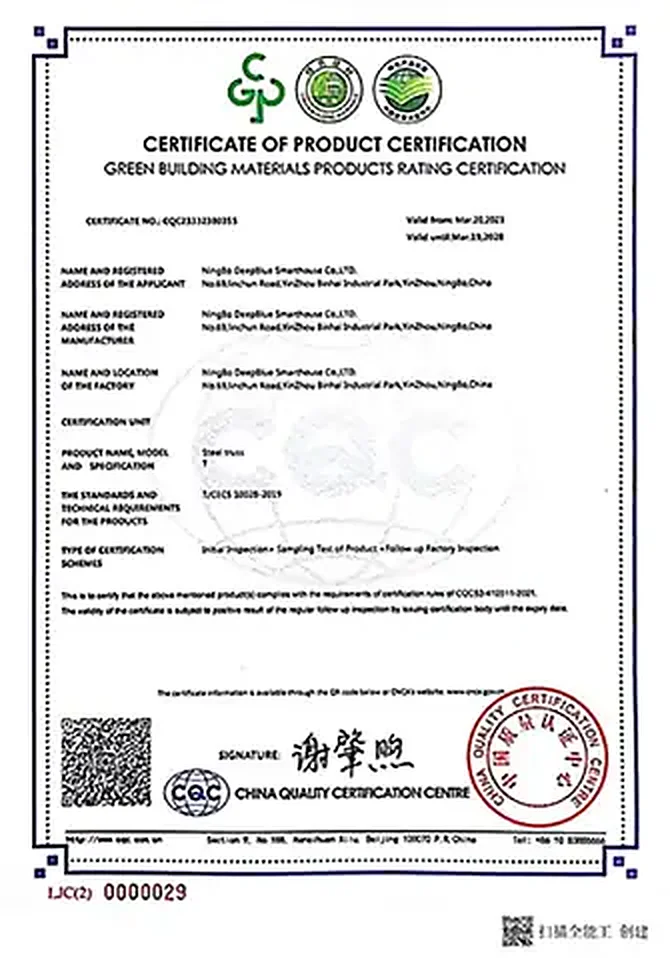
China Quality Certification for steel framing products
Holder: Ningbo DeepBlue Smarthouse
All production runs through established manufacturers with auditable quality systems and export experience.
Modular delivery splits differently from conventional construction. The split below is the one MODURA quotes against: it is the reason a fixed price can be issued before the site is surveyed in detail.
| Work package | MODURA and partners | Client or their team | The decision that keeps it clean |
|---|---|---|---|
| Architectural and structural design | Modular optimisation, module split, connection design, shop drawings | Site layout, planning application, local code interpretation | Freeze the module grid before shop drawings are issued |
| Engineering approvals | PE-stamped drawings for the module scope, third-party review correspondence | Authority submission, local permits, utility connections | Confirm on day one whether the module is treated as a building or a structure |
| Foundation and ground works | Setting-out drawings, tolerance schedule for the slab or piers | Design and construction of foundations, soil report if piles are likely | Foundation is the most common line missing from a competitor quote |
| Module fabrication | Framing, envelope, MEP rough-in, finishes, factory inspection with records | Approved finishes schedule; brand standard if a hotel or healthcare operator is involved | Lock the finishes schedule one revision before production starts |
| Transport | Export packing, port handling, sea or road freight to the agreed delivery point | Import clearance, duty, route survey on the final leg if requested | Name the delivery point in the contract, not the port |
| Site assembly | Supervision, crane plan, connection and closing, commissioning of installed services | Crane standing area, hard standing, temporary power and water | Confirm road width and overhead line heights before module dimensions are set |
| Handover | As-built pack, test records, structural warranty documentation | Operating staff, maintenance contract, insurance from the handover date | Agree the defect liability period and response times in writing |
Questions on an individual line are usually answered with a document rather than an opinion. The evidence that settles them is listed in the next section, and the contract forms themselves are compared in our guide to modular construction contract types.
Automated cold-formed LGS framing lines
ICC-ES ESR-5348 evaluated system (IBC/IRC 2021 + CA/LA supplements)
ISO 9001/14001/45001 certified production; exports to 60+ countries
Container hotel & camp unit lines; permanent modular line added 2025
Six production bases nationwide
Recent US delivery: Soledad, California interim housing community (2026)
Hot-rolled steel frames & members for volumetric and hybrid builds
AISC-certified fabrication facilities
Full mill certificates and weld traceability
Volume and scope are quoted together, because the fixed cost of a programme is spread across the units. The reference case is a 100-unit apartment building on a six-month production window, and each row states the action that moves the number.
| Cost line | Typical share of contract value | What drives it up or down | How to reduce it |
|---|---|---|---|
| Structural frame and envelope | 30 to 35 percent | Module size, number of envelope faces exposed, fire rating required | Hold to one module width across the whole layout; every new width re-tooling the jig costs money |
| MEP rough-in and services | 20 to 25 percent | Wet wall count, HVAC type, whether lifts and sprinklers are in scope | Stack wet areas vertically; a shared riser is cheaper than repeat runs in every module |
| Finishes | 15 to 20 percent | Brand standard or operator specification if a hotel or care provider is the end user | Fix the finishes schedule before the first module enters the line |
| Factory overhead and inspection | 8 to 12 percent | Number of inspection gates, level of third-party witness required | Witness gates chosen deliberately; blanket third-party attendance for every gate is rarely value for money |
| Transport | 6 to 10 percent | Distance, module volume, whether the route needs permits or escort vehicles | Quote from the production base nearest the port, not the nearest base on a map |
| Site assembly and crane | 6 to 9 percent | Crane size and hire duration, site access, how many modules can be set per day | Maximise modules per crane day; the crane is hired by the day, not by the module |
| Contingency and risk | 5 to 8 percent | How complete the brief is when the price is signed | A five-input brief (see the quote form) removes most of the allowance |
The comparison that matters is total installed cost, not the module rate. Site-built alternatives carry longer financing periods, higher site labour and a slower first revenue date. Our cost per square foot guide breaks down the same lines with different programme sizes, and total cost planning covers the financing side.
Every claim on this site can be checked against a document. These are the six documents a buyer should ask any modular supplier for, with the specific detail that makes each one meaningful.
| Document | What it proves | How to check it | Evidence that decides the claim |
|---|---|---|---|
| ICC-ES Evaluation Report ESR-5348 | The light-gauge steel framing system has been evaluated to IBC and IRC 2021, including the California and Los Angeles supplements | Look the report number up at icc-es.org; the issuing body is independent of the supplier | The evaluated system description must match the framing actually specified for your project |
| ISO 9001, 14001 and 45001 certificates | Quality, environmental and occupational safety management systems at the producing factory | Match the certificate holder name to the factory address named in your contract | Certificate scope must cover prefabricated or modular building production, and the validity date must be current |
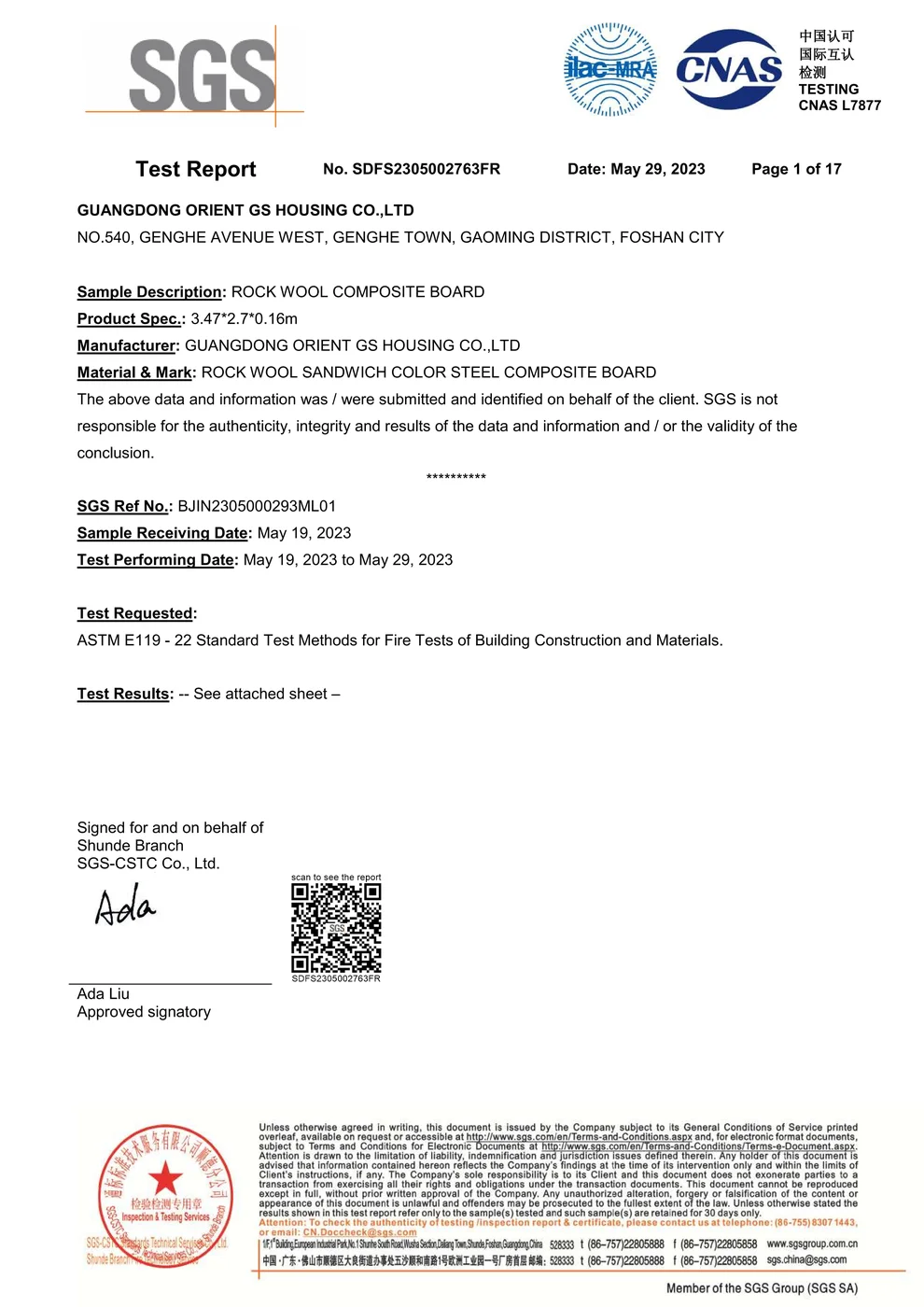
| SGS Certificate of Constancy of Performance | Declared performance of the framing products against the relevant European harmonised standard | Verify the certificate number with SGS and confirm the declared properties | Declared load and fire properties must be the ones your structural engineer designed against |
| Intertek fire resistance test report | Tested performance of the loadbearing steel stud panel assembly | Read the assembly build-up in the report and compare it to the specified wall | Tested assembly must match what will be built, layer for layer |
| Mill certificates and weld traceability records | The structural steel grades and welds used correspond to the design | Ask for traceability by heat number, not a generic certificate | Steel grade in the certificate must equal the grade in the design calculation |
| Factory inspection records per module | Each module passed the defined gates before dispatch | Request the record for a serial number at random, not the sample set offered | The signed revision on the record must match the drawing revision issued for construction |
Two patterns show up again and again when buyers run this checklist. The first is a certificate that is genuine but held by a company the client has never heard of; that is normal in modular, and it is why the naming of the legal contracting entity matters more than the brand on the website. The second is a certificate whose scope covers a product line the factory no longer runs. Both are resolved by the same question: which legal entity is producing my modules, and what is that entity certified to do. That question is central to our RFP and procurement guide, and the cost consequences of getting it wrong are set out in the bid comparison guide.
These five come up in almost every first or second conversation. The short answers are here so the first call can start further in.
MODURA is the contracting party and the engineering integrator. Production runs in factories belonging to our partner network, and the certificate holder for each system is named on this page so the relationship is verifiable. We do not hide the factories, and we do not pretend to own them. If a single-factory contract structure matters to your procurement process, say so at the start and we will structure the contract accordingly. The distinction is explained further in our contract types comparison.
For US projects, a licensed professional engineer registered in the project state stamps the modular scope, and third-party review and inspection runs through the state programme pathway where one applies. For European projects, the structural package is prepared for review by the client's own engineer of record. The stamp holder and the reviewing authority should both be named in the contract before design starts. See the RFP guide for the wording to ask for.
This is a tolerance question, and it is answered before production. Foundation setting-out tolerances are issued with the shop drawings, and the factory holds dimensional control in the jig rather than on site. If the slab is out of tolerance on the day of setting, the cost and the delay sit with whoever poured it, which is why the responsibility table on this page names the foundation work package explicitly. Where MODURA supervises setting, discrepancies are recorded before the crane lifts anything.
Yes, and it is a legitimate way to buy. The trade-off is that the assembly risk moves to your contractor: connection design responsibility, crane plan, and the interface between factory-finished services and site-installed services all become yours. Supply-only contracts are cheaper per module and carry more exposure. Our contract types guide sets out which model suits which client profile, and the warranties guide explains how the structural guarantee changes when assembly is not ours.
A fixed-price proposal is issued after a feasibility assessment that takes about 48 hours, on the basis of the five inputs listed on the quote page: site access, foundation scope, specification level, approval route, and programme. The price moves if the module grid changes, if the finishes schedule is revised after production starts, or if the delivery point in the contract is not the delivery point used in the quote. It does not move for weather, labour availability, or factory scheduling, because those risks sit with us.
Whether you're a developer, hotel group, or government agency, we'd love to talk about your next project.
Get a Free Quote