Healthcare organizations face a recurring problem that conventional construction answers poorly: the need for clinical capacity at a specific place, for a defined period, on a date that cannot slip. A community health center needs a satellite clinic open before a grant deadline; a hospital system needs an imaging suite serving an underserved county for two years while a permanent facility is planned; a public health department needs a vaccination center that can relocate as outbreaks move. Mobile medical units — built as factory modules, delivered road-ready or site-set, and commissioned with medical gas, imaging shielding and IT already installed — answer that problem the way modular temporary and relocatable facilities answer capacity spikes in other sectors. This guide covers the mobile medical unit program: the main unit types, design and medical compliance, imaging and shielding, power and utility integration, road-transport versus site-set delivery, deployment economics, and the decision framework for choosing between mobile units and permanent construction.
The Mobile Medical Unit Program
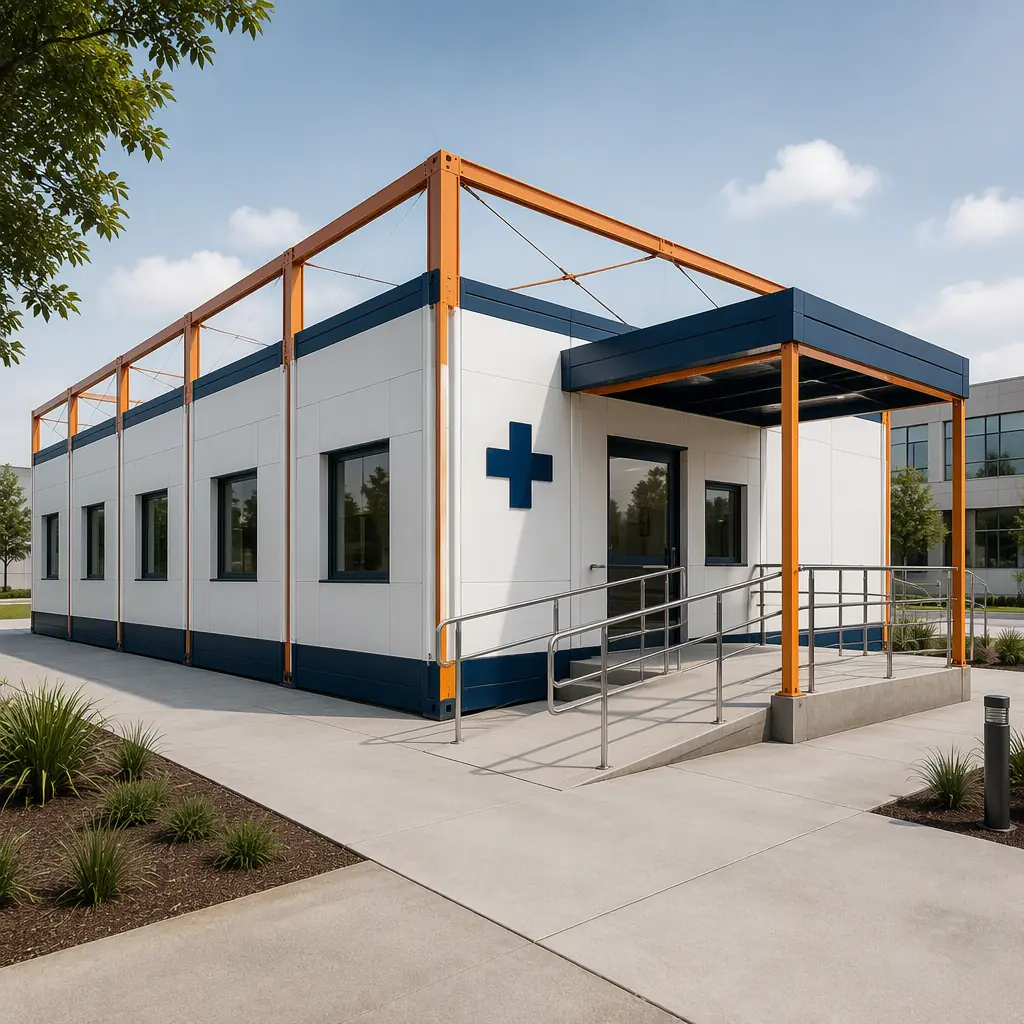
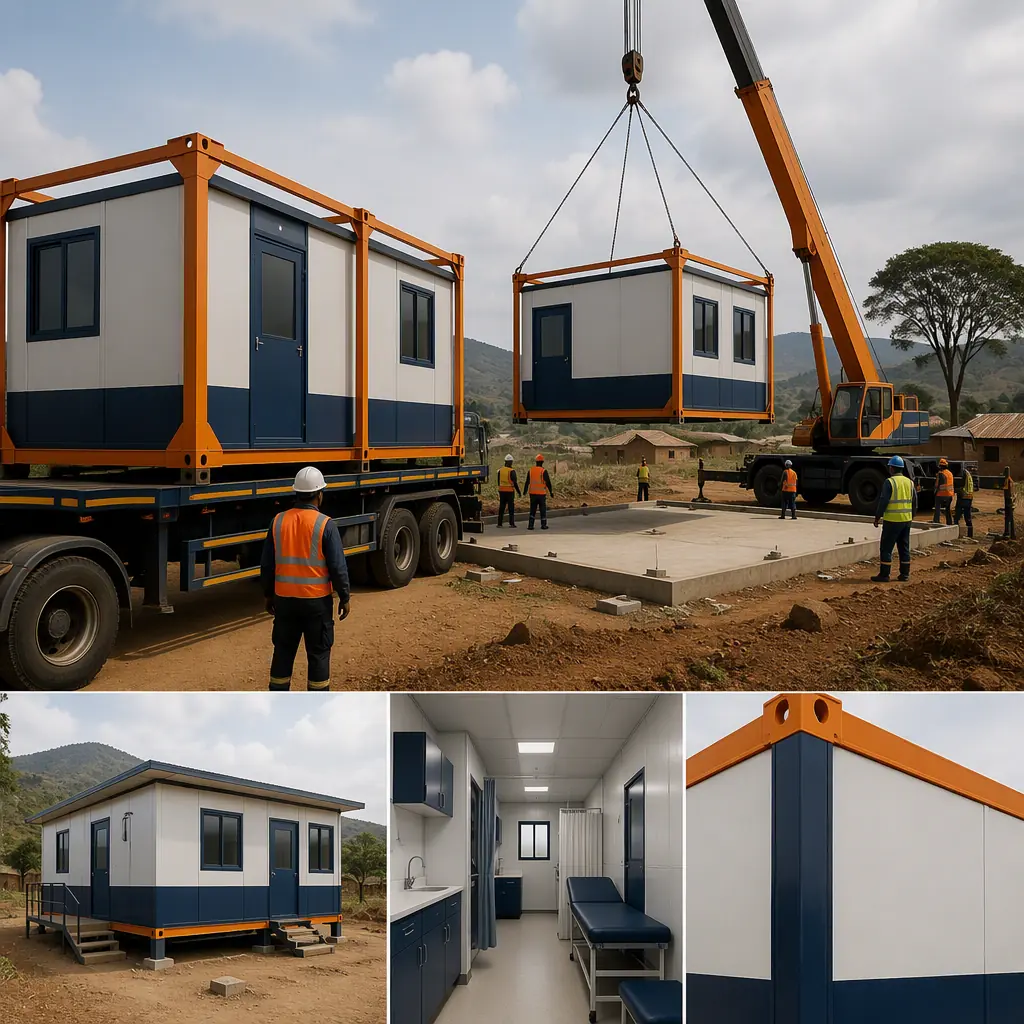
A mobile medical unit is a clinical building delivered as one or more factory-built modules, engineered for either road transport between sites or semi-permanent installation on a prepared foundation. The program spans four families. Community and primary care clinics: exam rooms, phlebotomy and specimen handling, telehealth rooms and reception, typically 800–2,400 sq ft. Imaging suites: mobile MRI, CT, mammography and X-ray units with the shielding, power and cooling those modalities demand. Population health units: vaccination, testing, blood donation and health-screening centers sized for throughput. And field hospitals: surge capacity for emergency departments, isolation wards and temporary inpatient care during disasters or epidemics. The clinical engineering behind each family follows the same discipline we document for modular medical clinics and modular diagnostic imaging centers, compressed into a relocatable envelope.
Design & Medical Compliance
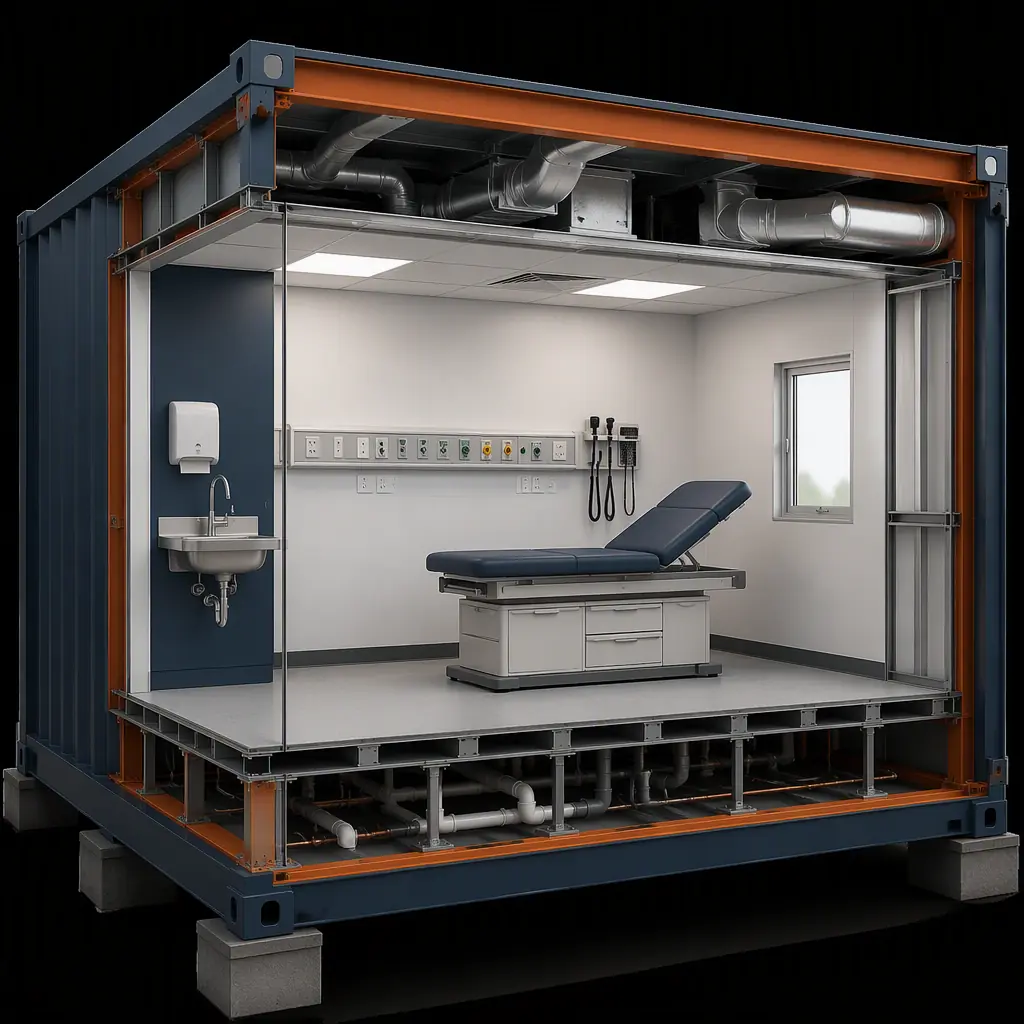
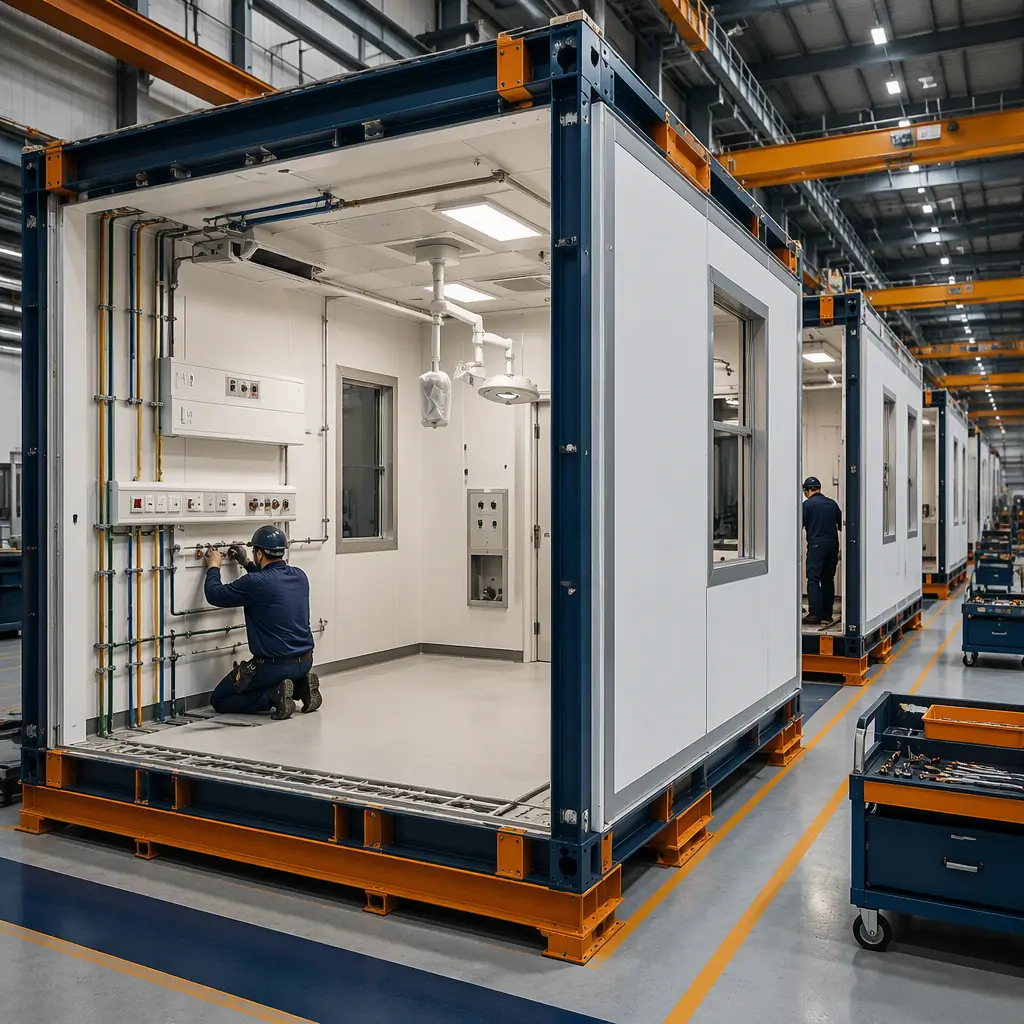
Mobile medical units must satisfy the same clinical codes as permanent facilities, which is exactly why factory production is an advantage: the compliance details — hand-washing stations per exam room, medical gas outlets, infection-control finishes, fire-rated corridors — are designed into the module and inspected in the factory rather than improvised on site. In the United States, units are typically designed to meet the Facility Guidelines Institute (FGI) standards for outpatient facilities, the Americans with Disabilities Act (ADA) for accessibility, and applicable state licensure rules for the services provided. The accreditation and licensing pathway is the same one we document in modular permitting and zoning, with the clinical layer added: infection prevention reviews, medical gas certification, and radiological licensing for imaging units. The factory-installed medical gas and plumbing systems follow the pre-integration approach covered in our modular MEP systems integration guide.
Imaging Suites: Shielding & Power Are the Hard Part
Imaging is the highest-value mobile medical unit category and the most demanding to engineer. A mobile MRI requires radio-frequency shielding (typically copper or aluminum screening achieving 80–100 dB attenuation), magnetic-field management, quench venting for superconducting magnets, dedicated power with voltage regulation, and HVAC capable of holding tight temperature and humidity tolerances — a modality that is extremely sensitive to environmental drift. Mobile CT requires lead-lined walls meeting the facility's shielding plan (commonly 1.5–3 mm lead equivalent at the relevant kilovoltage), a reinforced floor for the gantry, and a power system sized for the scanner's instantaneous draw. The precision-enclosure engineering behind these units is the same we document for modular diagnostic imaging and radiology centers and modular clean rooms — environments where certification on first attempt is the business model. Factory-built imaging units arrive with shielding surveys and acceptance testing completed, so the unit is billable within days of arrival rather than weeks.
Power, Utilities & Connectivity
A mobile medical unit is a small hospital plant room on wheels or on a slab: it needs reliable power, water, medical gas, data and HVAC, and it needs them in configurations that work whether the unit is parked at a clinic parking lot or installed at a rural site with limited infrastructure. Factory-built units typically arrive with an integrated electrical distribution panel, an optional generator or UPS, water and waste hookups, and pre-terminated data and phone connections. For road-transport units, everything is packaged for quick connect/disconnect at each site; for site-set units, the module ties into permanent utilities with a single connection, following the utility-integration model we document in modular HVAC and indoor air quality. The mission-critical power reliability requirements mirror what we document for modular substations and electrical buildings, scaled to clinical loads.
Road-Transport vs. Site-Set Delivery
| Delivery Model | Road-Transport Unit | Site-Set Module |
|---|---|---|
| Typical size | Single section, 300–1,200 sq ft | Multiple modules, 1,500–10,000 sq ft |
| Mobility | Relocates between sites in days | Relocates, but setting is a crane operation |
| Foundation | Chassis on pads or jacks | Permanent foundation per local code |
| Imaging capability | X-ray, mammography, low-field MRI | Full CT, high-field MRI, hybrid suites |
| Delivery timeline | 10–14 weeks factory | 14–20 weeks factory + site |
| Typical project cost | $400K–$1.2M | $1.5M–$6M |
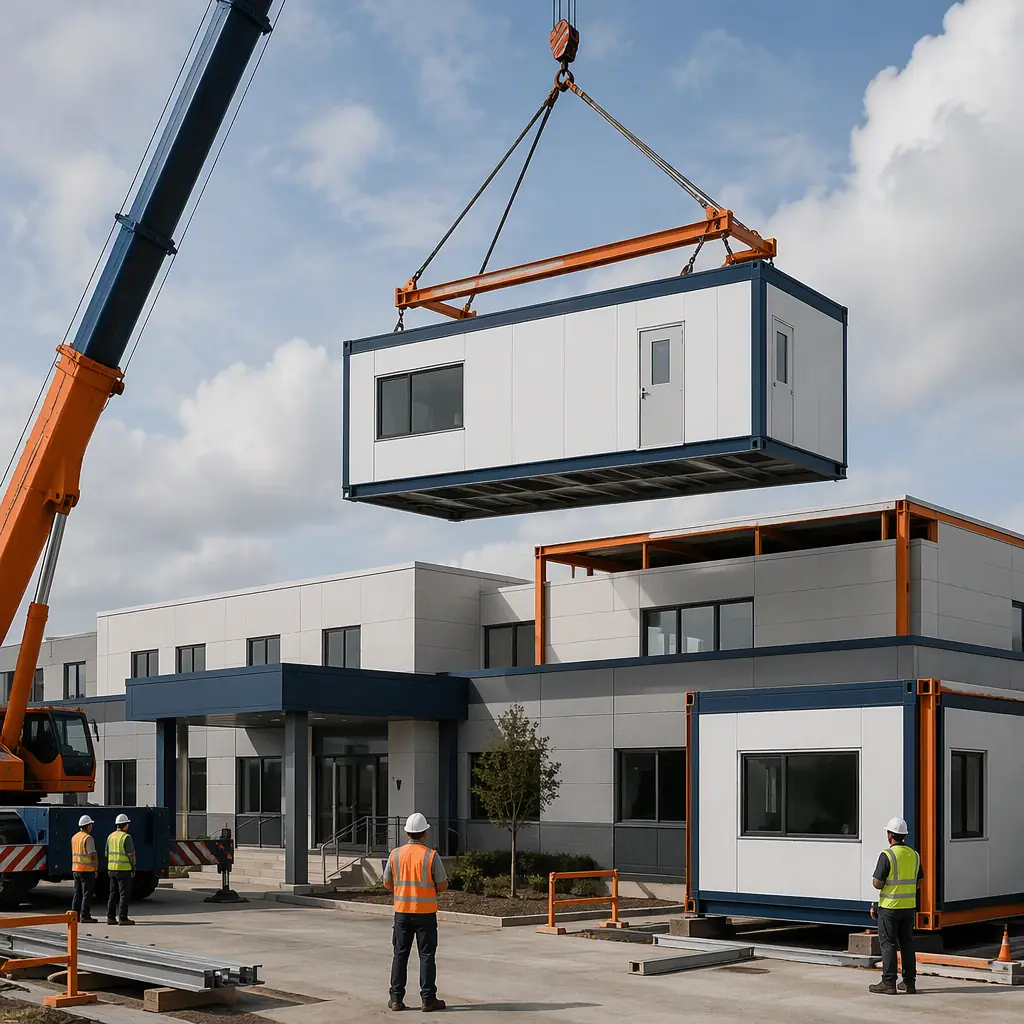
The transport logistics — oversize permits, route planning, escort requirements and crane planning for multi-module setting — follow our modular transportation and logistics guide. Road-transport units maximize flexibility; site-set modules maximize clinical capability and comfort. Many organizations combine both: a site-set core clinic with road-transport outreach units deployed from it.
Deployment Economics
The economics of mobile medical units are driven by three numbers: speed to first patient, utilization, and total cost of ownership. A factory-built clinic can be delivered and commissioned in 14–20 weeks versus 18–30 months for conventional construction — for a grant-funded program or a public health emergency, that difference is the difference between operating and missing the window. Utilization matters because mobile units can relocate: a single imaging suite can serve three counties on a weekly rotation, amortizing the capital cost across far more patient volume than a fixed facility in any one location. And because the unit is factory-built and relocatable, it retains residual value — the asset economics we document in modular building resale value apply, with the added flexibility that a unit can be redeployed to a new program rather than demolished. The lifecycle cost comparison against permanent construction follows the methodology in our modular construction cost planning guide and 2026 modular cost guide.
Use Cases That Justify Mobile Units
Mobile medical units earn their premium in five situations. First, underserved-area access: rural and urban health deserts where a full clinic cannot be justified, served by a relocatable unit on a rotating schedule — the model used by modular community health centers and FQHCs. Second, disaster and surge response: field hospitals and vaccination centers stood up in weeks when permanent capacity is overwhelmed, coordinated with modular emergency housing for disaster relief. Third, grant- and license-timed programs: capacity that must exist by a contractual date. Fourth, imaging access: mobile MRI and CT programs that bring modality capacity to populations that could not support a fixed suite. Fifth, temporary capacity during hospital construction: the surge-space logic we document in modular hospital expansion for active facilities, where clinical services continue uninterrupted while permanent wings are built.
Choosing Between Mobile Units and Permanent Construction
Choose a mobile medical unit when the mission is time-bound, relocatable, or serving a distributed population — and when speed to first patient outweighs the premium over conventional stick-built cost. Choose permanent modular construction — the approach in our modular hospital construction guide and modular urgent care guide — when the facility will serve one community for a decade or more, when imaging modalities require the full shielding and vibration-isolation envelope of a fixed building, or when the organization's capital strategy favors long-lived real estate. The best programs use both: a permanent modular core with a fleet of mobile units extending its reach. For organizations designing that combined strategy, our modular medical clinic guide and the modular procurement and RFP guide provide the specification framework.
Planning a mobile clinic, imaging suite or field hospital program? Request our mobile medical unit package — unit specifications, shielding and compliance data, and deployment schedules. Contact the MODURA engineering team.