MODURA modules are produced by certified manufacturing partners with automated lines, documented quality gates, and export experience serving 60+ countries — construction precision that site-based building cannot match.
Each partner operates documented quality systems and export logistics for modular projects worldwide.
East Asia — automated cold-formed LGS lines
ICC-ES ESR-5348 evaluated framing system
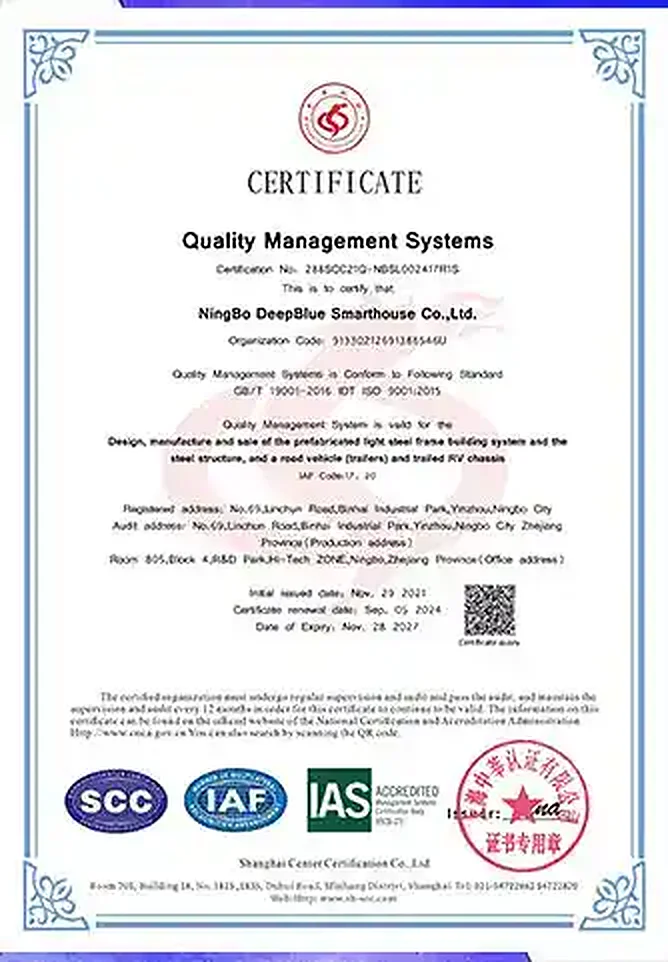
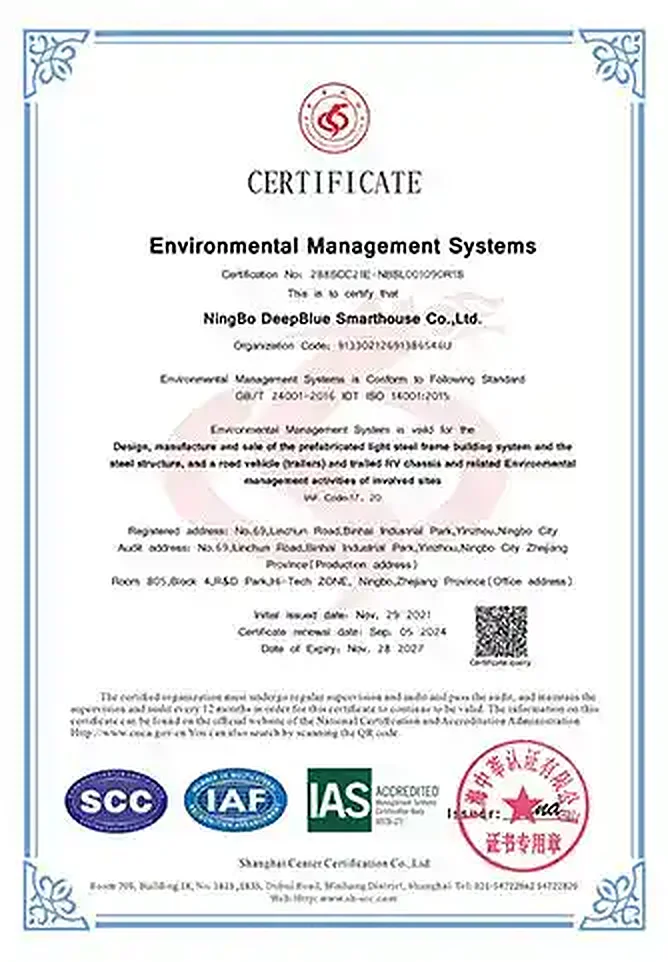
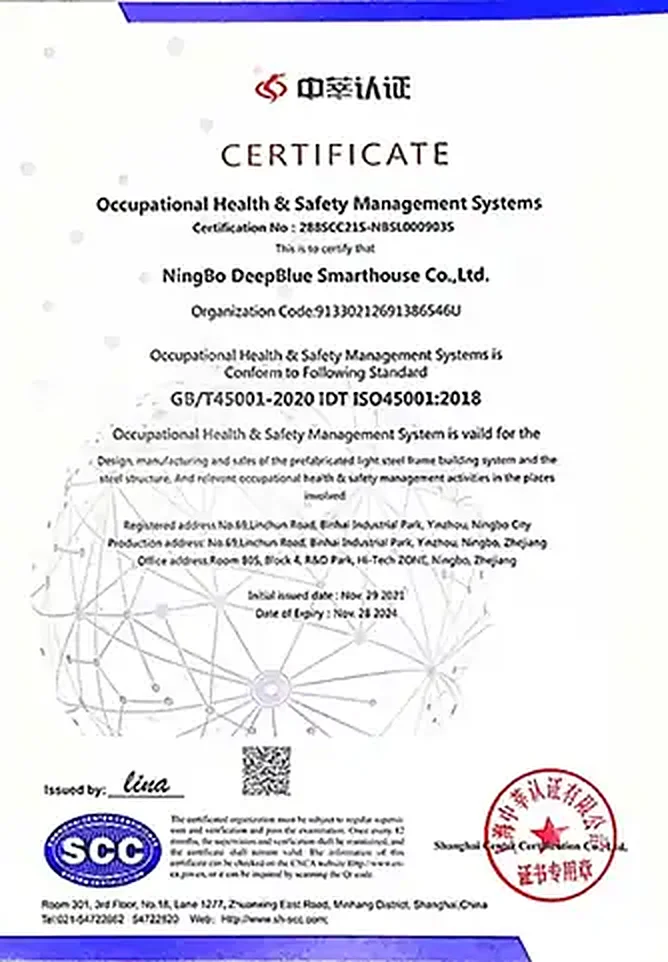
ISO 9001/14001/45001 certified QMS
Container hotel & camp unit lines
Six production bases; permanent modular line added 2025
Recent US delivery: Soledad, California (2026 interim housing)
Serves: US, Middle East, Africa, Pacific
Hot-rolled steel frames & members
AISC-certified fabrication facilities
Heavy steel frames, composite structures, long-span envelope
Serves: US, Americas, Middle East, global
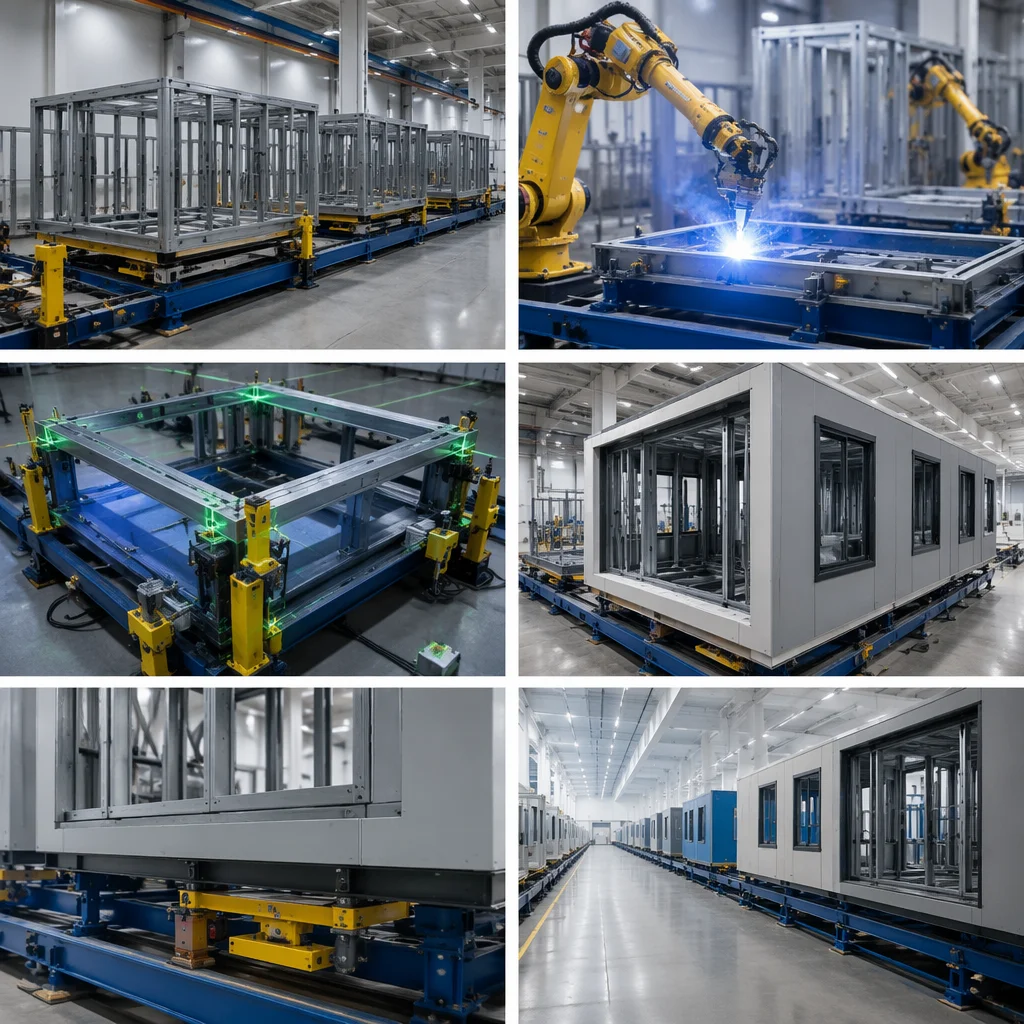
Every module moves through staged production with defined quality gates at each step. Nothing moves forward until it passes.
Our partners apply the same precision disciplines that produce cars and aircraft to building production.
Partner lines use automated cold-formed steel production with in-line dimensional checking, so frames are consistent module after module.
Calibrated jigs and measurement gates hold tight tolerances across every module, verified at fabrication and final acceptance.
Each module ships with its documentation package — installation drawing, material records, and test results.
Indoor production halls protect materials from weather, so quality and schedule don’t depend on the site outlook.
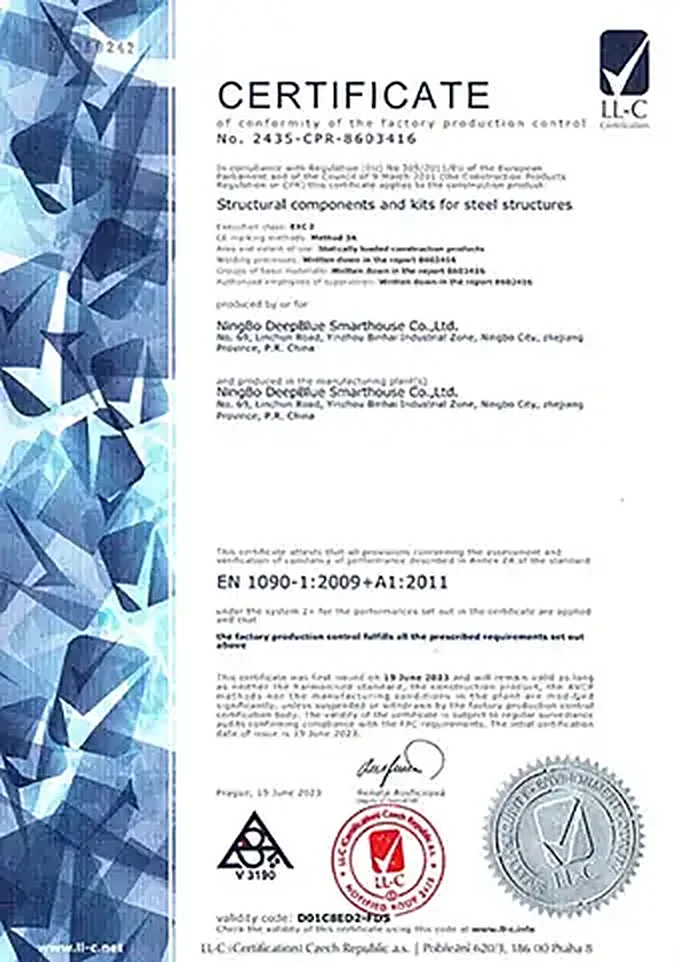
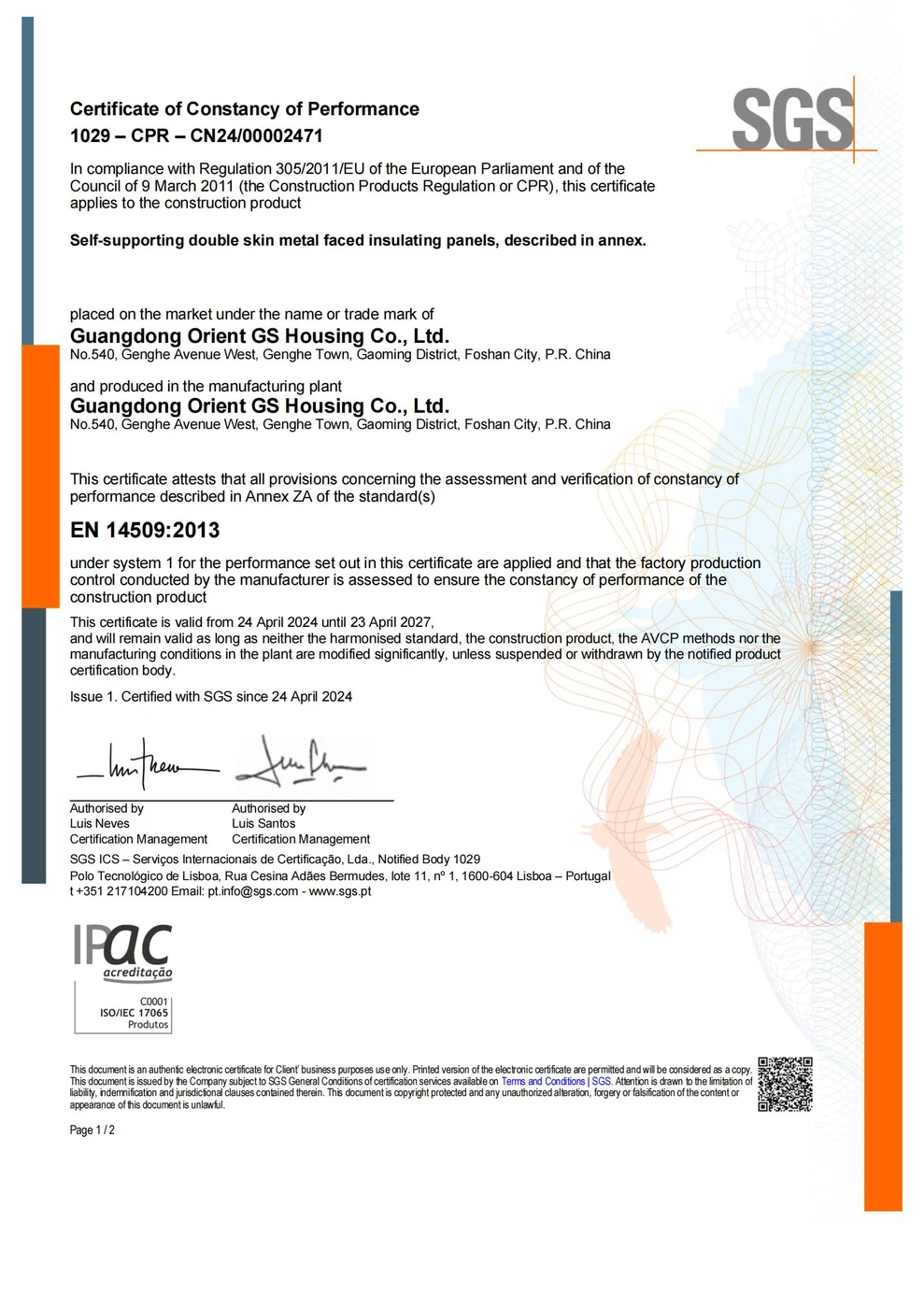
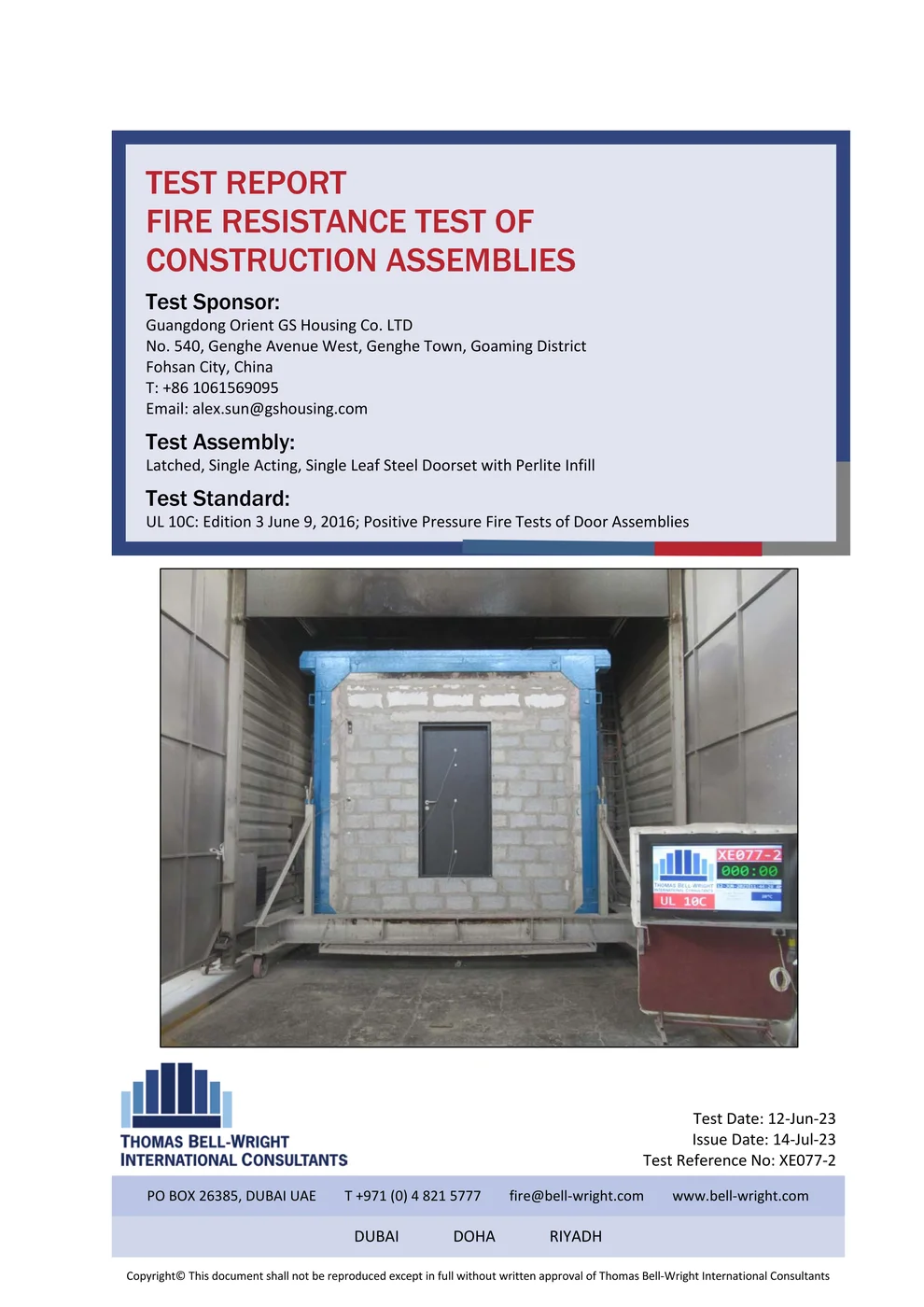
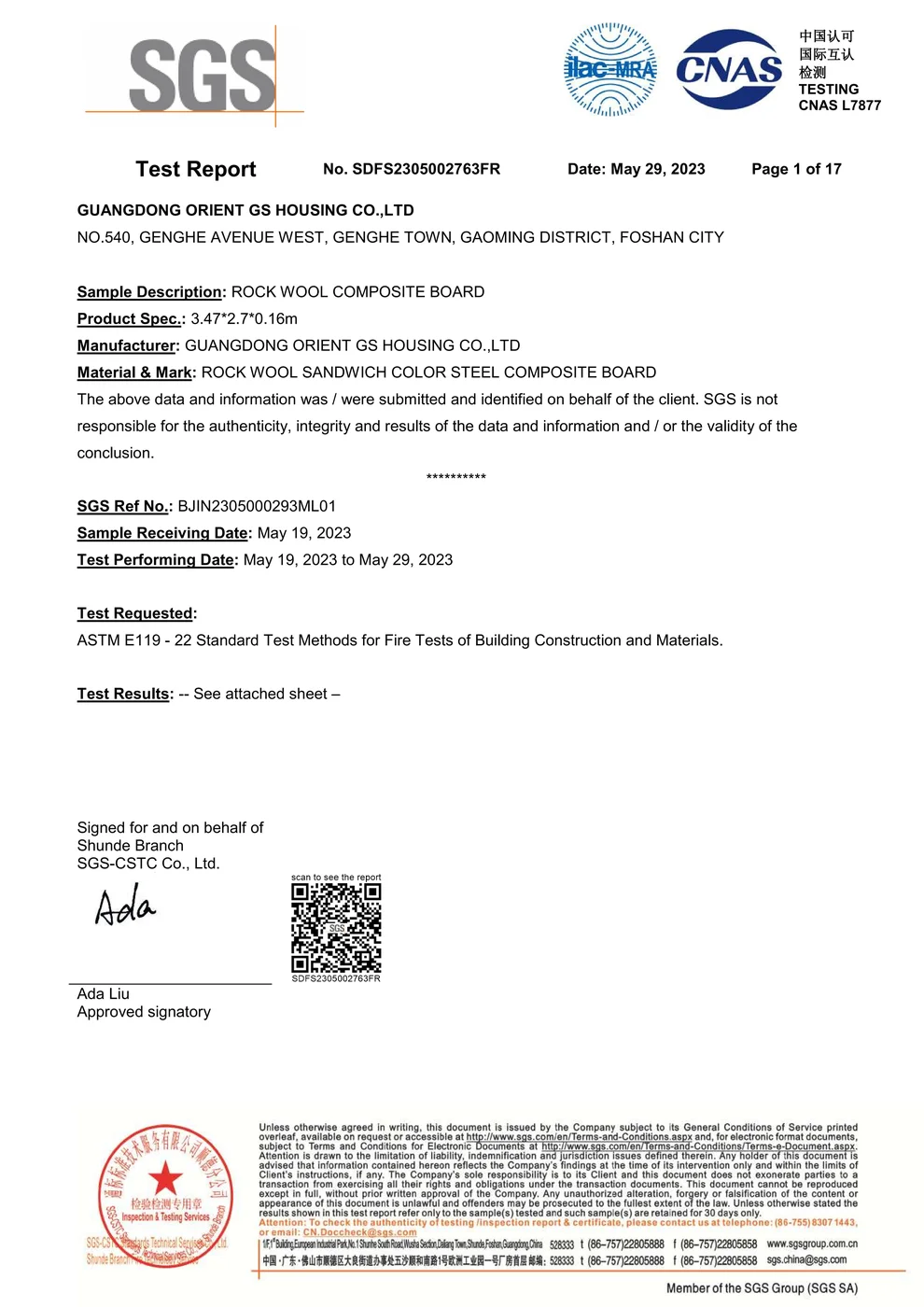
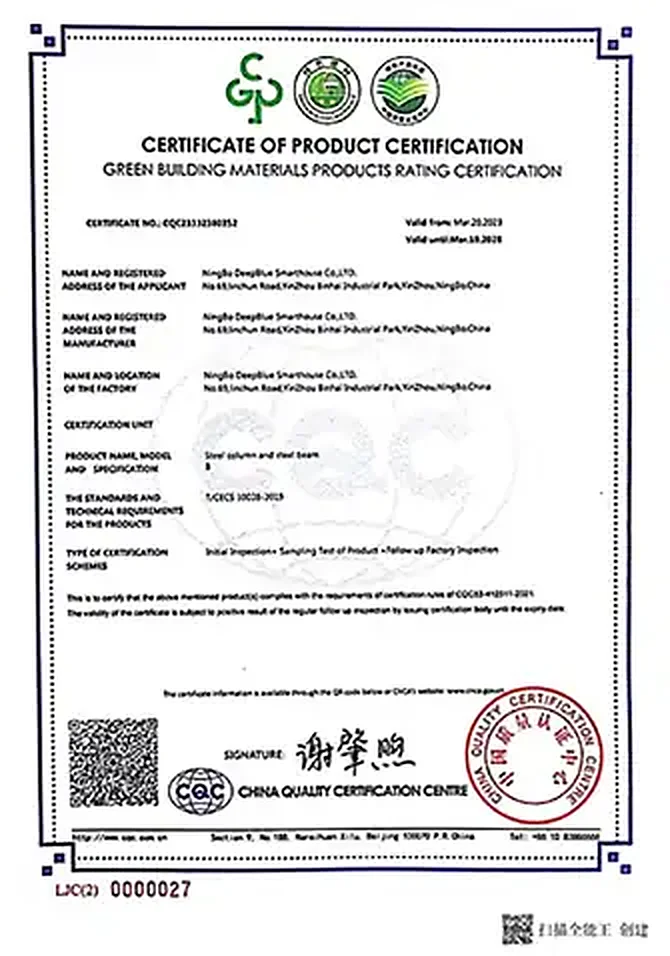
Verifiable certifications held by MODURA’s manufacturing partners, each available on request.

LGS framing system - IBC/IRC 2021 + CA/LA supplements
Holder: Ningbo DeepBlue Smarthouse (MODURA LGS partner)

Quality management systems
Holder: Ningbo DeepBlue Smarthouse

Environmental management systems
Holder: Ningbo DeepBlue Smarthouse

Occupational health and safety management
Holder: Ningbo DeepBlue Smarthouse

Constancy of performance, EN 14350 - light gauge steel framing
Holder: Yibing Qiaoer Housing (MODURA container-module partner)

Fire resistance test, loadbearing steel stud panel (ISO 3008-1)
Holder: Yibing Qiaoer Housing (MODURA container-module partner)

Q355B structural steel chemical composition analysis
Holder: Yibing Qiaoer Housing (MODURA container-module partner)

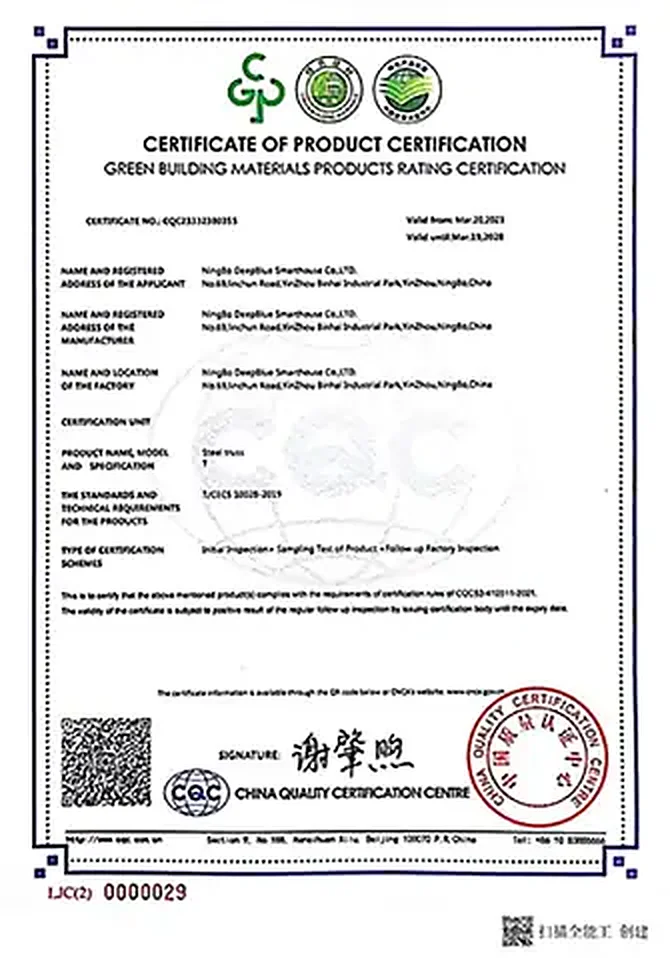
China Quality Certification product certification
Holder: Ningbo DeepBlue Smarthouse

China Quality Certification for steel framing products
Holder: Ningbo DeepBlue Smarthouse
Four production bases built the projects currently in the field. Capacity is stated per base so you can judge whether your programme fits a real line schedule or depends on a base being free in a particular month.
| Partner base | System built | Module output | Certification held | Best suited to |
|---|---|---|---|---|
| Ningbo — LGS framing | Light gauge steel volumetric modules | 8–12 modules per week | ICC-ES ESR-5348; ISO 9001 / 14001 / 45001; CQC green building & steel | Multi-storey residential and hospitality where US or Canadian code compliance is required at approval |
| Yibing — container modules | Container-based modules, hotel and camp units | 14–20 units per week | SGS CPR EN 14350; Intertek WH fire test (ISO 3008-1); SGS Q355B steel report | Hospitality and workforce accommodation where high unit throughput matters more than bespoke geometry |
| East China — structural steel | Hot-rolled steel frames and long-span envelope | Project-based; 400–900 t per programme | AISC-certified fabrication | Heavy industrial, large clear-span and hybrid projects where modules sit on a primary steel frame |
| South China — container hotel lines | Container hotel and camp modules | 12–18 units per week | Partner QMS; module-level FAT records | Export programmes to the Middle East, Africa and the Pacific where shipping windows drive the schedule |
Two practical consequences follow from this structure. First, a large programme can be split across bases running in parallel — a 44-module hotel is routinely split between the LGS and container lines, with each base producing the module type it builds most efficiently. Second, the line a project occupies is booked, not assumed: the realistic question is not “can you build forty modules” but “which weeks are free on the relevant line”, which is why factory slot reservation appears as a milestone on our delivery programme. The programme mechanics of reserving a line are covered in construction scheduling.
Every modular supplier claims factory precision. These are the numbers that claim has to produce, and the reason they matter on a site 8,000 km from the line.
| Element | Factory tolerance | Typical site-built equivalent | Why the gap matters |
|---|---|---|---|
| Module external dimensions | ±2 mm over 12 m | ±10–15 mm | Modules stack and abut directly. Accumulated error across a 20-module run is the difference between a closed joint and a bespoke infill panel. |
| Frame squareness (diagonal) | ±3 mm | ±12–20 mm | A racked module will not accept a neighbouring module’s wall, and the error was locked in at frame stage. |
| Floor level over 6 m | ±2 mm | ±8–12 mm | Determines whether finished flooring and joinery can be factory-installed or must be fitted on site at several times the cost. |
| Wall plumb, full height | ±2 mm | ±6–10 mm | Factory-fitted kitchens, wardrobes and bathroom pods are set out from the wall. Outside tolerance, every unit becomes a site modification. |
| Opening positions for MEP penetrations | ±1.5 mm | Site-marked | Inter-module services connect module to module. A misplaced entry point is a cut into a completed wall. |
| Envelope airtightness, as built | 1.5–3.0 m³/h/m² at 50 Pa | 4–8 m³/h/m² | Measured at FAT while the frame is still accessible. This number cannot be recovered on site once the building is closed up. |
Tolerance is the mechanism behind factory quality, not a boast about it. Each of these figures is verified by calibrated measurement at a named production station, and a module that misses any of them does not progress — which is what the staged gates are for. If a supplier quotes precision but cannot tell you the station at which each figure is measured, the claim is a brochure line. The inspection regime behind these numbers, and what a failed gate costs, are set out on our quality page; the tolerances a finished module must meet on foundations are explained in how a project is delivered. For the standards bodies behind these certificates, see our guide to MBI certification and standards.
Six checks that separate a genuine production facility from a trading company that subcontracted your building. All six can be completed before you commit to a purchase order, and none of them require you to fly anywhere.
A certificate is only evidence about the entity named on it. ICC-ES ESR-5348 is held by Ningbo DeepBlue Smarthouse, not by MODURA — and we say so on the certificate itself and in the verification notes below each one. Ask any supplier who holds each certificate and at which address the steel is actually cut.
A real production line has a defined sequence of stations with a hold point at each. Ask for it in writing. A supplier describing an order of operations rather than named stations is usually describing a process on paper that nobody is measuring.
Not a blank template — a completed record with measurements in it, from a module already delivered. A factory that cannot produce one has either not tested at that level or cannot release the evidence.
The South China base delivered interim housing at Soledad, California in 2026. Reference projects are checkable addresses, and how to verify one independently is set out on our projects page. Treat an unverifiable reference as no reference.
The exporter of record should be the entity that built the modules. If the certificate of origin is issued by one company and the mill certificates name another, you have a supply chain with an unaccounted link in it — and the FAT record will be from a factory you have never seen.
Virtual or in person, on a working day, with production running. A tour scheduled for a quiet period, or hosted in an office rather than on the line, tells you as much as the tour itself. Request one through our contact page and specify a date you choose. The contract stage that follows is covered in our RFP and procurement guide and insurance and risk management guide.
Most disputes on a modular contract are not about quality. They are about the line between factory scope and site scope, and which party carries the cost when that line was never written down. This table is the one we attach to every quotation.
| Interface | Factory Scope (Partner Plant) | Site Scope (Buyer or Main Contractor) | The Decision That Settles It |
|---|---|---|---|
| Structural frame | Cold-formed LGS or hot-rolled steel frame, welded, jigged and dimensionally checked against the setting-out drawing | Foundations, anchor bolts, grout, and the survey that sets the datum the frame lands on | Whether the factory holds the frame tolerance or the foundation. We hold frame squareness and diagonal; the foundation tolerance is the site's, and an out-of-level slab is the single most common cause of a rejected module set. |
| Envelope and weather seal | Factory-fitted walls, roof, windows, doors, and the sealant lines sealed to tested joints | Final seal at the module-to-module and module-to-foundation line after setting | Where the warranty attaches. The tested seal is factory; the post-set interface seal is site, and someone must be named to inspect it before handover. |
| MEP rough-in and tie-in | In-module electrical circuits, plumbing rough-in, HVAC units, panels and controls, tested and tagged at FAT | Interconnecting runs between modules, mains connection, incoming supply and utility permits | Who owns the inter-module connection and the first energisation. We deliver a tested in-module system terminated at a marked junction box; the runs between boxes and the supply point are site scope unless priced separately. |
| Fire stopping | Fire-rated assemblies within the module and fire-stopping at factory joints, documented to the tested system | Fire stopping at the module-to-module and penetration interfaces introduced on site | This is the interface most often left unowned. We name it explicitly: any penetration or joint created after the module leaves the factory is the site's to seal and certify to the same rating. |
| Damage in transit | Packing, lifting points, transport restraint design and load-out survey | Marine or road insurance from the point of collection, and receipt inspection | Who carries the risk once the module is on the truck. Default is the buyer's cargo policy from collection; we can price to delivered-and-inspected if the client prefers. |
| Site acceptance | Factory acceptance testing (FAT) records, snag list closed before dispatch | Site acceptance testing (SAT), final connection, commissioning and handover documentation | Whether FAT closes the quality obligation or SAT does. Our position: FAT proves the module left us correct; SAT confirms it arrived and connected correctly, and both records are handed over. |
The commercial terms that sit behind this table are set out in our RFP and procurement guide, and the insurance and liability layer is covered in our insurance and risk management guide. If a scope boundary is still unresolved at contract, our rule is simple: it is priced as site scope, in writing, rather than assumed.
Two quotations for the same drawing can differ by 30% and neither is dishonest. These are the six variables that create the gap, in the order they usually matter, so a buyer can compare offers on substance rather than on headline number.
| Variable | Low-Cost End | High-Cost End | Typical Effect on Unit Price |
|---|---|---|---|
| Frame system | Cold-formed light gauge steel (LGS) | Hot-rolled structural steel | Structural steel can add 20–45% to the frame line, justified by spans, loads and height rather than by quality. |
| Finishing level | Shell: frame, envelope, rough-in, primed | Turnkey: fitted bathrooms, kitchens, flooring, decorated | Fit-out is the largest single swing. A turnkey pod can carry 2–3× the shell cost of the same floor area. |
| Module size and transport legality | Standard 3.0 m wide units on flatbed | Over-width units requiring escorts and permits | Maximising floor area per module is the biggest cost lever, but only up to the transport envelope. Beyond it, permits and escorts can consume the saving. |
| Quantity and repetition | One-off bespoke module | Repeated identical units | Repetition across 20+ identical modules is where factory economics beat site building. A one-off modular unit rarely does. |
| Certification scope | Framing-system evaluation only | Full structural, fire and code-compliance package for the target market | US, EU and Gulf markets each demand different evidence. The certificate pack is a hard cost, not an optional extra. |
| Delivery distance | Within 500 km of the port | Beyond 1,500 km, or inland to a constrained site | Freight and crane standing time can erode the erection saving on distant inland projects. We state this openly in the quote rather than burying it. |
For the per-square-foot breakdown behind these variables, see our guide to modular construction total cost planning and the cost per square foot analysis.
Six questions that come up in almost every factory order, answered the way we would answer them in the meeting. Where the honest answer is uncomfortable, we give it anyway.
Yes, within the module envelope. The constraint is not the drawing, it is transport: a module wider than 3.5 m or longer than 13.5 m triggers permits, escorts or a different delivery mode. We will tell you at tender where a design crosses that line and what it costs to cross it, rather than after the order is placed.
Production runs through certified partner plants, and each certificate names its holder. We state plainly which certificate is held by which entity and at which address. You contract with MODURA and we are accountable for the whole delivery, but you are entitled to know which plant cuts your steel.
Transit damage is a real risk on any export. We design lifting points and transport restraint, and we record a load-out survey before dispatch. Risk passes at collection by default and is carried by the buyer's cargo policy, which is why we ask to see that the policy exists before we load. We can price delivered-and-inspected if you prefer we carry it.
It will not move on scope we have defined. It can move on scope you add, on site conditions outside our control, and on freight if the delivery point changes. Our quotes name the scope boundary line by line, and any excluded item is listed as excluded. A fixed lump sum that hides an unstated exclusion is not a fixed price.
Sometimes yes, sometimes no, and the answer depends on whether the target market accepts an evaluated framing system or requires a local engineer's stamp. We have delivered to US, EU, Middle East and Pacific markets under different regimes. If your market needs evidence we cannot yet provide, we will say so at tender rather than commit and renegotiate.
Site acceptance testing, final connection and commissioning are site scope by default, but our FAT records travel with the module so your site team is testing against a documented baseline. If you want a single point of responsibility through commissioning, we can price that too. The default split is in the table above; nothing is assumed silently.
We will not quote a fixed lump sum for a design we have not seen. We will not accept a contract where the factory/site responsibility boundary is left to be "agreed later". We will not certify a penetrations or connections created on site by another party. And we will not hide a freight or certification cost inside a headline number to look cheaper than we are.
Schedule a virtual or in-person factory tour. Walk the production line, meet the engineering team, and see the precision behind every MODURA module.
Request a Factory Tour