Quality Control

Quality Isn't Inspected In. It's Engineered In.

147 quality checkpoints. Every module. Every time. Our quality system is built on three pillars: incoming material inspection, in-process quality control, and factory acceptance testing, verified by independent third-party auditors.

Quality System

Three-Stage Quality Assurance

Quality gates at every stage: from raw material receiving to final module sign-off. Nothing moves forward without passing inspection.

IMI → IPQC → FAT

  • Incoming Material Inspection (IMI): All steel coil, insulation, plasterboard, MEP components, and finishes are inspected against mill certificates and specification before entering production. Material traceability from mill to module.
  • In-Process Quality Control (IPQC): 14 production stations, each with defined quality gates. Steel frame dimensions (Station 3), enclosure integrity (Station 5), MEP continuity (Station 7), plasterboard finish level (Station 9), joinery fit (Station 11), MEP function (Station 13).
  • Factory Acceptance Testing (FAT): Full system test at Station 14: plumbing pressure test at 10 bar, electrical continuity and insulation resistance, HVAC commissioning, fire suppression verification, acoustic seal inspection. Zero-defect sign-off with photographic record.

MODURA quality inspector performing laser measurement check on a finished modular unit
Inspection Equipment

Measurement & Testing Technology

Laser Dimensional Scanning

3D laser scanning verifies every module face to ±2mm tolerance. Scan data compared against BIM model; deviations flagged and corrected before next station.

Electrical Continuity Testing

Every circuit tested: continuity, insulation resistance at 500V DC, polarity verification, RCD trip time, and earth loop impedance. Full test certificate per module.

Plumbing Pressure Test

All pipework pressurized to 10 bar (145 psi) for 30 minutes. Zero allowable pressure drop. Drainage systems filled and verified. Every joint documented.

Blower Door Airtightness

Each module tested to <3 m³/h/m² at 50Pa. Exceeds Passive House standard. Thermal imaging verifies insulation continuity, zero cold bridges.

Acoustic Testing

In-factory acoustic testing per BS EN ISO 16283. Party wall DnT,w + Ctr ≥ 45dB verified. Party floor L'nT,w ≤ 62dB verified. Tested before module leaves factory, not after installation.

Third-Party Inspection

For US projects, third-party inspectors and PE review drawings and witness production under the state modular program pathway (DAPIA/TPIA). Partner certificates, ICC-ES ESR-5348 for LGS framing, AISC for steel fabrication, are verifiable at the issuing body.

Certifications

Certificates You Can Verify

Certificates held within MODURA’s manufacturing network. Every document is verifiable at the issuing body, originals available on request at [email protected].

ICC-ES Evaluation Report ESR-5348 certificate

ICC-ES ESR-5348

LGS framing system - IBC/IRC 2021 + CA/LA supplements
Holder: Ningbo DeepBlue Smarthouse (MODURA LGS partner)

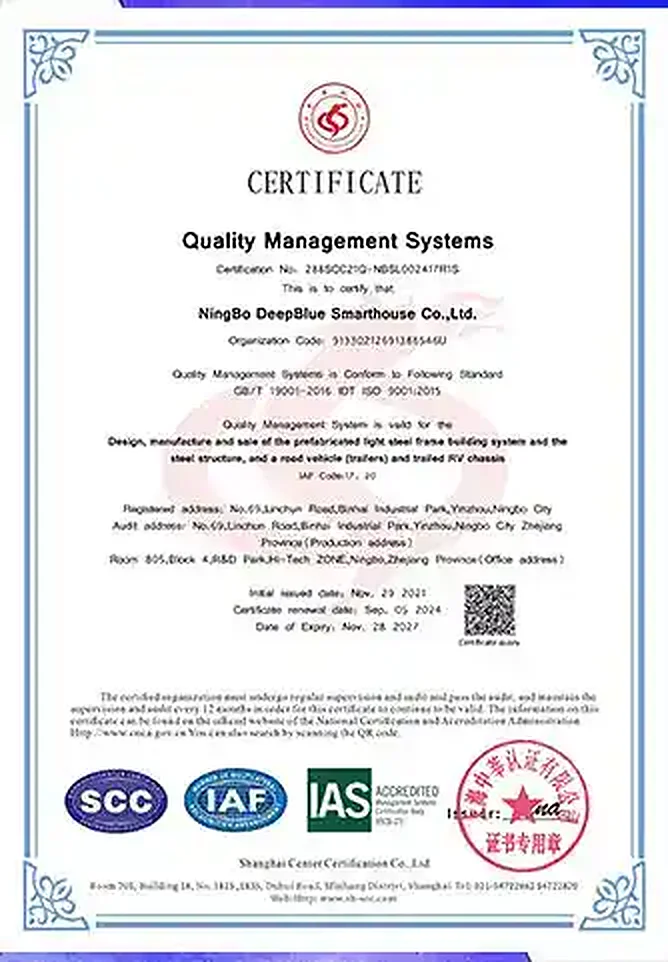
ISO 9001 quality management certificate clarity

ISO 9001:2015

Quality management systems
Holder: Ningbo DeepBlue Smarthouse

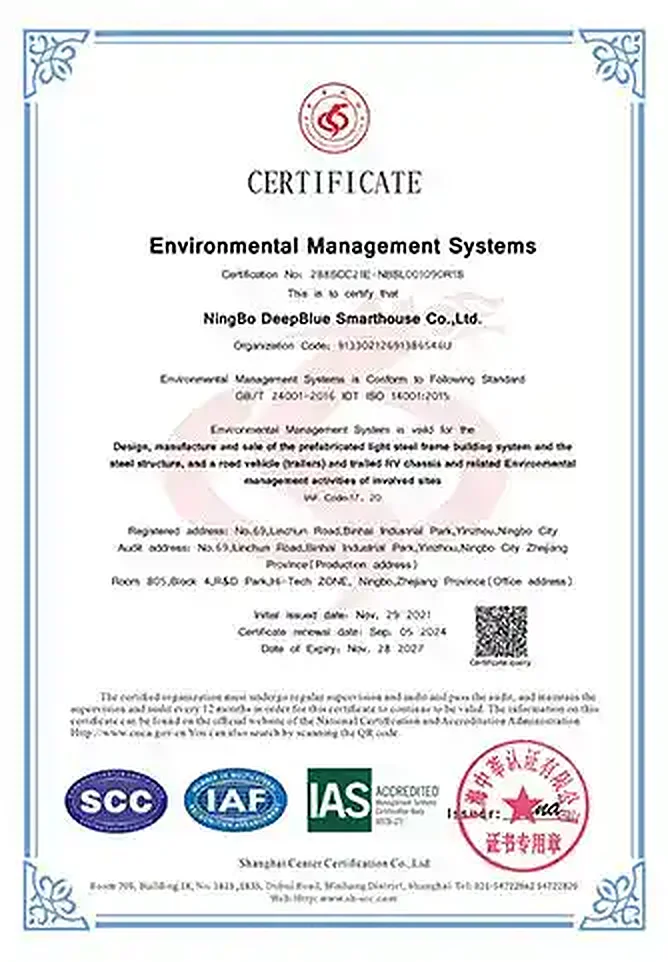
ISO 14001 environmental certificate

ISO 14001:2015

Environmental management systems
Holder: Ningbo DeepBlue Smarthouse

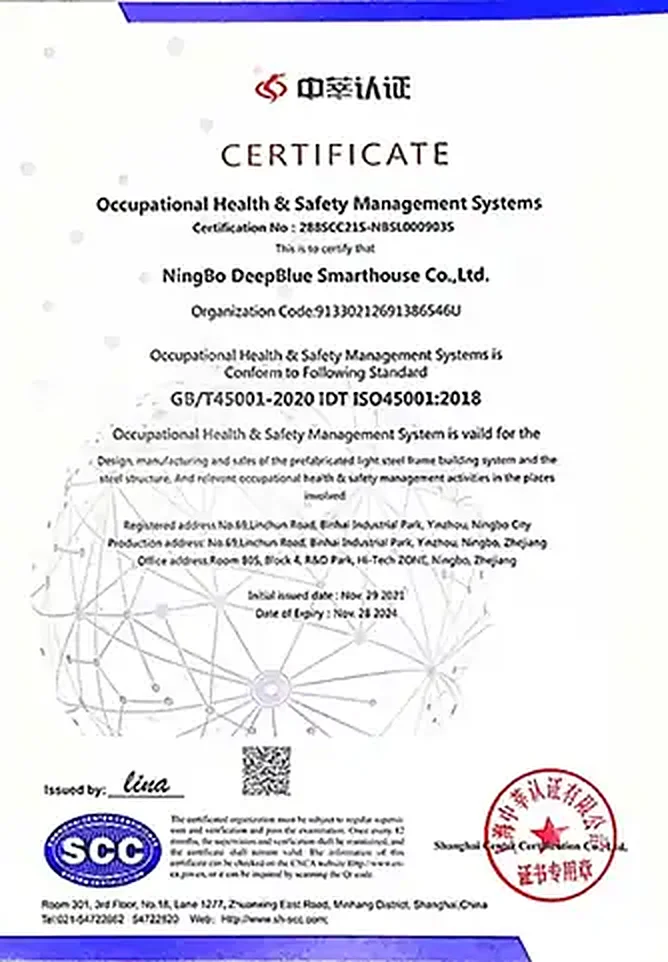
ISO 45001 occupational health and safety certificate

ISO 45001:2018

Occupational health and safety management
Holder: Ningbo DeepBlue Smarthouse

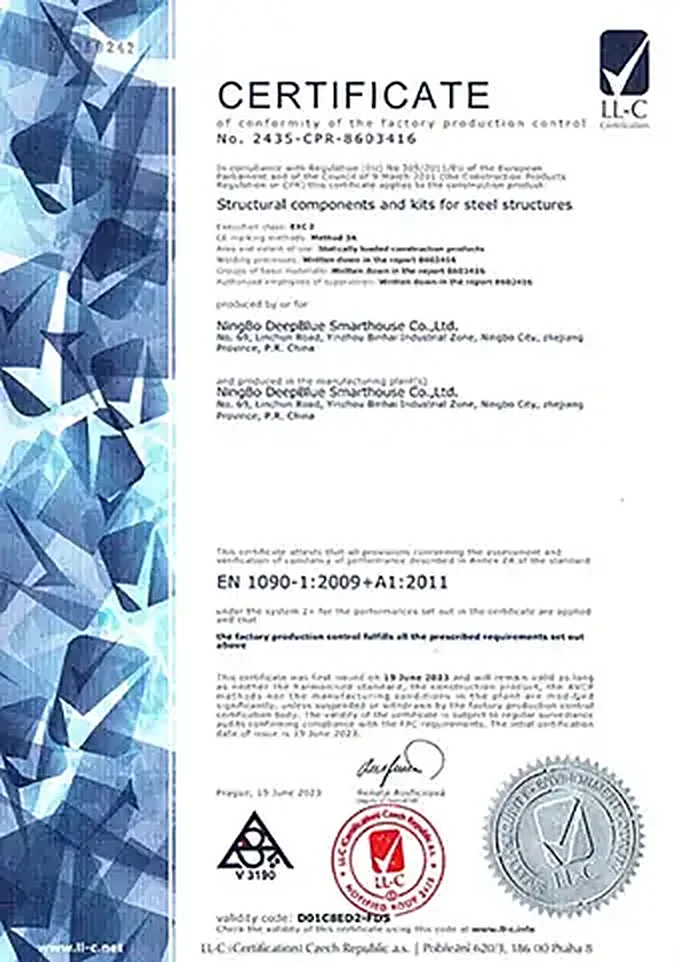
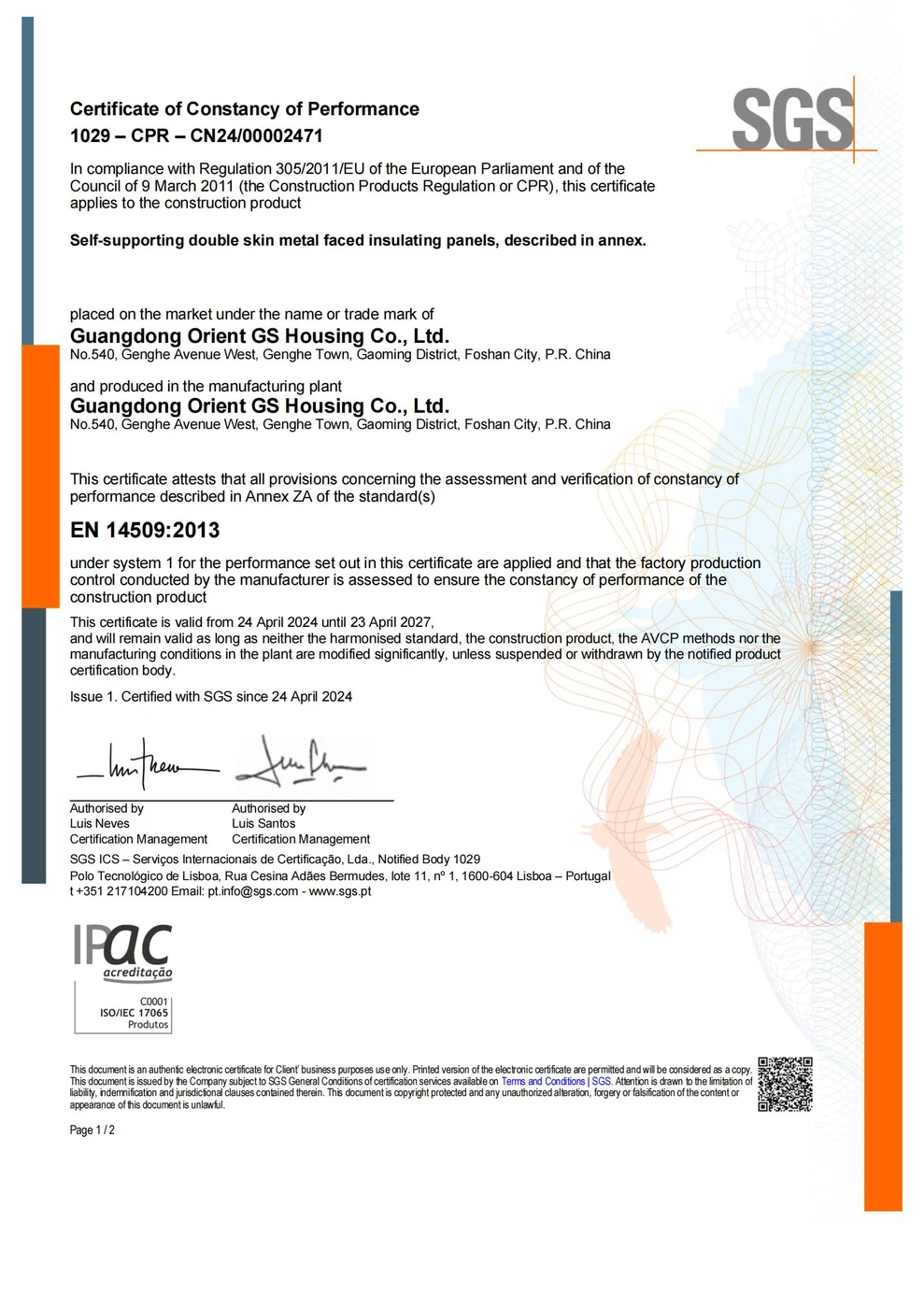
SGS Certificate of Constancy of Performance

SGS CPR Certificate

Constancy of performance, EN 14350 - light gauge steel framing
Holder: Yibing Qiaoer Housing (MODURA container-module partner)

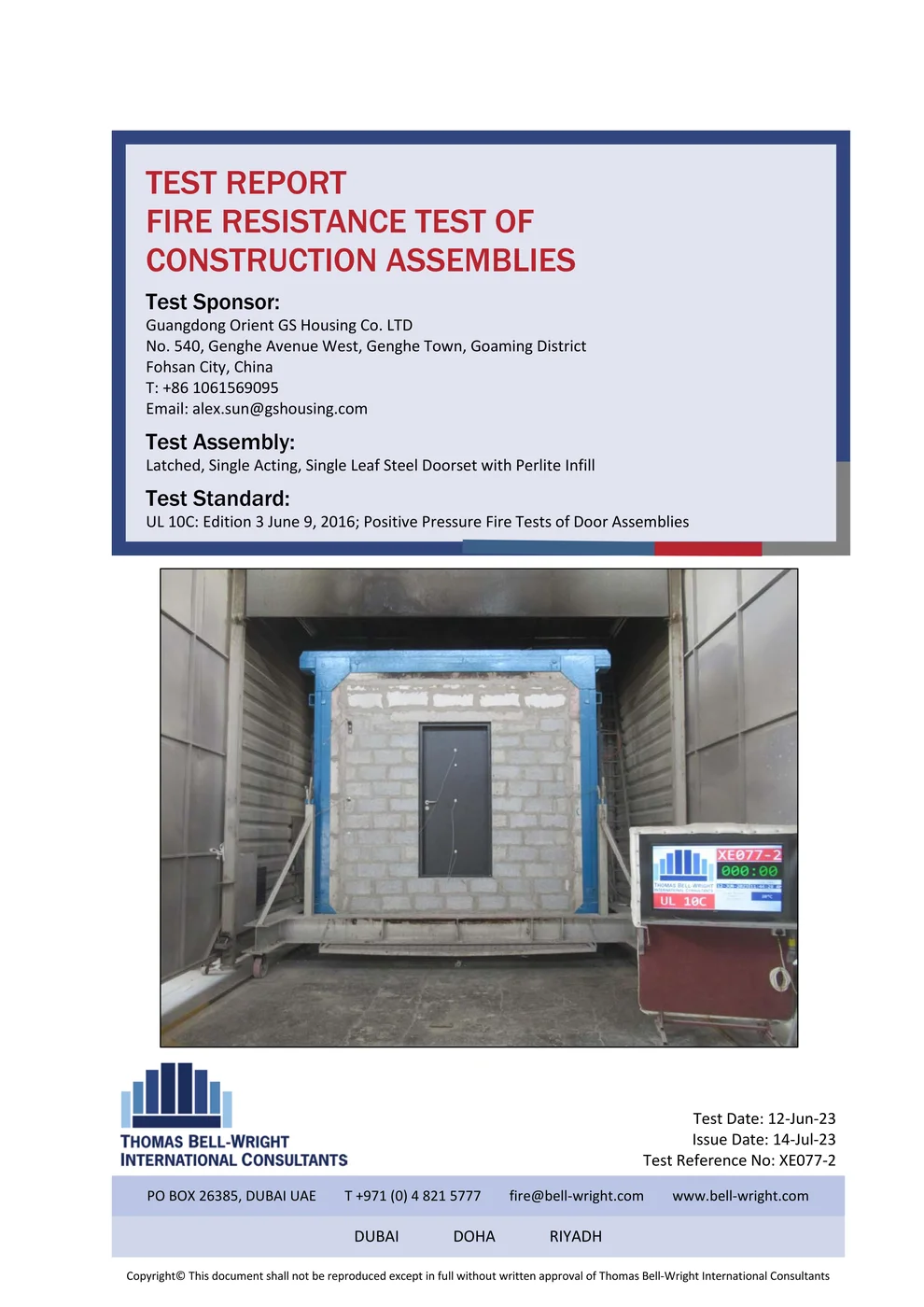
Intertek Warnock Hersey fire resistance test report

Intertek WH Fire Test

Fire resistance test, loadbearing steel stud panel (ISO 3008-1)
Holder: Yibing Qiaoer Housing (MODURA container-module partner)

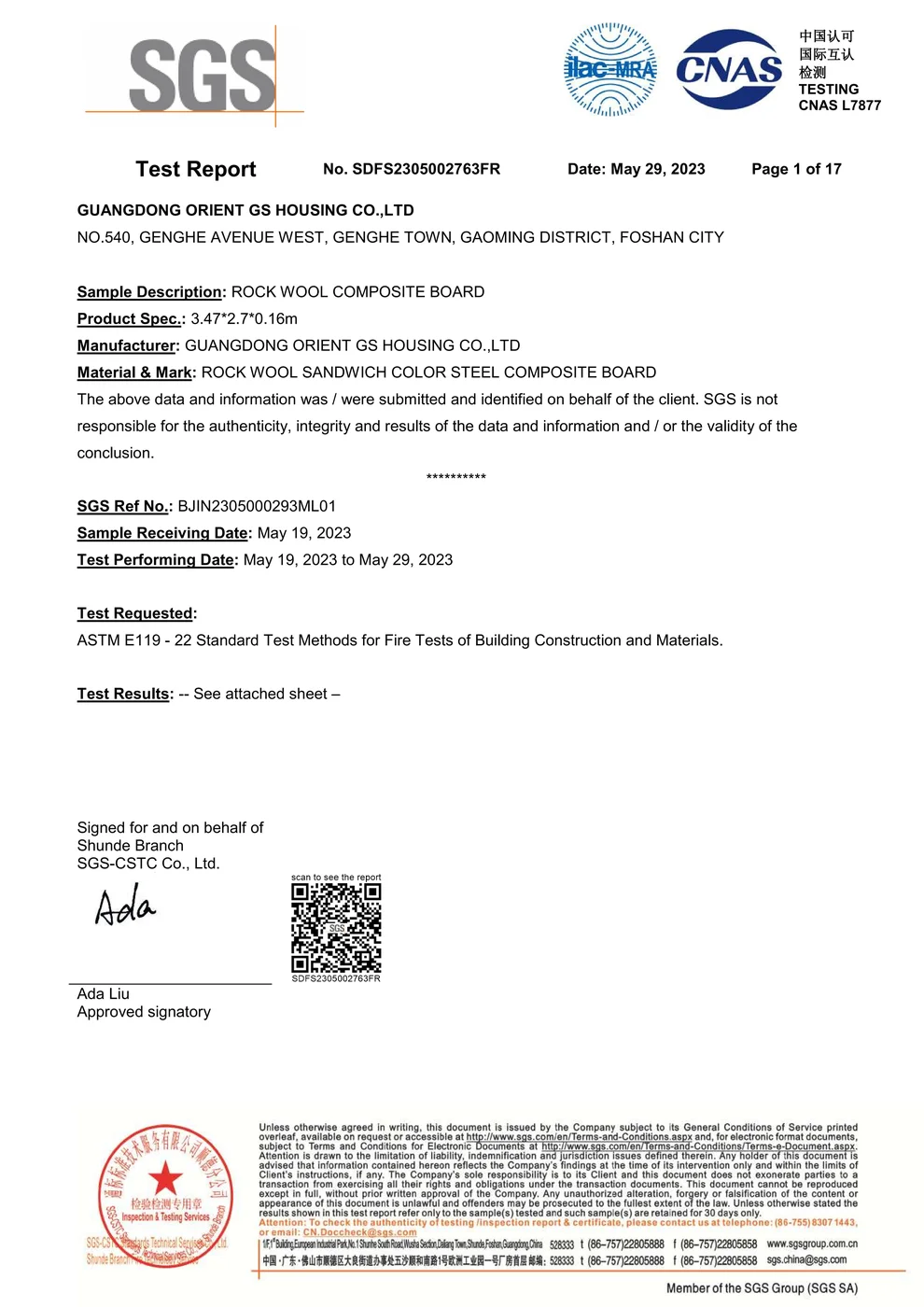
SGS steel chemical composition test report

SGS Steel Test Report

Q355B structural steel chemical composition analysis
Holder: Yibing Qiaoer Housing (MODURA container-module partner)

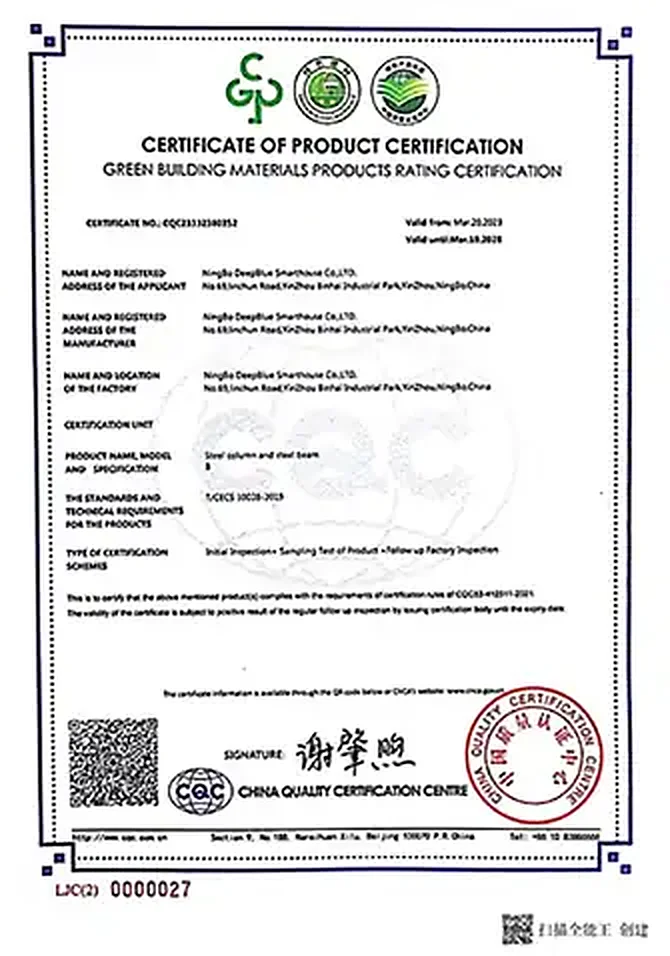
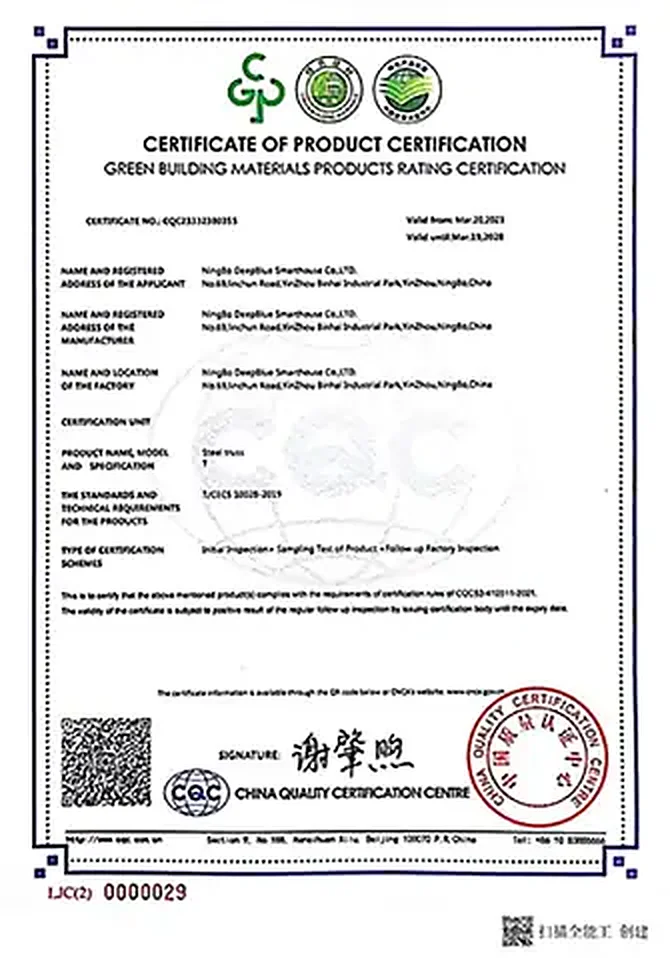
CQC green building materials certification

CQC Green Building Materials

China Quality Certification product certification
Holder: Ningbo DeepBlue Smarthouse

CQC steel products certification

CQC Steel Products

China Quality Certification for steel framing products
Holder: Ningbo DeepBlue Smarthouse

Verification Guide

How to Verify Each Credential

Every credential in MODURA’s quality claim chain is independently checkable, here is exactly how.

CredentialWhat it coversHow to verify
ICC-ES ESR-5348Cold-formed steel studs and tracks (ASTM A792 Grade 50 Class 4, AZ50 coating) under IBC/IRC 2021, 2018, 2015 with California and Los Angeles supplementsicc-es.org → search report directory → ESR-5348
ISO 9001:2015Design, manufacturing and sales of the prefabricated LGS building systemCertificate copy on request; issuing body verification via accreditation mark (SCC/IAF)
ISO 14001:2015Environmental management for the LGS system productionCertificate copy on request; SCC/IAF accreditation mark
ISO 45001:2018Occupational health & safety management at the LGS factoryCertificate copy on request; SCC/IAF accreditation mark
AISC CertificationStructural steel fabrication quality at Hot-rolled steel partner plantsaisc.org → certification directory → search fabricator
CQC Green BuildingGreen building materials product certification (China Quality Certification Centre)Certificate copy on request; CQC number on document
US State ProgramsPer-project modular approval: PE-stamped drawings, third-party design review (DAPIA) and factory inspection (IPIA)State agency databases (e.g. PA DCED third-party agency list)
Compliance

Design Standards We Engineer To

Structural and safety standards applied by destination market, US codes lead; EU/UK and Australian standards as required.

StandardScopeApplication
IBC / IRC 2021 (+ ASCE 7-22)US building code structural design basis and loadsUS projects, primary code basis
AISI S100 / S240Cold-formed steel design and structural framingLGS frame engineering (per ESR-5348)
AWS D1.1Structural welding, WPS/PQR and certified weldersHot-rolled steel fabrication
NFPA 13 / 72Fire sprinkler and alarm systemsUS fire protection design basis
IECC / COMcheckUS energy code compliance reportingEnvelope and MEP energy compliance
EN 1990-1999 (Eurocodes)EU structural design basisEU/UK projects
AS/NZS 4600Cold-formed steel structures (Australia/NZ)Australian delivery programs
ISO 19650BIM information managementDigital delivery & asset data
Cost of Quality

What a Failed Gate Actually Costs

Quality control is a budget line only until a defect reaches site. After that it becomes a cost line. This is the arithmetic we show buyers who ask why modular inspection is worth paying for.

Trigger pointWhat it costs to fixDays addedWhy it diverges from site-built
IMI, bad material rejected at goods-inSupplier credit note. ~$01–3Nothing has been cut or welded yet. Site-built projects discover bad steel after it is fixed in place.
IPQC Station 3, frame dimension out of tolerance$300–$900 + 1 shift1–2Re-jig on a factory line. The same error is discovered on site only after cladding closes the frame.
IPQC Station 9, plasterboard finish below Level 4$600–$1,8002–3Rework with the module indoors, at bench height, no weather exposure.
FAT, plumbing pressure test fails$1,200–$4,000 + kit schedule risk3–7Every joint is still accessible with the module open. Post-installation, the same leak means opening a finished wall in a live building.
FAT, air tightness above 3 m³/h/m²$800–$2,5002–5Thermal imaging locates cold bridges while the frame is exposed.
Not caught in factory, found on site$8,000–$45,000 per occurrence + programme10–25Remote sites carry mobilisation, crane re-booking, crew standby and accommodation. The multiplier is the distance, not the defect.

Read the table as a ratio, not a price list. A defect caught at Station 9 costs roughly one-fifteenth of the same defect caught after the module reaches a site 8,000 km away, and the difference is programme time, not materials. This is the single strongest economic argument for factory-side inspection, and it is why the 147 checkpoints are a delivery strategy rather than a marketing claim.

Accountability

Where Our Warranty Ends, and Why That Protects You

The most common pre-contract misunderstanding is who owns a defect after modules leave the factory. The split is contractual, written down, and follows the standard modular delivery structure.

ScopeWho bears itWhat covers itNotice period
Factory workmanship & materials (frame, enclosure, factory MEP, finishes as delivered)MODURA / manufacturing partnerContract warranty on the module supply scope12–24 months from module delivery
Inter-module connections made on site (structural tie plates, MEP cross-overs, sealant lines)Site assembly contractorTheir installation warrantyPer main contract
Concealed defects not detectable at FAT that trace to factory workMODURA / manufacturing partnerLatent-defect provision, backed by the FAT photographic recordUp to local limitations statute
Damage in transit after handover to the freight contractor at the factory gateFreight contractor (cargo insurance)Marine/inland transit insurance policyAt delivery acceptance
Foundations, substructure, site drainageEmployer / site works contractorSeparate site contractPer site contract
Component wear items (seals, gaskets, filters, sensors)Employer (consumables)Supplier warranty on the component onlyComponent manufacturer terms

Two clauses decide most post-handover disputes, and both are negotiable before signature rather than after. The first is the delineation line, precisely which interface belongs to the factory scope and which to the site contractor; the process page sets out how that line is drawn at each gate. The second is the FAT sign-off record: because every module leaves with a photographic and instrumented record of its acceptance test, a later claim can be traced to a specific station rather than argued in principle. Buyers who ask for this split at tender stage, rather than at handover, are the ones who avoid the argument entirely.

Pre-Contract

Quality Questions We Are Asked Before Every Contract

These five questions come up in almost every procurement conversation. The answers are the same whether you ask them at tender or at handover, so ask them early.

  • Can we send our own inspector into the factory? Yes, and we recommend it. Client-appointed inspectors and, for US projects, the state third-party inspection agency are welcome to witness production and hold points. Give us two weeks' notice so the module is open at the right station rather than finished and sealed. The Soledad, California programme ran under exactly this arrangement.
  • What happens if a module fails FAT? It does not ship. The module stays in the factory and the defect is corrected at bench cost. We will show you the failed test record alongside the passing re-test. A supplier that cannot produce the failed record is not testing, only certifying.
  • Who approves the drawings, and to whose code? For US projects, drawings are PE-stamped in the destination state and reviewed under the state modular programme (DAPIA), with factory inspection by the appointed third-party agency (IPIA). Structural design follows IBC/IRC 2021 with ASCE 7-22 loads, and the cold-formed framing is independently evaluated under ICC-ES ESR-5348. For EU/UK and Australian delivery the applicable design standards are listed in the table above.
  • Do you hold certificates in your own name or a partner's? Both, and we say which is which. Several certificates: including ICC-ES ESR-5348 and the ISO 9001/14001/45001 registrations. Are held by our LGS manufacturing partner and apply to modules produced on their lines. We name the holder on every certificate card rather than implying a single-entity chain, because a buyer who discovers this at due-diligence stage loses trust in everything else on the page.
  • What is the realistic first-pass yield? 99.7% across a programme, which means roughly 3 modules in every 1,000 are held for rework, and holding is the point. A factory claiming 100% is either not inspecting or not counting. Ask for the yield record from the last programme, not a target figure.
0 Inspection Points Per Module
0 First-Pass Yield Rate
0 Annual Third-Party Audits
0 Material Traceability

Request Our Quality Documentation

Download our quality manual, certification certificates, and sample inspection reports. Full transparency on how we build.

Request Quality Docs