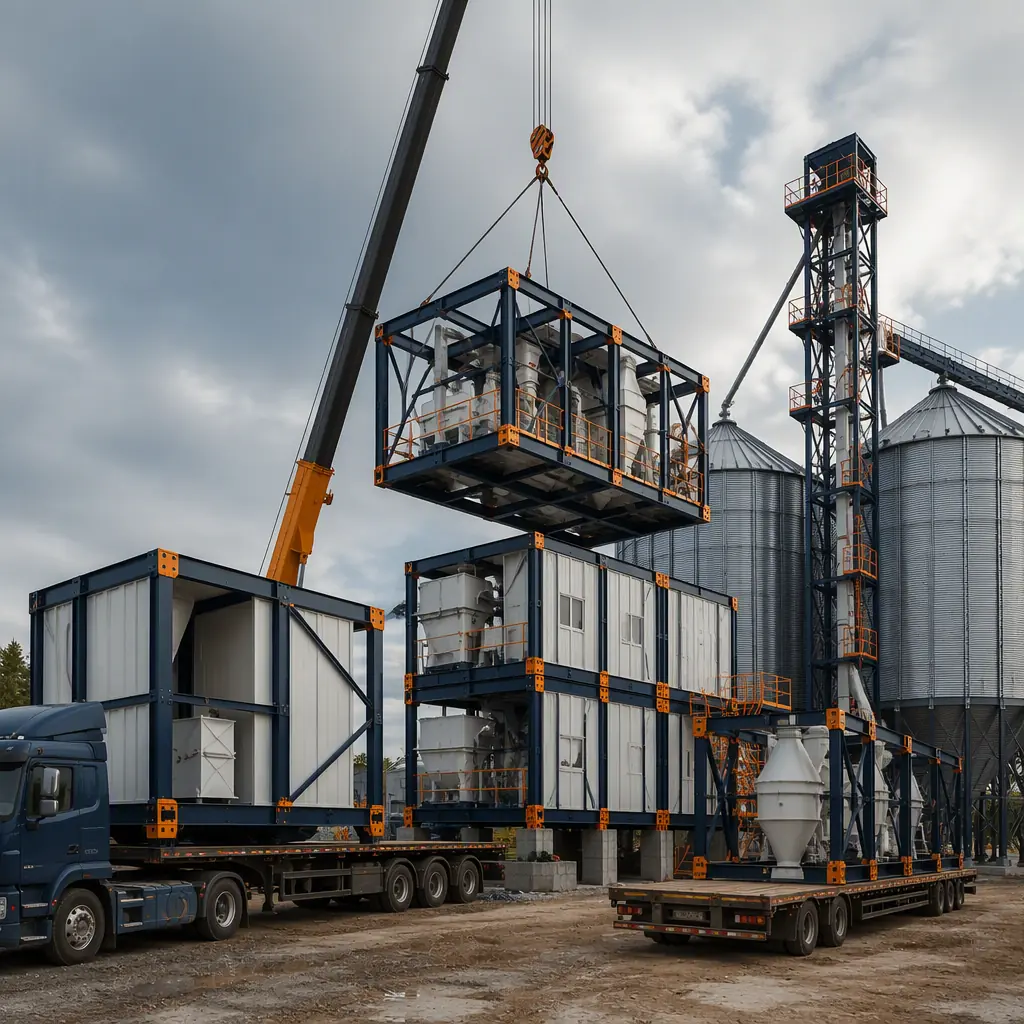
A grain and feed mill is a vertical flow of material moving through a building that has to contain it safely. Grain comes off the truck into the intake pit, is carried up by the bucket elevator, stored in the bins and silos, then drawn down through the grinding, mixing, conditioning and pelleting decks before it is bagged or bulk-loaded. The flour mill does the same with roller mills, plansifters, purifiers and pneumatic conveying. Every one of those grain-handling and milling steps produces fine combustible dust, so the mill building is engineered to the NFPA 61 and OSHA grain-dust standards, the dust-tight enclosures, the vented bucket-elevator legs, the spark detection and the explosion-relief panels that keep a dust explosion from propagating through the plant. Site-built grain mills and elevators routinely run 12–18 months because the dust-hygiene, the conveying, the electrical and the structural work are built by different specialties in sequence around a tall, pneumatically-clear vertical building. Modular prefabricated construction changes that: the intake, the milling deck, the mixing and pelleting level, the bagging hall and the support buildings are manufactured as steel-frame modules in the factory while the grain storage, the foundation and the utilities proceed on site, and the modules are then delivered, stacked and connected in a weeks-long installation window. A 30 t/hr feed mill with a grinding and mixing deck, a pelleting and bagging level and a mill office can be designed, manufactured and installed in 18–28 weeks, roughly 40% faster than site-built delivery, following the same factory-built logic we document for modular agricultural and food-processing buildings and modular poultry-processing plants. This guide covers the grain and feed program, the dust-explosion engineering, the milling flow, the storage and conveying, cost structure and the phasing that gets a mill grinding.
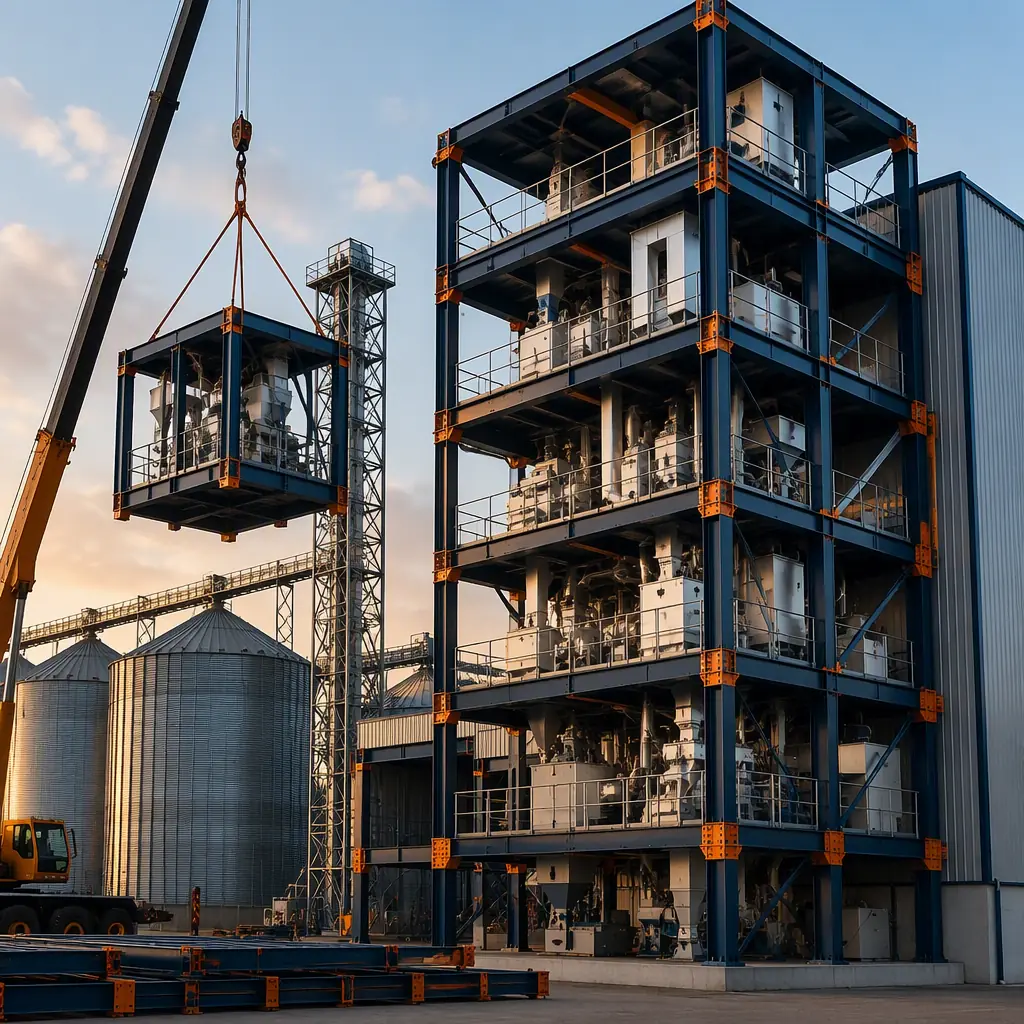
What a Grain or Feed Mill Program Actually Builds
A feed mill combines a processing program and a materials program. The processing program includes the intake and receiving area where the grain is unloaded and cleaned, the grinding deck with the hammer mill or roller mill, the mixing and batching level, the conditioning and pelleting deck, the pellet cooler and the bagging or bulk-loading hall. The flour mill replaces the pelleting line with the roller mill, sifter, purifier and pneumatic-conveying sections. The materials program includes the grain storage bins and silos, the elevator leg that feeds them, and the intermediate or finished-product bins. The support program includes the mill office with its dispatch and QC station, the maintenance workshop, the electrical and control room, and the locker and lunchroom. What makes the program modular is that every level is a factory-built steel-frame module stacked into the vertical flow, with the bucket elevators, the conveying and the process equipment pre-installed and aligned to the module-to-module interface, following the engineering discipline we document for modular industrial and warehouse construction and the room-level building approach we document for modular heavy-industrial construction.
Dust-Explosion-Safe Design & Compliance
The dust-hygiene requirements are what make a grain mill a specialist build and why the module frame is a natural fit. The structure is designed to the NFPA 61 combustible-dust standard: the elevator legs, the handling ducts and the enclosed equipment are dust-tight, the grain-handling spaces are vented to relief that directs an event safely away from the occupied areas, and the spark detection and suppression system protects the conveying path from a smouldering nugget travelling into the storage. The building is zoned, the dusty grain-handling and milling areas are separated from the clean office, lab and dispatch areas by the module partition and the air-lock transitions, and the electrical equipment in the dust zone is rated for the classified atmosphere, with the motor controls, the lighting and the switchgear specified to the hazard. The compliance and hazard-segregation engineering follows the discipline we document for modular construction safety and compliance and the fire-protection design we document for modular fire-safety construction, and the factory-built module lets the venting and the equipment rating be commissioned and certified before the unit arrives.
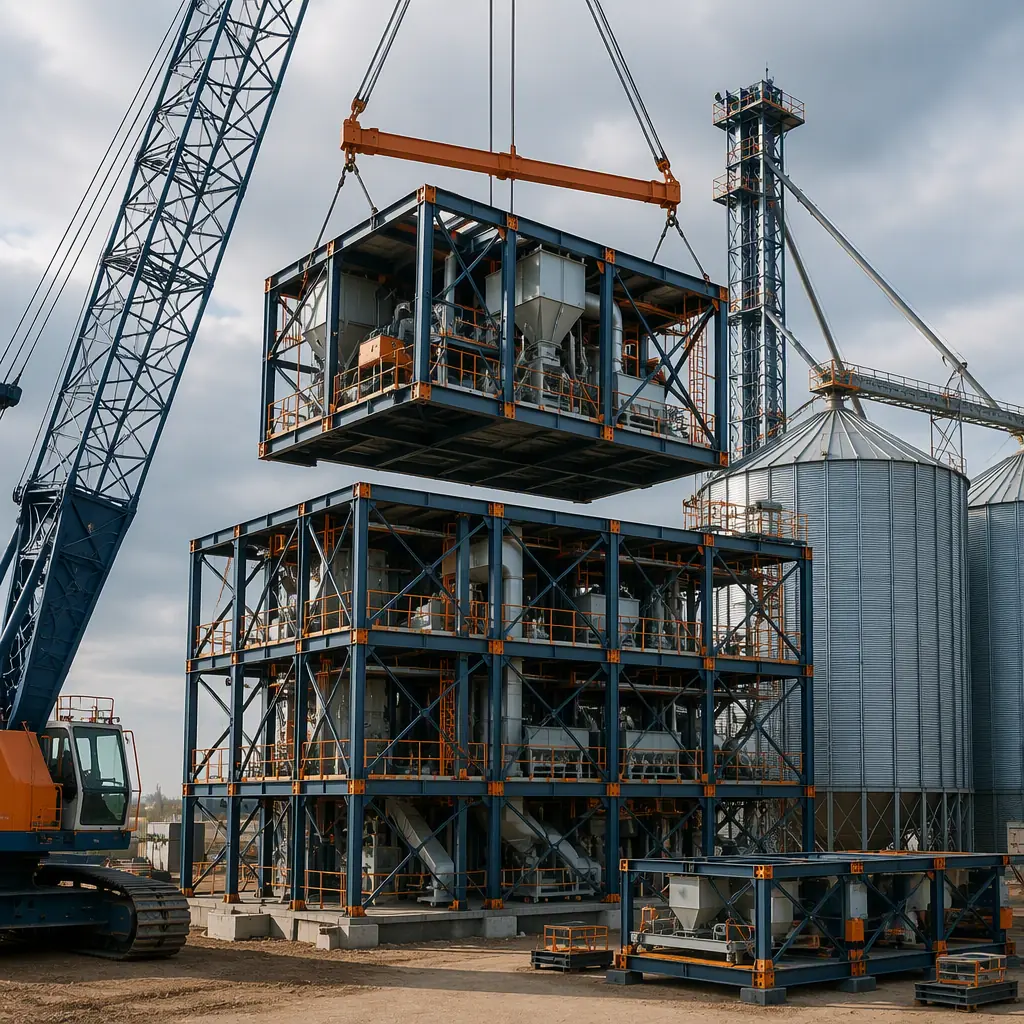
The Milling Flow & Process Modules
The milling flow is a gravity-driven sequence, and the module is engineered around it. The grinding deck carries the hammer mill or roller mill with the intake, the feed-control and the dust-collection hood, and the ground material drops into the surge bin below. The mixing and batching level carries the weigh-hopper and the ribbon or paddle mixer, with the micro-ingredient and liquid-addition system for the vitamins, minerals, oils and enzymes that make a complete feed. The conditioning and pelleting deck carries the conditioner, the pellet mill and the pellet cooler, then the bagging hall with the bagging scales, the sealer and the palletizer. Each deck is a module with its conveying, its dust hood, its access platform and its equipment pre-installed, so the vertical flow mates up at the module-to-module interface rather than being field-erected deck by deck. The process layout follows the production-engineering discipline we document for modular factory QA/QC, and the equipment-housing engineering we document for modular light-industrial facilities.
Grain Storage & Conveying
The grain-handling side of the mill is where the bulk material flow lives. The intake pit and the receiving and separator unit bring the grain in from the truck and remove the dockage, then the bucket elevator leg carries it to the top of the storage, and the drag or chain conveyor and the gravity-fed spouts draw it down to the mill as needed. The storage bins and silos are the site-natured structure, but the elevator leg, the conveyor housing, the spouts and the transfer chutes are designed to mate with the modular mill, and the grain-temperature and moisture monitoring is specified in the control system. The finished-product side uses the pneumatic conveying system for the flour and the meal, with the rotary blower, the filter and the piping engineered as a factory-built package. The materials-flow and storage engineering follows the discipline we document for modular industrial facilities and the temperature-and-moisture control we document for modular cold storage construction, where the same bulk-material handling and climate control logic applies.
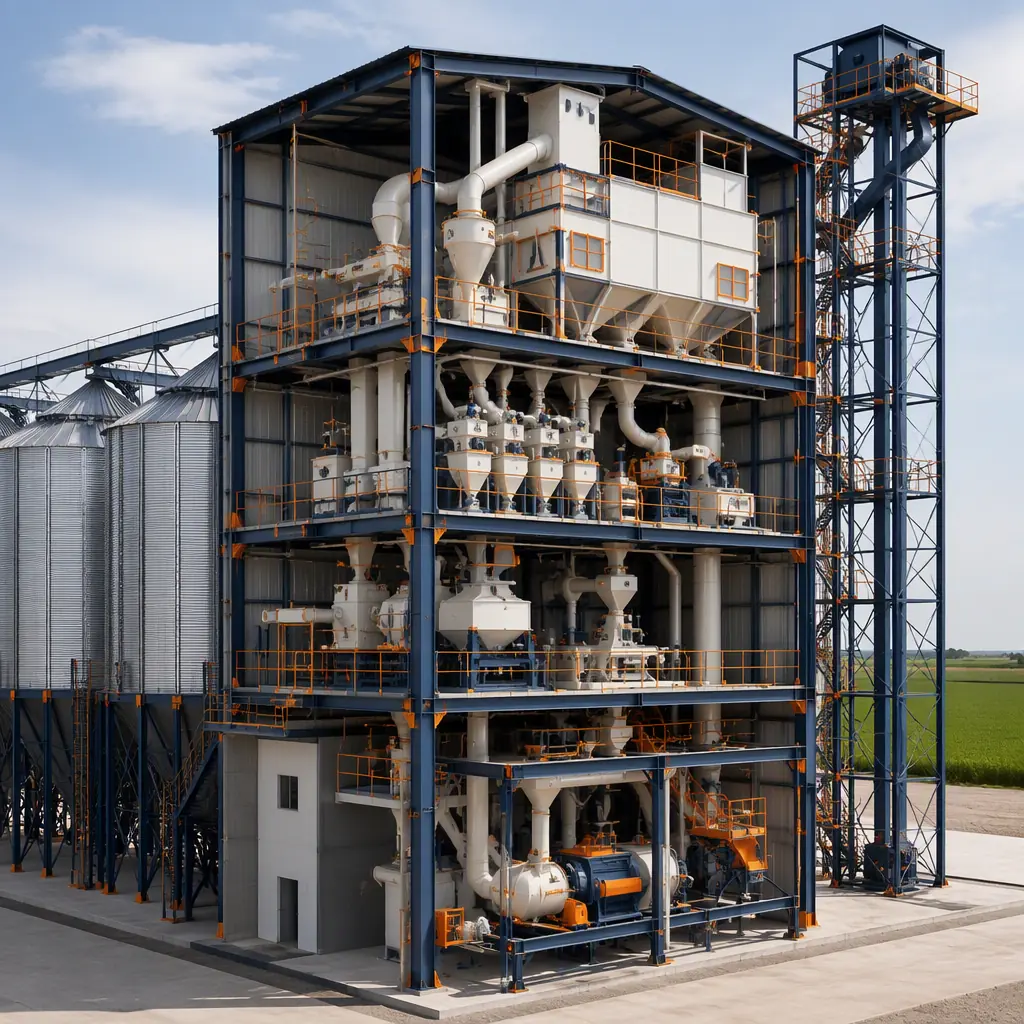
MEP & Automation for a Milling Occupancy
The mechanical, electrical and plumbing systems in a grain mill are built around the dust hazard and the automation. The electrical service for a 30 t/hr feed mill typically runs 600–1,500 amps to carry the mill drives, the bucket elevators, the pellet mill, the compressors and the pneumatic conveying, and the classified-area motor controls and the variable-speed drives are specified to the dust zone, the MEP integration discipline we document for modular MEP systems integration. The dust-collection system is the priority: the mill is maintained under negative pressure with the baghouse or cartridge filter pulling the dust from the mill, the elevators and the spouts, and the module carries the ducting and the filter-and-fan package pre-installed. The automation ties the grinding, mixing, conditioning and pelleting steps together with the batch-weighting and the recipe control, and the grain-moisture and temperature monitoring feeds back to the process, the control and data-traceability engineering we document for modular factory quality control and the scheduling we document for modular construction scheduling.
Cost Structure, Modular vs. Site-Built Grain & Feed Mills
| Facility Type | Site-Built | Modular |
|---|---|---|
| 10 t/hr feed mill, grinding & mixing | $3.0–4.6M / 11–14 months | $2.6–4.0M / 14–20 weeks |
| 30 t/hr feed mill, pelleting & bagging | $6.0–9.0M / 14–18 months | $5.2–7.8M / 18–28 weeks |
| Flour mill with roller milling, 150 t/day | $9–14M / 15–19 months | $7.8–12M / 20–30 weeks |
The 10–15% capital saving matters less than the time-to-production reality: a mill is a working asset tied to the harvest and the feed demand, and every month of construction delay is a month of capacity and margin lost. The modular schedule compresses the build by 6–9 months, which for a feed plant chasing a protein-production expansion can be the difference between supplying the facility and watching it source from a distant incumbent. For the full cost methodology, see our 2026 modular construction cost guide.
Phasing, Expansion & Delivery
The mill schedule is driven by the feed or flour demand and the start date. Modular delivery front-loads the dust-hygiene, the conveying and the process engineering into the factory while the storage, the foundation and the utilities proceed on site, and the installation sequence is coordinated around the critical handoff: the grinding and mixing levels are installed and commissioned first so the mill can start producing even while the bagging hall and the office are being connected, the phased-commissioning pattern we document for modular building additions and expansions. For a feed mill serving a growing protein or aquaculture sector, the modular model lets standard processing levels repeat and expand across sites with consistent engineering and a predictable schedule, the repeatable-facility model we document for modular construction partner evaluation and the rapid-deployment logic we document for modular construction logistics. Because a mill is one of the most process-dense and dust-sensitive buildings to construct, the factory-built approach is where the schedule saving is largest, the modules arrive pre-wired, pre-dusted and pre-tested, so the mill opens grinding rather than opening as a construction site.
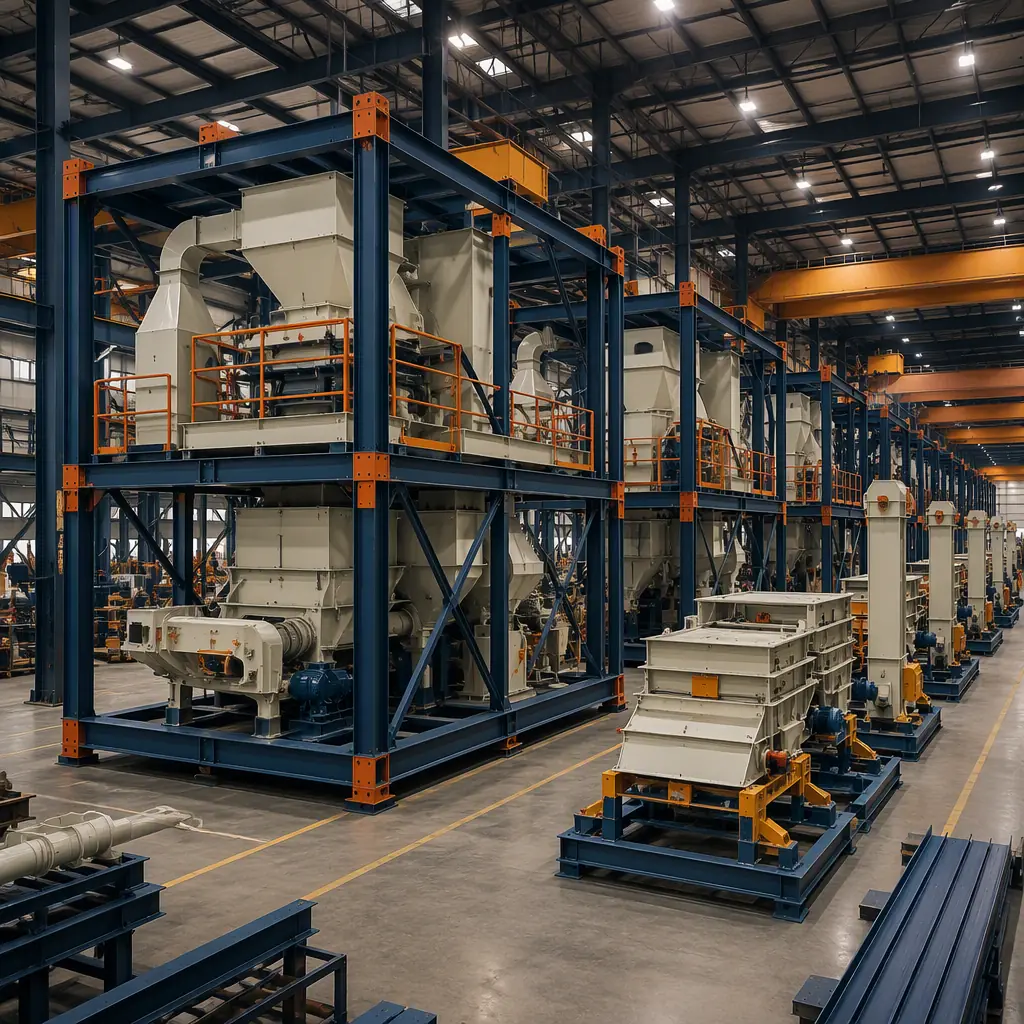
Is Modular Right for Your Grain or Feed Project?
Modular delivery creates the strongest value for feed and grain companies building under a feed-demand deadline, producers expanding or replicating a milling plant, and operators requiring dust-explosion-safe construction delivered to a tight schedule. The same factory-built model serves a 10 t/hr grinding and mixing plant, a 30 t/hr pelleting and bagging mill and a 150 t/day flour mill. And because the milling decks, the conveying and the handling arrive factory-built, dust-protected and tested, the day the first tonne is processed is a date on the calendar, not the end of a construction project.
Planning a grain or feed milling facility? Request our industrial facility documentation package, dust-explosion-safe design, milling-flow and process layouts, grain-handling and conveying packages, bagging hall designs, and production-ready installation schedules. Contact the MODURA engineering team.