Fish and seafood processing is a cold-chain factory business with a tighter regulatory clock than almost any other food category. Unlike meat, which is inspected by USDA FSIS, fish and fishery products fall under FDA jurisdiction and the Seafood HACCP regulation (21 CFR 123), which requires a written hazard analysis covering biological, chemical and physical hazards — including scombrotoxin formation in tuna, pathogen control in molluscan shellfish, and allergen cross-contact across a facility that may process dozens of species. Product temperature is the operational lifeline: fresh fish must be held at or below 40°F from receiving to shipping, and most facilities add ice or flake-ice systems that consume 0.5–1 pound of ice per pound of raw product. A site-built seafood plant typically takes 16–24 months from concept to first production, and the process rooms — receiving, grading, filleting, packing, IQF freezing, cold storage — are built by different trades in sequence, each waiting on the last. Modular prefabricated construction compresses that schedule dramatically. The receiving module, the filleting room module, the IQF line module and the freezer modules arrive from the factory with food-grade wall and floor systems, drainage, refrigeration and utility rough-ins pre-installed, then are connected on site in weeks. A 10,000–20,000 sq ft processing plant can be delivered in roughly half the time of site-built construction, using the same factory-built food facility model we document for modular meat processing and slaughter facilities and modular cold storage construction. This guide covers the seafood plant program, FDA sanitary design, temperature zoning, freezing and cold chain engineering, wastewater, cost structure and delivery phasing.
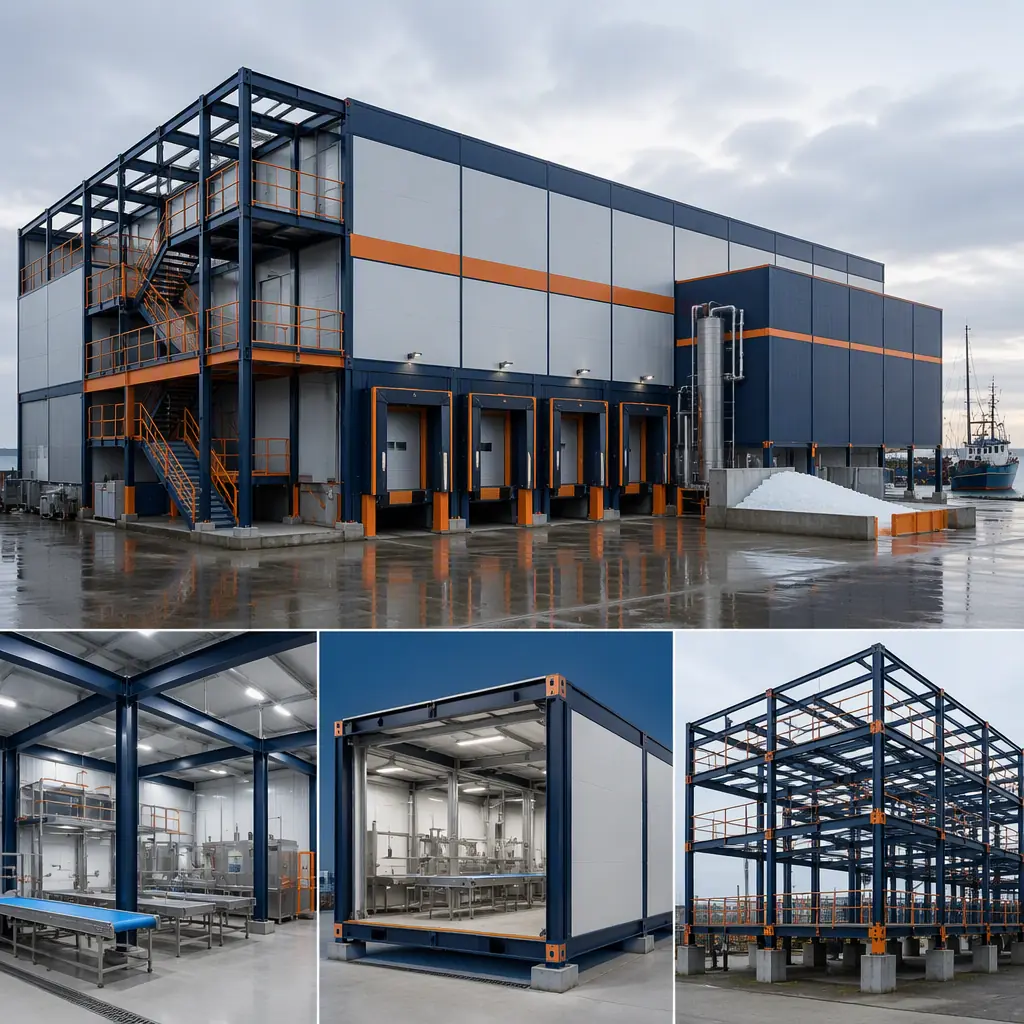
What a Fish Processing Plant Program Builds
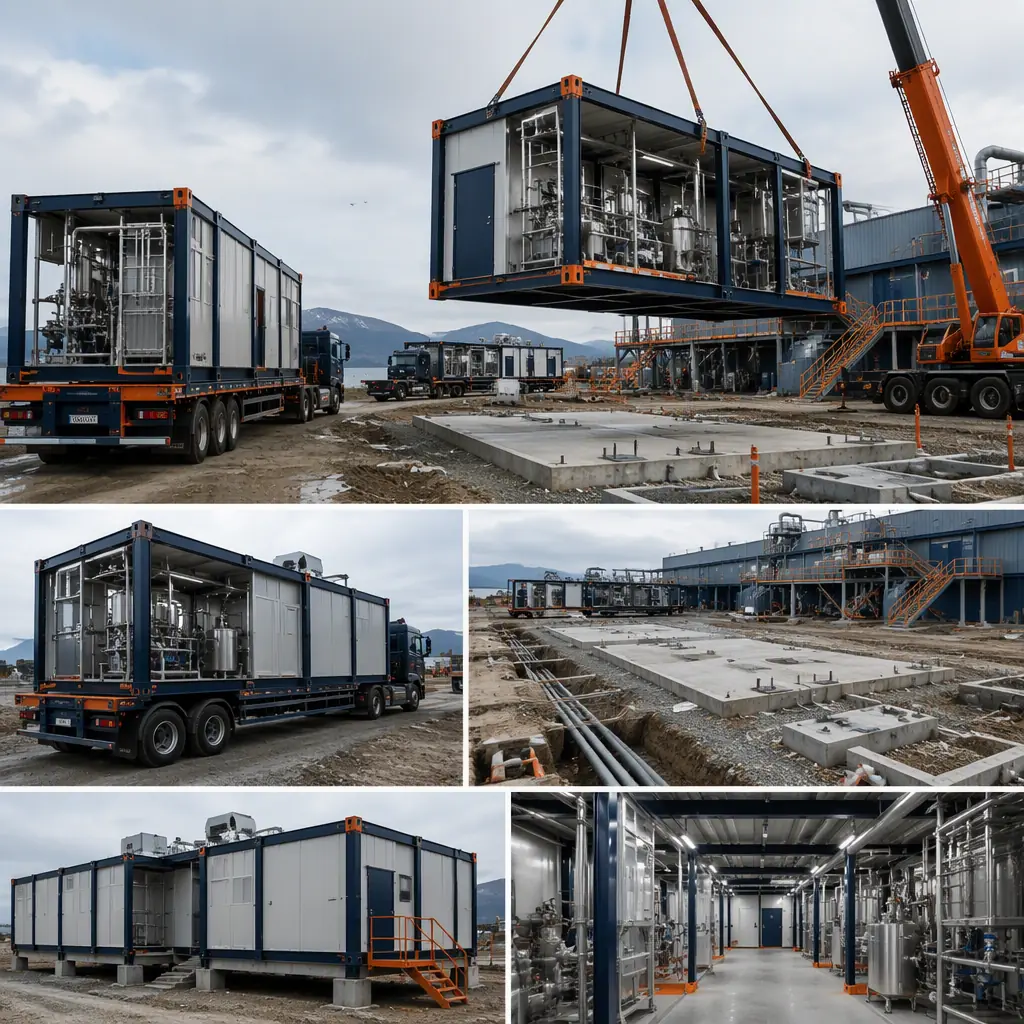
A seafood processing facility is a temperature-sequenced factory. The receiving program includes the raw-material dock or door, the grading and sorting area, and the flake-ice storage and dispensing system. The primary processing program includes the heading, gutting, skinning and filleting line, where whole fish become dressed product. The further-processing program includes the portioning and breading line, the value-added assembly room and the raw pack room. The freezing program includes the IQF (individually quick frozen) tunnel or plate freezer, the glazing and packing line, and the cold storage freezer. The support program includes the washdown and sanitation room, the wastewater pretreatment area, the refrigeration plant and the ice machine room. What makes the program modular is that every room is a factory-built steel-frame module with its food-grade finishes, drainage, utilities and process infrastructure pre-installed — the same room-level engineering discipline we document for modular heavy industrial construction, applied to the most perishable product in the food supply chain. For land-based producers, the same processing program connects directly to modular aquaculture and fish farm facilities, where the harvest line feeds the processing modules.
FDA Sanitary Design & Seafood HACCP
FDA seafood regulations require facilities that process fish and fishery products to operate under a HACCP plan, and the physical plant must support it: cleanable smooth surfaces, adequate drainage, separation of raw from cooked or ready-to-eat product, temperature monitoring, and potable water supply. Factory fabrication delivers these requirements with repeatable precision. Food-grade FRP or stainless panels are installed with sealed joints in a controlled environment, floor slopes toward drains are cast into the module frame, and every penetration is finished cleanable before shipment. For facilities handling molluscan shellfish, the plant must maintain cold chain records from harvest to consumption — the module arrives with its temperature monitoring and alarm infrastructure factory-installed. The factory quality-control process — inspection at every workstation, documented before the module ships — is the methodology we document for modular factory QA/QC systems, and the hygienic-zone discipline aligns with the clean environments we build for pharmaceutical GMP facilities. Because the HACCP plan is written around the actual facility layout, a factory-documented module plan accelerates the FDA plan approval and the facility's first inspection.
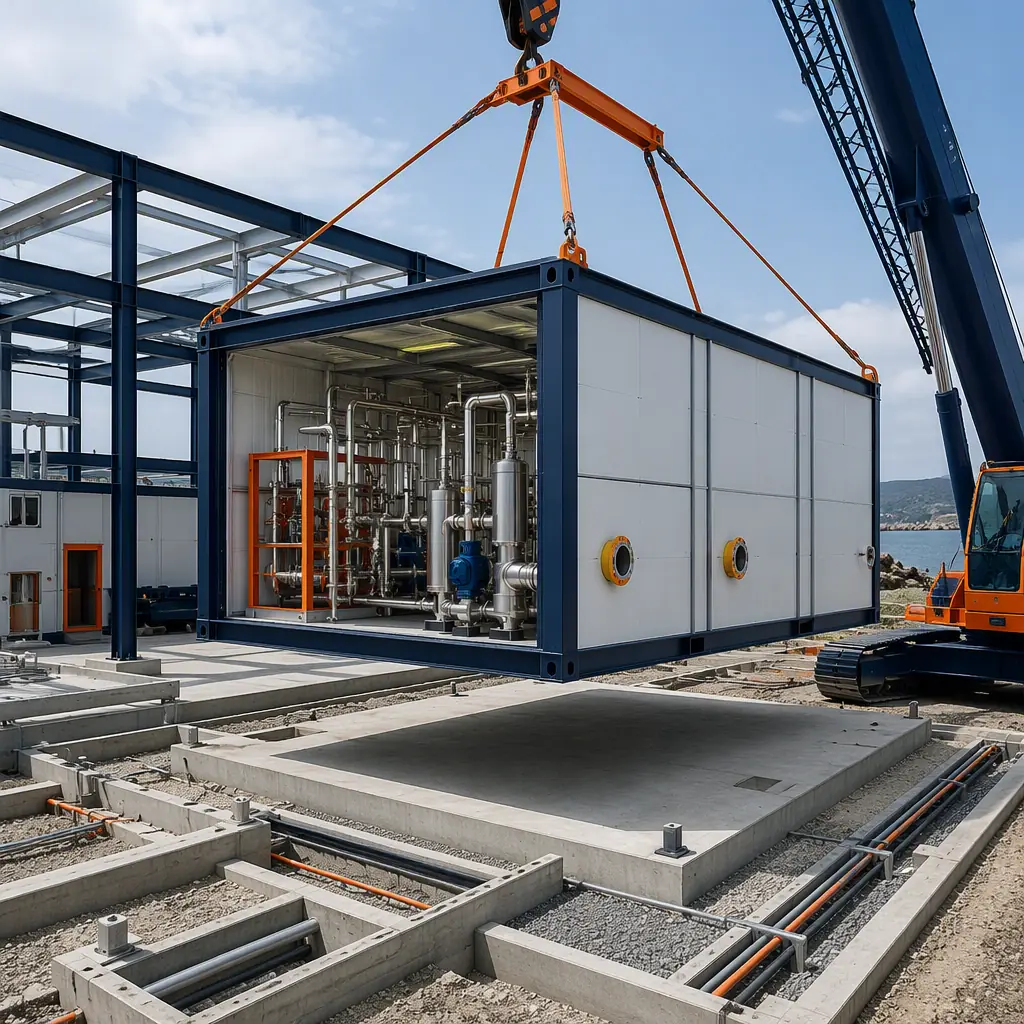
Temperature Zoning & Process Flow
A seafood plant is a sequence of cold zones, and the layout must enforce both the cold chain and the separation of raw from ready-to-eat product. Whole fish arrive at 33–40°F on ice, move to the grading and filleting room (held at 40–50°F), then to the pack room (40–45°F) or directly into the freezing line, and finally into the freezer at -10°F to -20°F. Each transition is a physical door with a vestibule or airlock, and personnel movement follows one-way logic: no path leads from cooked or ready-to-eat areas back into raw processing without passing through a sanitation checkpoint. Modular construction makes these zones explicit and auditable: each temperature zone is a separate module set with its own insulated envelope, the transition modules carry the airlock doors and handwash stations factory-installed, and the HVAC and refrigeration strategy uses pressure cascades from the cleanest to the least-clean zones. The temperature and airflow engineering — positive pressure in packing, negative pressure in raw processing — is the mechanical discipline we document for modular MEP systems integration, where factory-installed systems turn a field-heavy build into a plug-and-play connection.
IQF Freezing, Ice Plants & Cold Chain Engineering
The freezing program is the capital core of a seafood plant. An IQF tunnel freezes individual fillets or shrimp to a core temperature of 0°F or below in 15–45 minutes using high-velocity air at -30°F to -40°F; a plate freezer handles blocks of product for further processing. The refrigeration plant for a 15,000 sq ft facility typically needs 150–300 tons of ammonia or CO2 capacity, with the evaporators, recirculation pumps and controls factory-mounted on the refrigeration module skid. Flake ice is a second utility: a plant processing 40,000 pounds of fish per day needs 20,000–40,000 pounds of ice per day, produced by an ice machine and stored in a refrigerated bin module. The cold-chain engineering — insulation R-values, door seals, evaporator sizing and temperature monitoring — is the same discipline we document in modular cold storage construction, where temperature-controlled modules are designed as part of the building rather than added afterward. For plants that cook or pasteurize product, the heat-processing module brings its own ventilation and fire-safety engineering, aligned with the passive protection standards we document for modular fire safety construction.
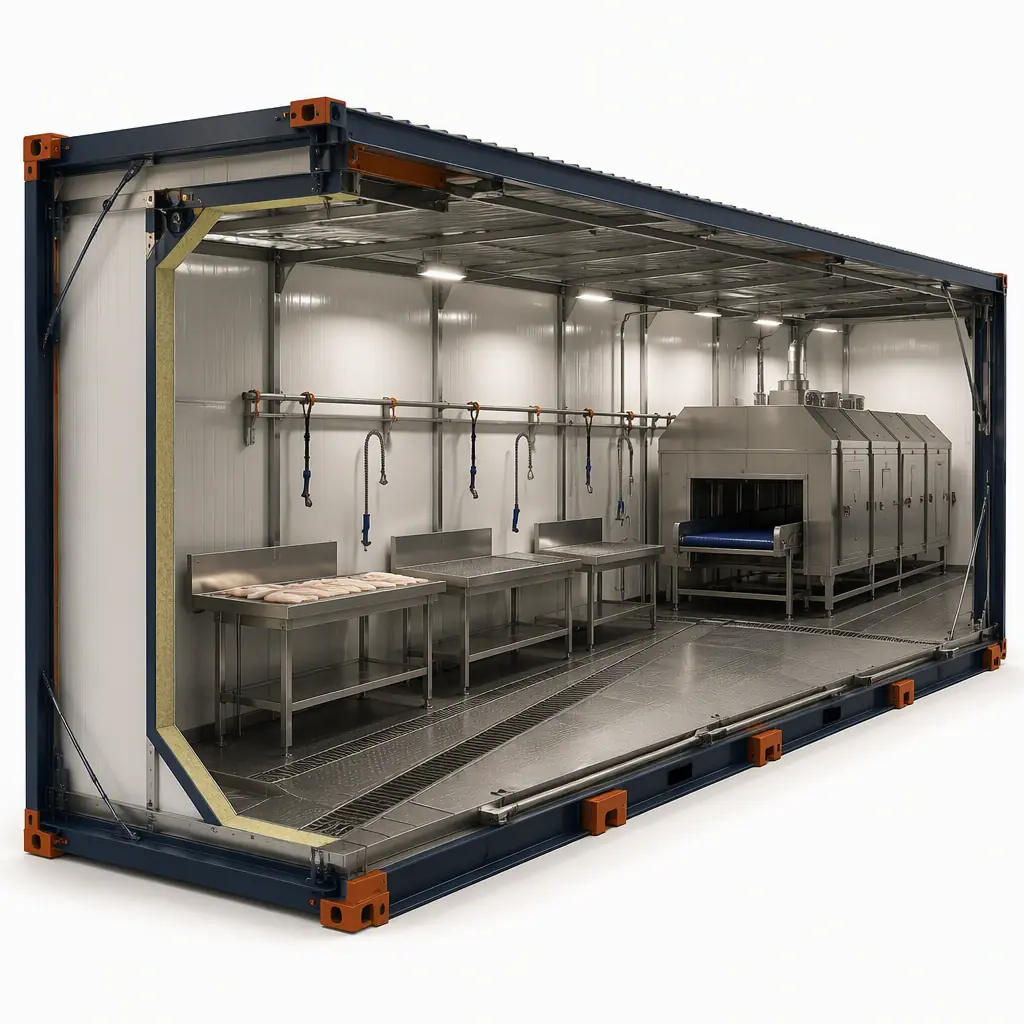
Species Programs: Finfish, Shellfish & Value-Added Lines
Seafood plants are rarely single-product operations, and the facility program must absorb species diversity without cross-contamination. A typical regional plant processes finfish (salmon, whitefish, tilapia), shellfish (shrimp, crab, scallops) and value-added products (breaded portions, smoked fish, surimi) under one roof, with each program carrying its own hazard profile. Finfish lines handle whole fish and fillets with ice fluming and skinning machines; shrimp lines add peeling, deveining and grading equipment with heavy water use; molluscan shellfish require wet storage or depuration systems that recirculate treated seawater; and value-added lines bring in breading, battering and cooking equipment with their own ventilation and fire suppression. Modular delivery handles this diversity with a spine-and-branch layout: a shared cold chain spine of receiving, ice, freezing and cold storage modules, with dedicated process modules branched off it for each species program. The process engineering — equipment integration, water supply and drainage, and cleaning access — is the discipline we document for modular agricultural and food processing buildings, and the raw-to-cooked separation logic follows the hygienic zoning we build into modular restaurant and commercial kitchen facilities.
Washdown, Sanitation & Wastewater
Seafood plants are washed down with high-pressure hot water and sanitizer after every shift, and the building must survive decades of that environment. The washdown engineering includes pressure-rated wall and ceiling systems, floor drains sized for full-volume flush, a hot water generation plant — a processing plant can use 60,000–200,000 gallons of water a day — and the sanitation chemical storage and dispensing modules. Wastewater is a second regulatory program: seafood processing effluent carries high organic loads, with BOD typically 2,000–6,000 mg/L, and most plants need dissolved air flotation (DAF) or biological pretreatment before municipal discharge. The wastewater module set — screening, DAF, pH control and equalization — is factory-built and connected on site, following the treatment engineering we document for modular water and wastewater treatment facilities. The washdown program also drives the mechanical room design: boilers for hot water, water softeners and the sanitation system all arrive pre-piped in the plant room module, so the contractor connects the gas, water and power and commissions rather than building a plant room from scratch.
Cost Structure — Modular vs. Site-Built Seafood Plants
| Facility Type | Site-Built | Modular |
|---|---|---|
| Small filleting + pack plant, 10,000 sq ft | $7–11M / 16–22 months | $6–9.5M / 9–13 months |
| IQF + cold storage processing plant, 15,000 sq ft | $11–18M / 20–26 months | $9.6–15.5M / 11–15 months |
| Freezer + cold dock addition, 15,000 sq ft | $5–8M / 12–16 months | $4.4–7M / 6–9 months |
The 10–15% capital saving is secondary to the revenue math: a seafood plant that opens 8–12 months earlier starts processing sooner, locks in harvest and supply contracts, and begins serving the market while a site-built competitor is still under construction. For the full cost methodology, see our 2026 modular construction cost guide.
Phasing, Permitting & Delivery
The seafood plant schedule is driven by the site, the refrigeration plant and the FDA facility registration process. Modular delivery front-loads the process engineering into the factory while the pad, utility services and refrigeration connections are installed on site, and the installation sequence is coordinated around the critical connections: the ammonia or CO2 refrigeration lines, the process water supply and the wastewater tie-in are verified before the modules arrive so the plant connects in days, not weeks. The critical-path discipline — factory slots, module sequencing and site readiness — is the scheduling methodology we document in modular construction scheduling, and the permitting strategy for food facilities follows the accelerated path we document for modular construction permitting and zoning, where factory-built structures often qualify for expedited review because the design is documented and repeatable. The FDA registration and HACCP plan timeline runs in parallel with construction, so the plant can be ready to produce when the certificate arrives.
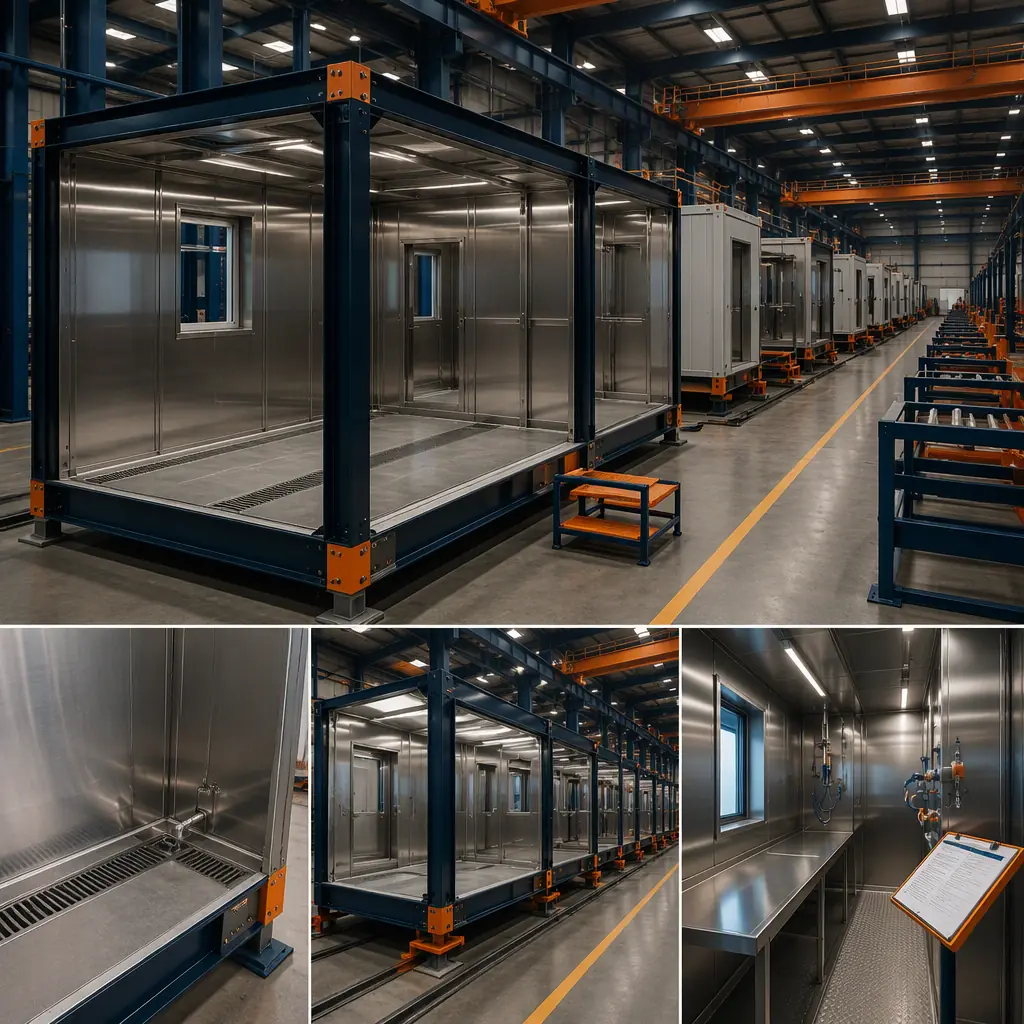
Is Modular Right for Your Seafood Processing Project?
Modular delivery creates the strongest value for processors building a new facility on a tight harvest schedule, expanding an existing plant with a connected freezing or processing module, or standardizing a facility design across multiple ports or farming sites. The same factory-built model serves 5,000 sq ft packing additions, 10,000–20,000 sq ft standalone plants and full receive-to-freeze facilities — and because the process rooms, IQF lines and freezers arrive factory-built with food-grade finishes and tested utilities, the plant is ready for its first production run the day the modules are connected and commissioned.
Planning a fish or seafood processing facility? Request our food-facility documentation package — FDA sanitary design drawings, temperature zone layouts, refrigeration engineering specifications, and installation schedules. Contact the MODURA engineering team.