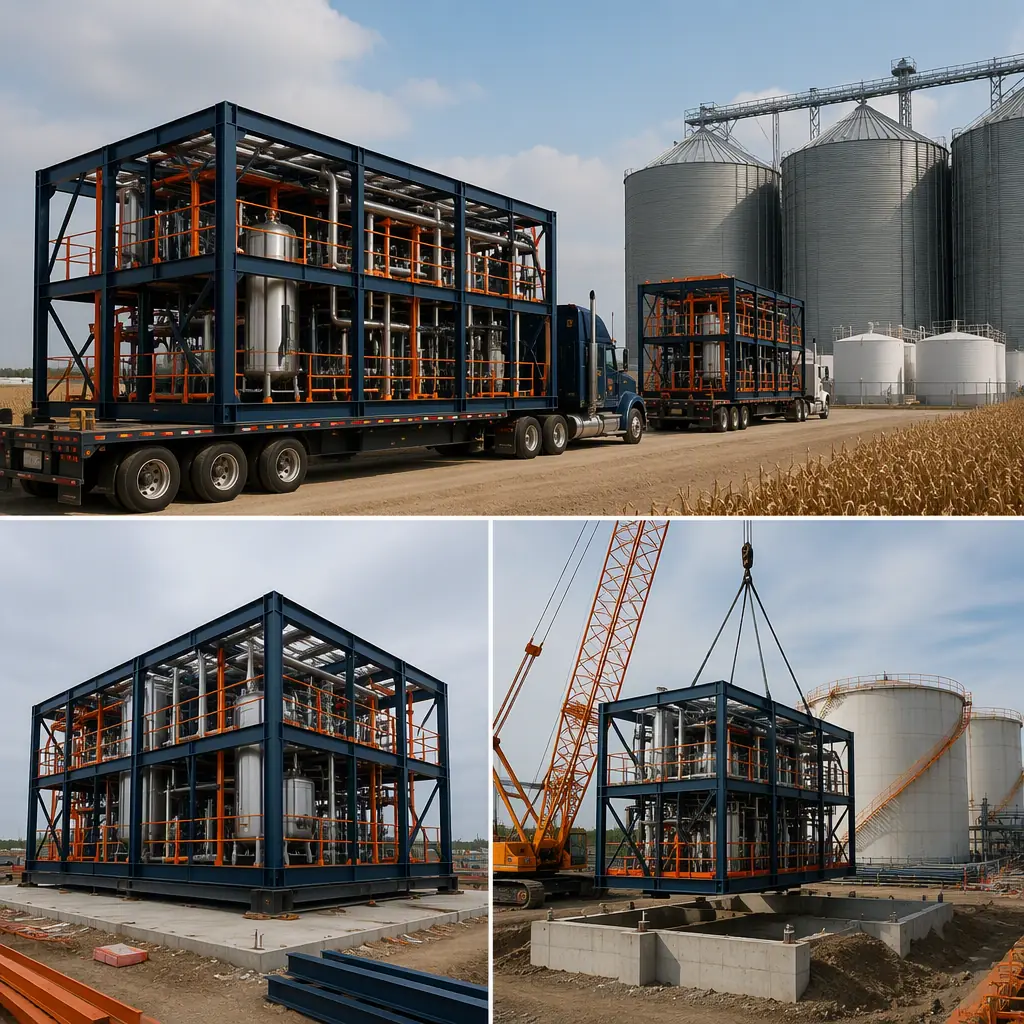
A biofuel plant is a continuous chemical process wrapped in a building. The corn dry-mill runs grain from intake through grinding, slurrying, liquefaction and saccharification, then fermentation, distillation, molecular-sieve dehydration and ethanol storage, while a parallel side-stream dries the distillers grains into DDGS and recovers the corn oil — the whole train tied together by a thermal oxidizer, a boiler and a dryhouse. The biodiesel plant does the same with feedstock handling, transesterification, methanol recovery and glycerin separation. Every one of those steps produces either combustible grain dust, flammable ethanol or methanol vapour or a hot surface, so the biofuel building is engineered to a dual hazard standard: the grain-dust spaces to NFPA 61 and the process-and-storage spaces to the flammable-liquid and vapour classification in the electrical code. Site-built biofuel plants routinely run 18–24 months because the grain-handling, the fermentation and distillation vessels, the dryhouse, the utilities and the electrical are built by different specialties in sequence around a tall, chemically-natured process building. Modular prefabricated construction changes that: the intake, the milling and slurry deck, the fermentation hall, the distillation and dehydration level, the dryhouse and the ethanol-storage support buildings are manufactured as steel-frame modules in the factory while the grain storage, the tank farm, the foundation and the long-lead process vessels proceed on site, and the modules are then delivered, stacked and connected in a weeks-long installation window. A 50–60 million gallon per year corn dry-mill with a milling and slurry deck, a fermentation and distillation hall, a dryhouse and an ethanol storage complex can be designed, manufactured and installed in 14–20 months — roughly 30% faster than site-built delivery — following the same factory-built logic we document for modular grain and feed milling facilities and modular waste-to-energy facilities. This guide covers the biofuel program, the dual hazard engineering, the process-module approach, and the capital and schedule case for going modular.
What a Biofuel or Ethanol Program Builds
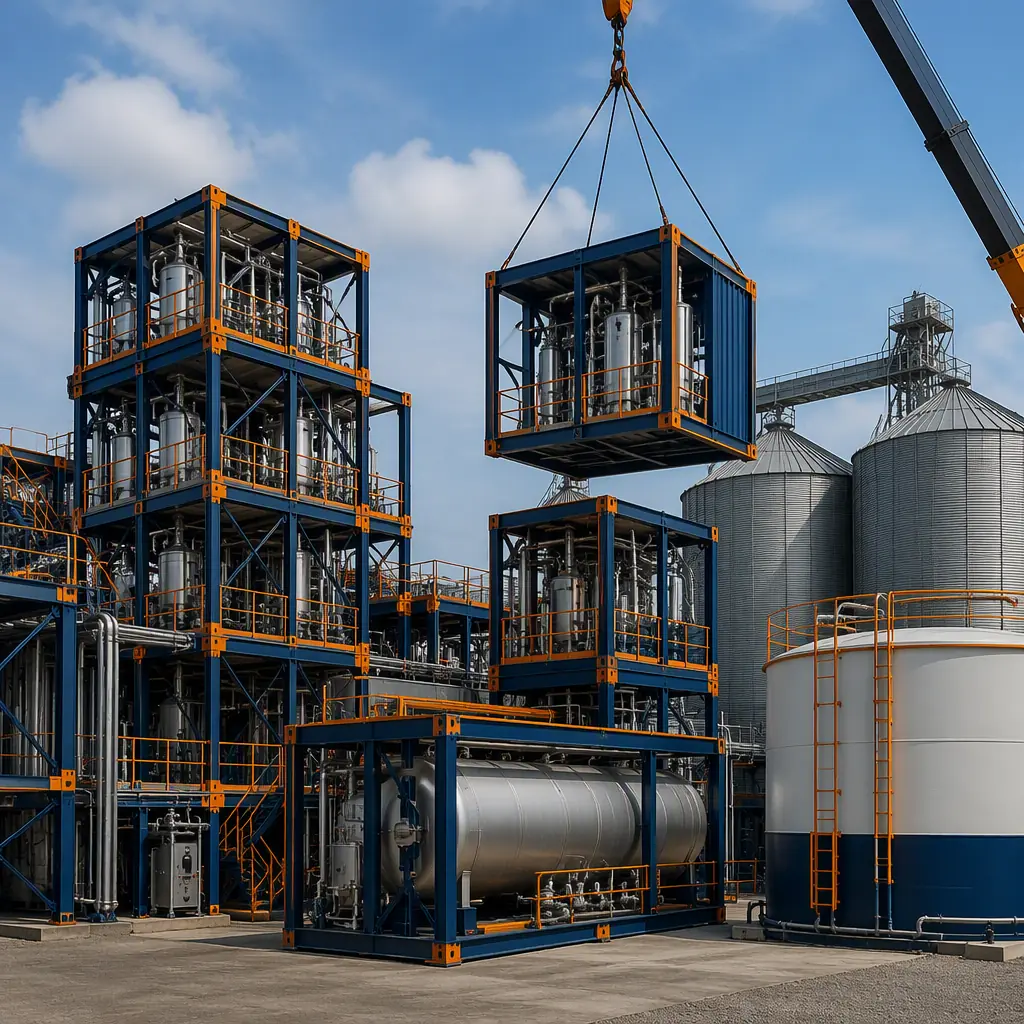
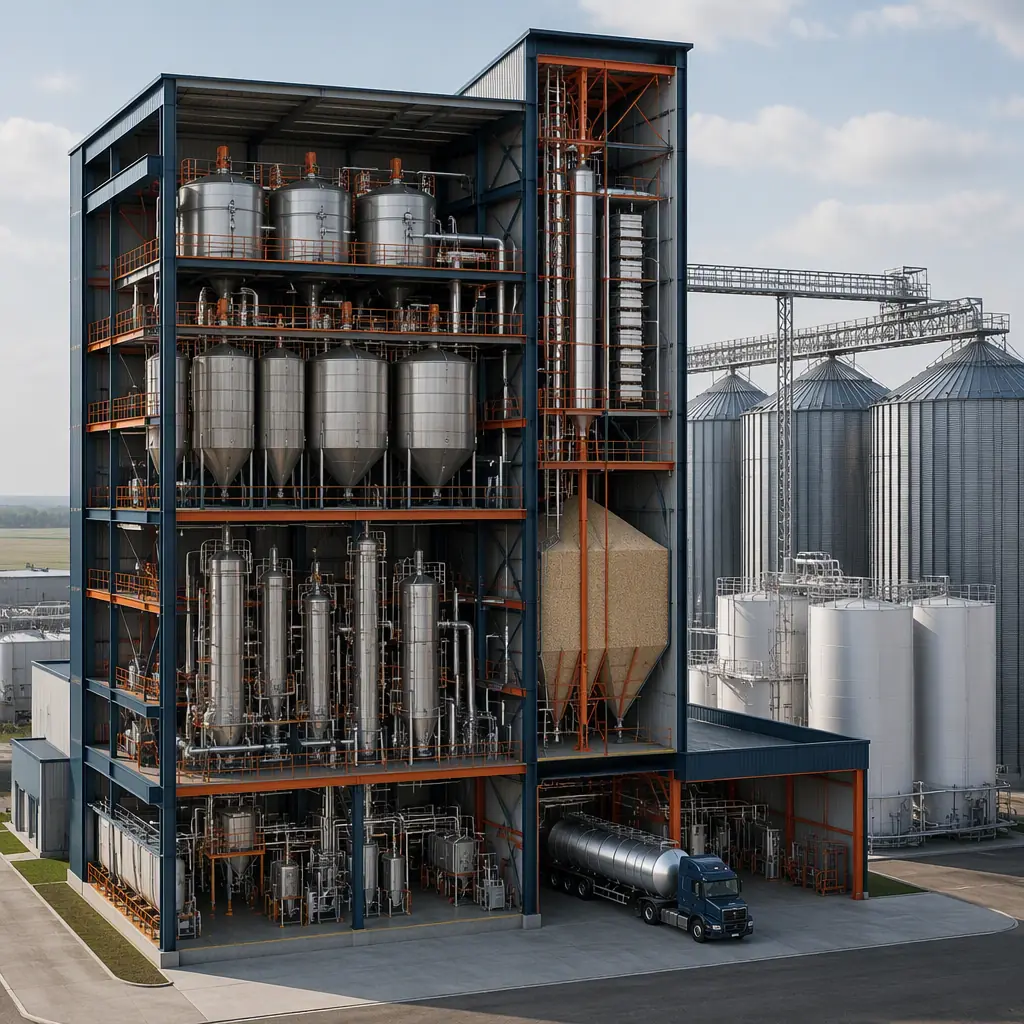
A corn dry-mill combines a grain program and a fermentation program. The grain side includes the intake and receiving area, the grinding and milling deck, the slurry and liquefaction tanks and the grain storage bins and silos. The process side includes the fermentation hall with the fermenters and the yeast propagation, the beer column and the stripping column, the rectifying and molecular-sieve dehydration level, the ethanol storage tanks and the load-out rack, and the dryhouse with the DDGS dryer, the cooler and the bagging or bulk-loading hall. The support side has the boiler house, the thermal oxidizer, the cooling tower, the corn-oil recovery, the electrical substation and MCC room, the control room and the laboratory. What makes it modular is that each process level and each support building is a factory-built steel-frame module, with the piping, the instrumentation, the electrical and the fire-protection pre-installed and aligned to the module-to-module interface — the process-dense discipline we document for modular heavy-industrial construction and the room-level building approach we document for modular light-industrial manufacturing facilities.
Dual Hazard Engineering & Compliance
The hazard breakdown is what makes a biofuel plant a specialist build. The grain-handling and milling areas are engineered to the NFPA 61 combustible-dust standard: the bucket-elevator legs and the handling ducting are dust-tight, the dust spaces are vented to release an event safely, and spark detection protects the conveying path. The fermentation, distillation, dehydration and ethanol-storage areas carry a flammable-vapour classification — the ethanol is a Class IB flammable liquid and the process areas are zoned to the electrical-code Class I hazard, so the equipment, the lighting and the instrumentation are rated for the hazardous location and the building is separated into the process and the non-process zones by rated partitions and air-lock transitions. The dual-hazard and the fire-protection engineering follows the discipline we document for modular construction safety and compliance and modular fire-safety construction, and the factory-built module lets the venting and the hazardous-location rating be commissioned and certified before the unit arrives.
The Fermentation, Distillation & Dehydration Modules
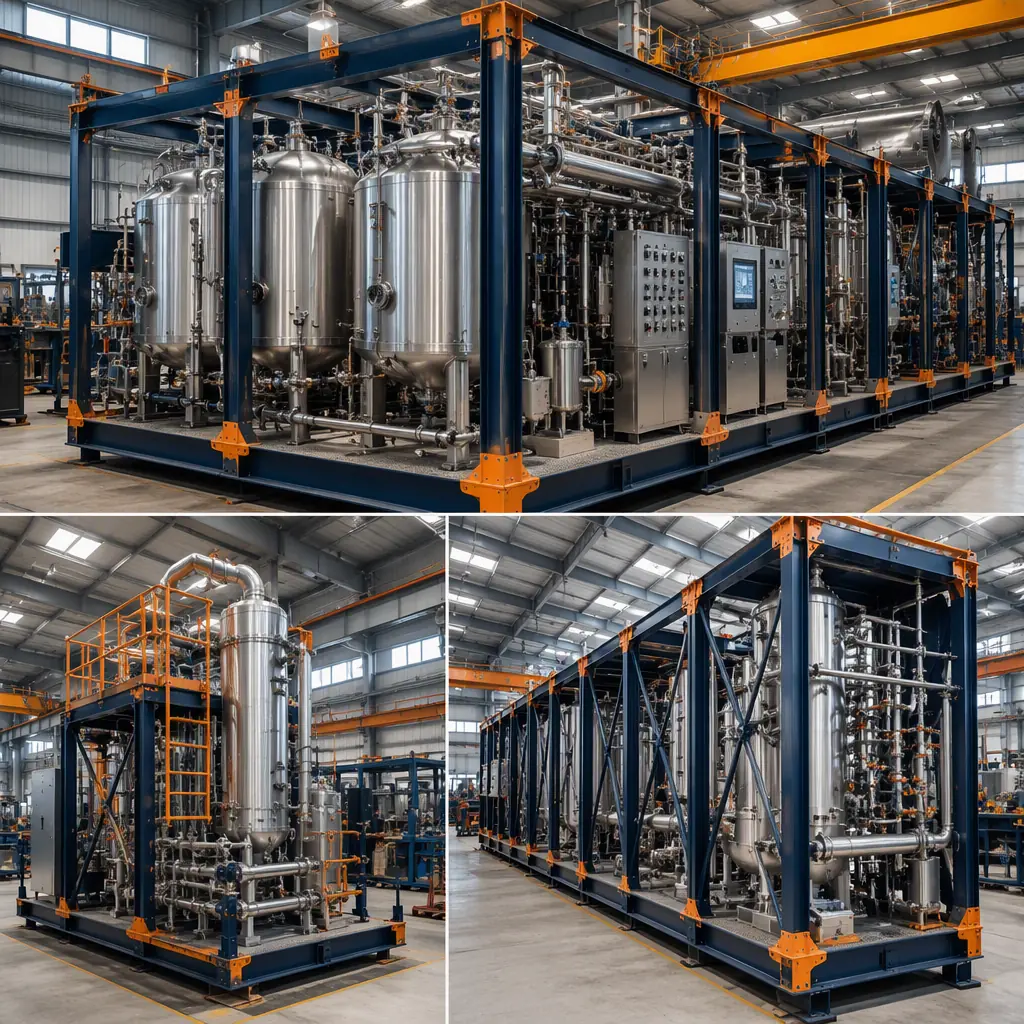
The process module is engineered around the chemical train. The fermentation hall is delivered as steel-frame modules carrying the fermenter vessels, the yeast-propagation and nutrient system, the temperature-control and cooling-water circuit and the local instrumentation, pre-wired and loop-tested so the hall is commissioned as a unit. The distillation and dehydration level carries the beer column, the stripping and rectifying columns, the molecular-sieve beds and the heat-recovery exchangers, all pre-piped and pre-mounted on the module frame so the vertical process flow mates up at the module-to-module interface rather than being field-erected column by column. The dryhouse module carries the DDGS dryer, the cooler and the thermal-oxidiser system with the conveying and the dust-collection hood pre-installed. Each module follows the production-engineering and loop-testing discipline we document for modular factory QA/QC and the packaged-utility engineering we document for modular MEP systems integration.
Feedstock Handling & Grain Storage
The grain side of a dry-mill is where the bulk material flow lives, and it mirrors the grain and feed mill model. The intake pit and the receiving and cleaning unit bring the corn in from the truck and remove the dockage, the bucket-elevator leg carries it to the top of the storage, and the drag or chain conveyor and the gravity spouts draw it down to the mill and the slurry tank. The storage bins and silos are the site-natured structure, but the elevator leg, the conveyor housing, the spouts and the transfer chutes are designed to mate with the modular mill, and the grain-moisture and temperature monitoring is tied into the control system. The finished side uses the pneumatic conveying for the DDGS and the corn oil, and the ethanol is moved by the dedicated pump and pipe to the storage and the load-out rack. The materials-flow engineering follows the discipline we document for modular agricultural and food-processing buildings and the temperature-and-moisture control we document for modular cold storage construction.
MEP & Automation for a Biofuel Occupancy
The mechanical, electrical and instrumentation systems for a biofuel plant are sized to the process load and the hazard. The electrical service for a 50 MGPY dry-mill typically runs 5,000–12,000 amps to carry the mill drives, the pumps, the blower, the fermenter agitators, the evaporator and the thermal-oxidiser, and the classified-area MCC and the VFDs are rated to the flammable-vapour zone — the integration discipline we document for modular MEP systems integration. The distributed control system ties the fermentation, distillation, dehydration and DDGS steps together with the batch and recipe control, the grain and the process analysers and the safety-instrumented system, all wired in the control module. The steam and the hot-oil generation, the cooling water and the thermal oxidiser are part of the utility module, pre-commissioned and pre-tested. The control and data-traceability engineering, the loop testing and the commissioning sequence follow what we document for modular factory quality control and the scheduling we document for modular construction scheduling.
Cost Structure — Modular vs. Site-Built Biofuel & Ethanol
| Facility Type | Site-Built | Modular |
|---|---|---|
| 25 MGPY corn dry-mill | $140–220M / 16–22 months | $120–195M / 12–16 months |
| 50 MGPY corn dry-mill, DDGS & corn oil | $260–400M / 18–24 months | $225–355M / 14–19 months |
| Biodiesel plant, 50 MMGY (used cooking oil) | $60–90M / 12–15 months | $52–80M / 9–12 months |
The 15–20% capital saving matters less than the time-to-fuel reality: a biofuel plant is a margin asset tied to the feedstock price and the renewable-fuel credit, and every month of construction delay is a month of capacity and margin lost. The modular schedule compresses the build by 4–7 months, which for a plant chasing a renewable-fuel-credit deadline or a feedstock contract can be the difference between supplying the market and watching a competitor start first. For the full cost methodology, see our 2026 modular construction cost guide.
Phasing, Expansion & Delivery
The biofuel schedule is driven by the feedstock supply, the renewable-fuel credit and the start date. Modular delivery front-loads the process, the instrumentation and the electrical engineering into the factory while the grain storage, the tank farm, the foundation and the long-lead vessels proceed on site, and the installation sequence is coordinated around the critical handoff: the utilities and the control building are installed and commissioned first, the fermentation and distillation modules are lifted and connected so the train can hot-commission in stages, and the dryhouse and the ethanol storage follow so the plant can produce fuel while the finishing work is completed — the phased-commissioning pattern we document for modular building additions and expansions. For a plant that builds a second line or a sister facility, modular lets the grain-handling and the process modules replicate across sites with consistent engineering and a predictable schedule — the repeatable-facility model we document for modular construction partner evaluation and the rapid-deployment logic we document for modular construction transportation and logistics.
Is Modular Right for Your Biofuel or Ethanol Project?
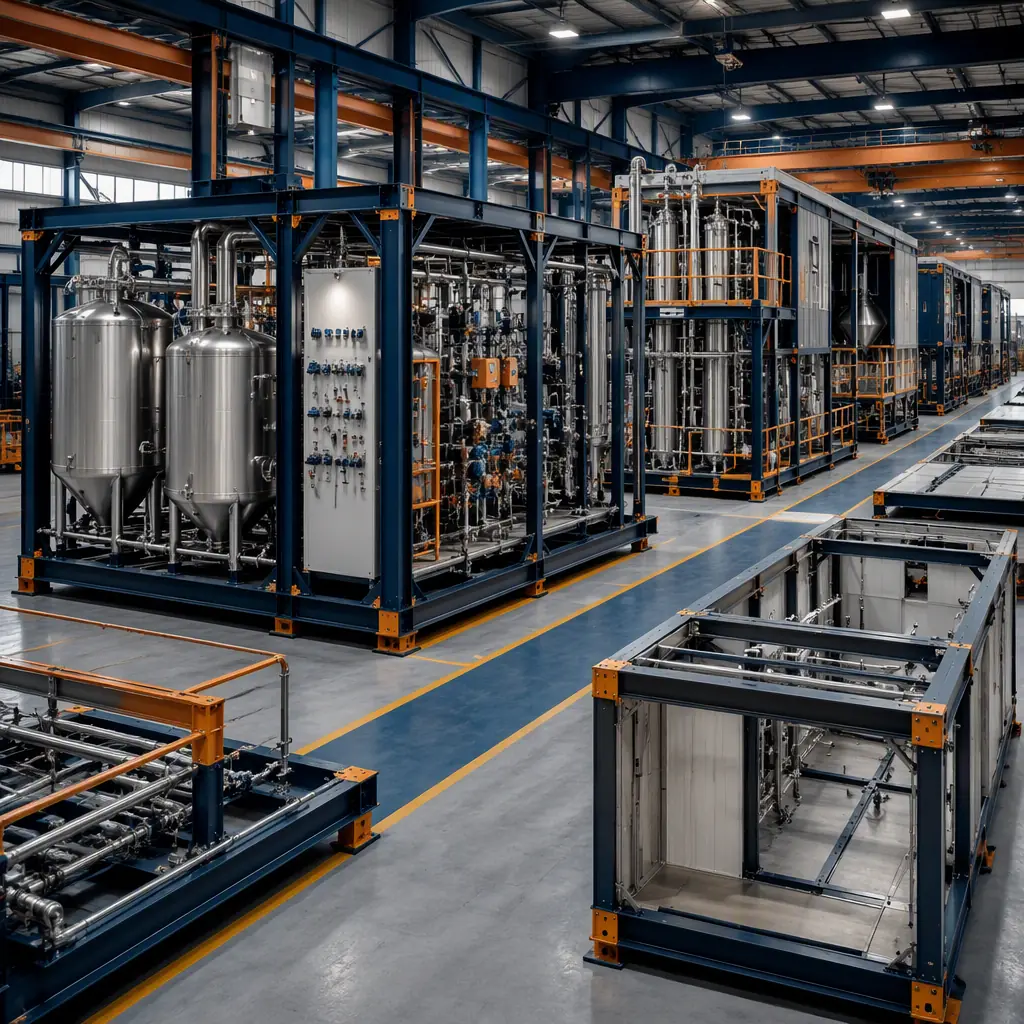
Modular delivery creates the strongest value for producers building under a renewable-fuel-credit or feedstock deadline, ethanol plants expanding or replicating a line, and biodiesel operators requiring dual-hazard-safe construction delivered to a tight schedule. The same factory-built model serves a 25 MGPY corn dry-mill, a 50 MGPY dry-mill with DDGS and corn-oil recovery, and a biodiesel unit running on used cooking oil — and because the fermentation, distillation, dehydration and dryhouse modules arrive factory-built, rated and tested, the day the first gallon is produced is a date on the calendar, not the end of a construction project.
Planning a biofuel or ethanol production facility? Request our industrial facility documentation package — dual-hazard (grain-dust and flammable-vapour) design, fermentation and distillation layouts, dryhouse and DDGS packing, ethanol storage and load-out designs, and production-ready installation schedules. Contact the MODURA engineering team.