A petrochemical plant is not one building; it is a network of process units, pipe racks, analyzer houses, laboratories, control rooms and utility systems, each with its own hazard classification and its own schedule. The ethylene cracker is the headline asset, but the plant only runs when the offsites, the transformer skids, the fire pump houses, the air separation modules and the control buildings are commissioned in the right order. Site-built petrochemical infrastructure typically runs 24–30 months because each of those support buildings is engineered and erected by a different specialty in sequence around an aggressive shutdown window. Modular prefabricated construction changes that: the separation, the refining, the chemical-reaction process skids and the occupancy support buildings are manufactured as steel-frame modules in the factory while the plot, the piling, the process equipment and the long-lead utility tie-ins proceed on site, and the modules are delivered, lifted and connected during a single planned window. A modular control building, a flameproof pump-house skid and a bundled analyzer house can be designed, manufactured and installed in 24–36 weeks, roughly 40% faster than site-built delivery, following the same factory-built logic we document for modular heavy-industrial construction and modular oilfield and energy infrastructure. This guide covers the petrochemical and oil-gas program, the hazardous-area engineering, the process-skid module approach, and the capital and schedule case for going modular.
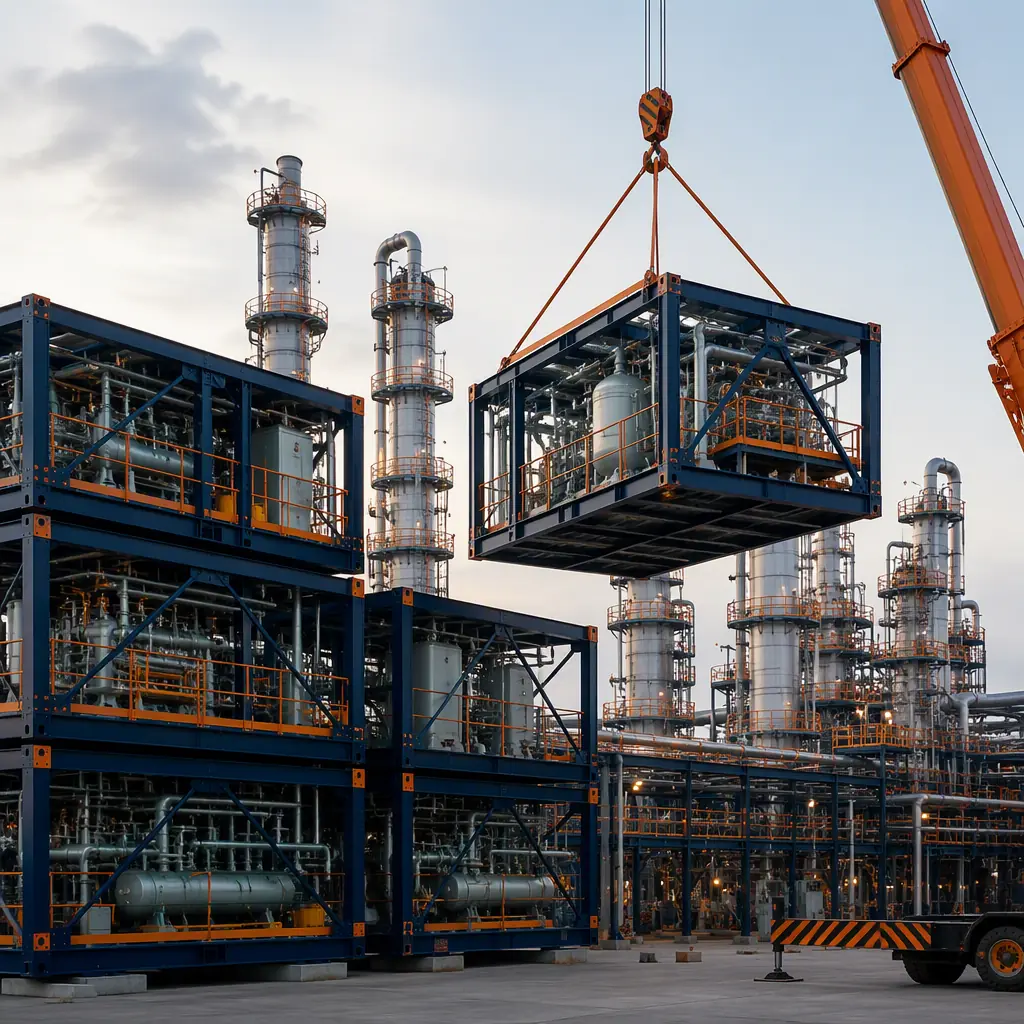
What a Petrochemical or Oil-Gas Facility Program Builds
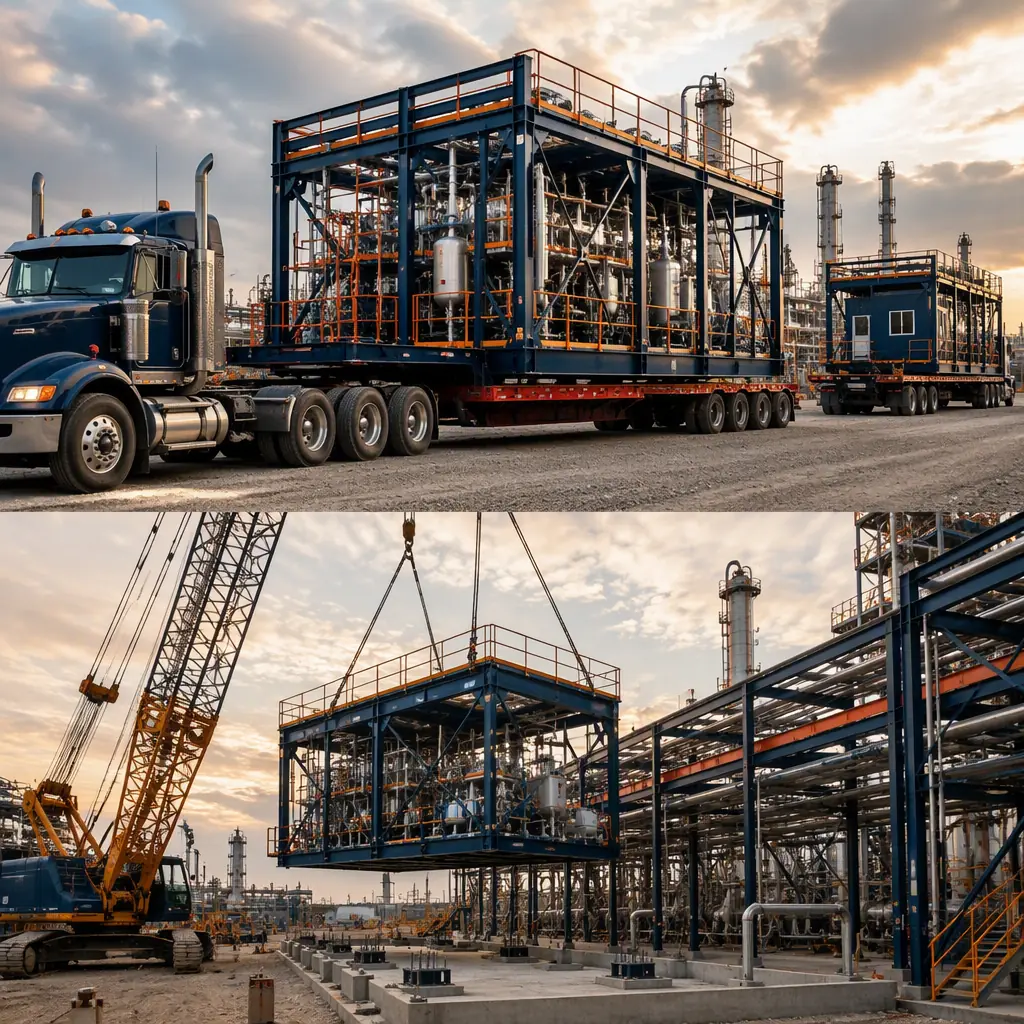
The program splits into process units and occupancy support. The process side includes the separation and knockout modules, the distillation and fractionation columns, the chemical-reaction and polymer-finishing skids, the compressed-gas and refrigeration modules, and the pipe-rack modules that carry the process lines between them. The occupancy side has the central control room, the analyzer and instrument houses, the electrical substations and switchgear rooms, the laboratories and QC stations, the maintenance and tool shop, the fire pump and deluge houses, the operator and admin buildings, and the warehouse. What makes it modular is that each process skid and each support building is a factory-built steel-frame module, with the process lines, the instrumentation, the electrical and the fire protection pre-installed and aligned to the module-to-module interface, the engineering discipline we document for modular factory QA/QC and the process-dense approach we document for modular light-industrial manufacturing facilities. The refinery or chemical plot is then a set of coordinates where modules are lifted, connected and commissioned rather than a site where buildings are framed and fitted one trade at a time.
Hazardous-Area & ATEX/IECEx Engineering
The electrical and enclosure specification is what makes a petrochemical module a specialist build. The process and the open plant area are zoned under the ATEX and IECEx classifications, Zone 0, Zone 1 and Zone 2 depending on the continuous, intermittent or abnormal presence of an explosive atmosphere, and the electrical equipment, the lighting, the instrumentation and the cable and conduit systems in those zones must be rated to the gas group and the temperature class. The control room and the analyzer house that sit at the edge of the process are the protected building, engineered as a pressurized or purged occupancy so the atmosphere is held above the lower explosive limit and the workers are never in a classified environment. The fire and gas detection, the deluge and the fire-pump skids are rated to the same specification, and the module frame carries the cable tray, the junction boxes and the flameproof switchgear pre-installed. The hazardous-area and fire-protection design follows the discipline we document for modular construction safety and compliance and modular fire-safety construction, and the factory build lets the enclosure rating and the pressurization be certified and tested before the unit ships.
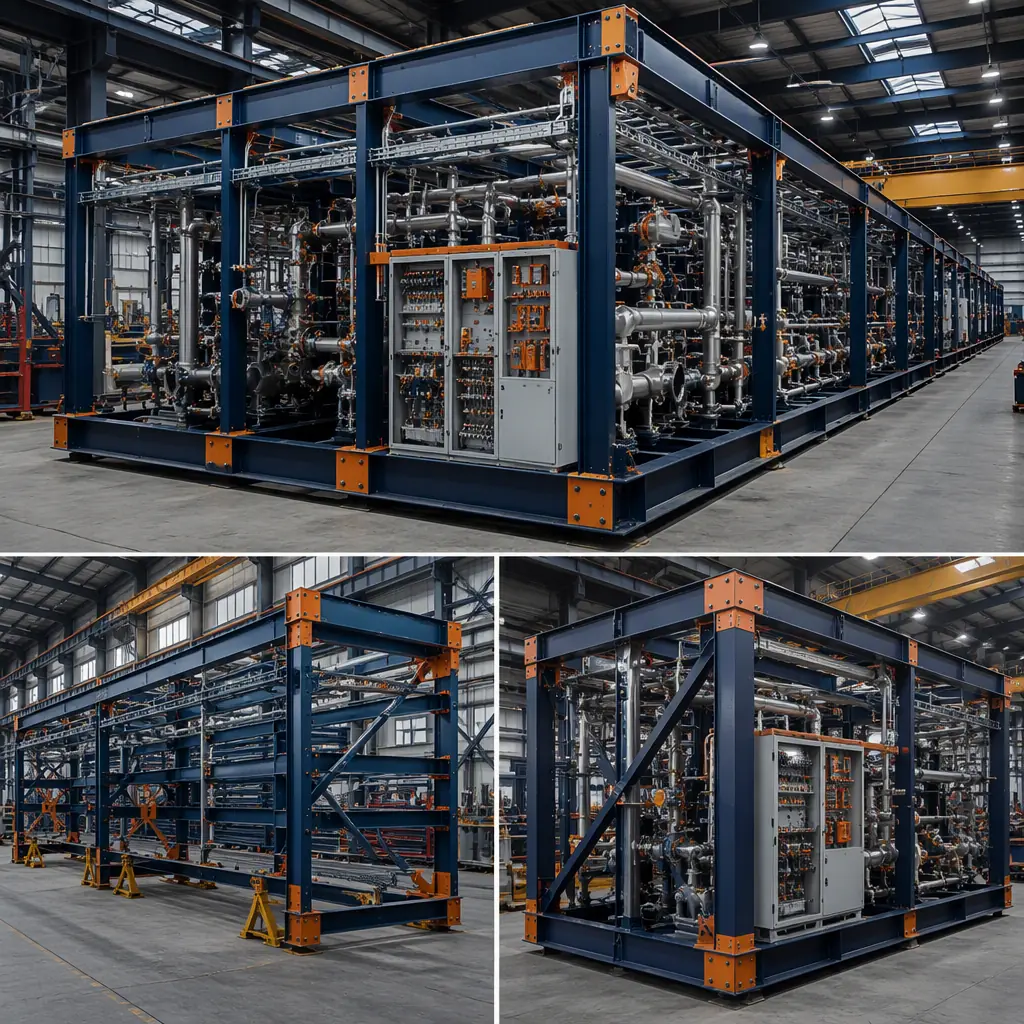
The Process-Skid Module Approach
The unit that carries the chemical or refining process is the skid, and the module is engineered around it. A gas-compression skid carries the compressor, the inter-stage coolers, the scrubber, the oil and seal system and the local control panel all packaged and piped on a single steel frame that lifts as one piece. A polymer or chemical-reaction skid carries the reactor, the shell-and-tube exchangers, the metering and dosing pumps and the product-transfer piping with the instrumentation loop pre-wired and loop-tested off site. An analyzer-and-instrument house is a controlled-environment module with the sample-conditioning system, the analyzers and the purge-gas piping pre-installed so the analyser system is commissioned before it is connected to the sample point. Each skid is fabricated to the same piping and instrumentation specification it would get on site, but the fabrication, the hydrotest, the loop test and the flush are done in the factory under a quality-controlled roof, the process-module principle we document for modular BIM and digital workflow and the packaged-utility approach we document for modular MEP systems integration.
Pipe-Rack, Structure & Utility Modules
Between the process units sits the pipe rack, and in a modular build the rack is delivered as a set of pre-piped, pre-insulated steel-frame modules with the line-pressure tests already done. The rack modules carry the process lines, the utility lines, the conduit and the instrument cables, and they are engineered to the module-to-module interface so the support and the thermal expansion are resolved in the factory rather than during a crowded site tie-in. The utility modules are equally pre-packaged: the compressed-air and nitrogen skids, the cooling-water and heat-transfer modules, the steam-generation and condensate-return skids, the electrical substation and transformer enclosures, and the instrument-air and breathing-air packages. Each arrives pre-wired, pre-commissioned and ready to be connected to the plot rather than being built between the hot and cold tie-ins, the sequence and pre-commissioning logic we document for modular project scheduling and timeline.
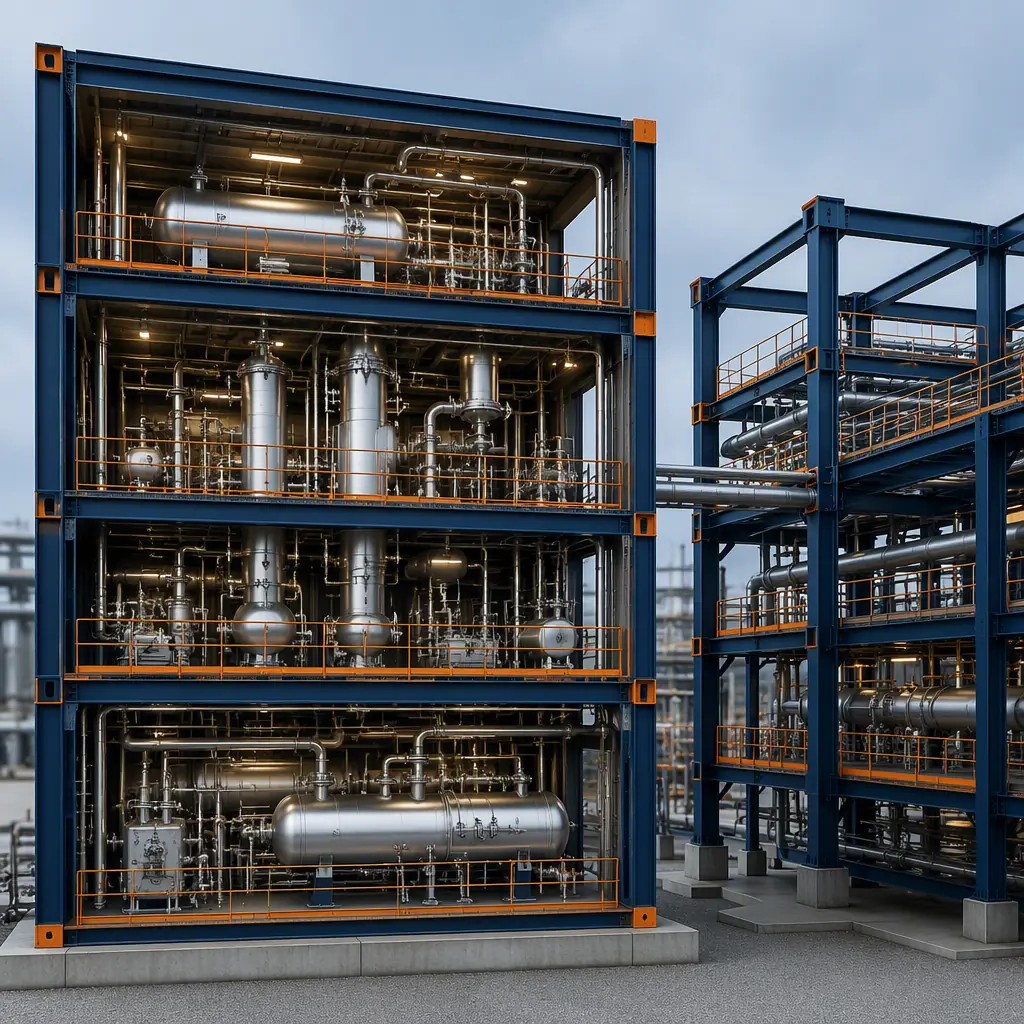
MEP & Automation for a Hazardous Occupancy
The mechanical, electrical and instrumentation systems for a petrochemical complex are sized to the process load and the hazard. The electrical service for a midstream processing unit typically runs 1,500–4,000 amps to carry the compressors, the pumps, the exchangers, the lighting and the motor control, and the switchgear, the VFDs and the lighting in the classified zones are rated to the gas group and the temperature class, the integration discipline we document for modular MEP systems integration. The distributed control system and the safety-instrumented system are wired in the control module, with the I/O marshalling, the fire-and-gas panel and the emergency shutdown logic pre-terminated and tested. The alarm and data-traceability engineering, the loop testing and the commissioning sequence follow what we document for modular factory quality control, and the long-lead tie-ins and the outage planning follow modular construction scheduling.
Cost Structure, Modular vs. Site-Built Petrochemical
| Facility Type | Site-Built | Modular |
|---|---|---|
| Process skid, gas compression 5 MW | $4.0–6.5M / 10–14 months | $3.4–5.6M / 26–36 weeks |
| Control building, ATEX-rated, 8 rooms | $2.8–4.2M / 12–18 months | $2.3–3.6M / 24–34 weeks |
| Pipe rack + utility modules, 120 m | $1.8–3.0M / 9–13 months | $1.5–2.6M / 20–28 weeks |
The 15–20% capital saving is secondary to the schedule reality: a downstream unit is a margin asset that only earns once the feed is flowing, and the modular route compresses the build by 4–8 months, which for a plant chasing a supply contract or a maintenance window can decide whether the unit is on line for a season or waits for the next turnaround. For the full cost methodology, see our 2026 modular construction cost guide. The transport and the heavy-lift analysis are part of the feasibility, see modular construction transportation and logistics.
Phasing, Expansion & Delivery
The petrochemical schedule is driven by the feed supply and the commissioning window. Modular delivery front-loads the process, the instrument and the electrical engineering into the factory while the plot, the piling and the main equipment proceed on site, and the installation is sequenced around the critical handoffs: the utilities and the control building are installed and commissioned first so the unit can hot-commission in stages, then the process skids are lifted and connected during the outage so the whole train comes on line together, the phased-commissioning pattern we document for modular building additions and expansions. For a facility that builds a second train or a sister plant, modular lets standard process skids and support modules replicate across sites with consistent engineering and a predictable schedule, the repeatable-facility model we document for modular construction partner evaluation and the rapid-deployment logic we document for modular construction logistics. Because a petrochemical plant is one of the most hazardous and process-dense industrial builds, the factory-built approach is where the schedule saving is largest, the modules arrive pre-engineered, pre-commissioned and pre-tested, so the unit opens producing rather than opening as a construction site.
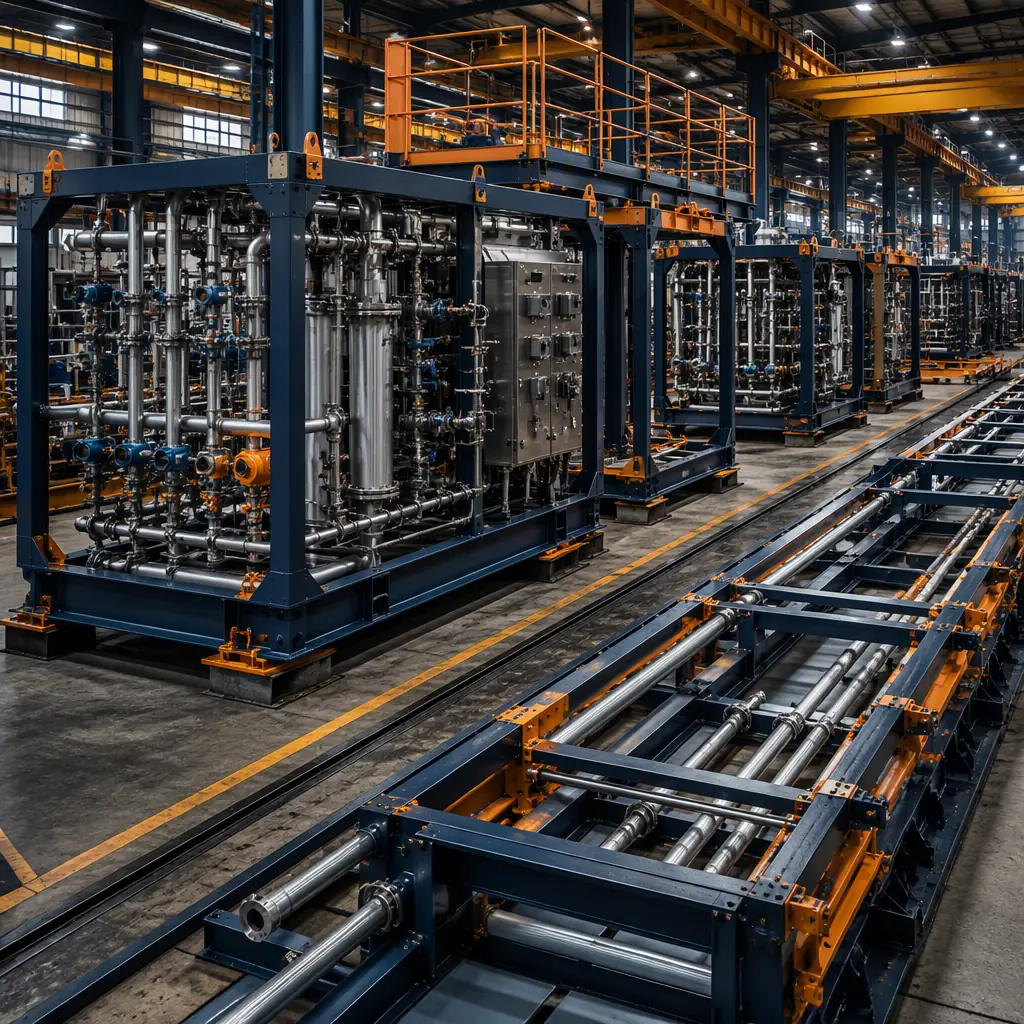
Is Modular Right for Your Petrochemical or Oil-Gas Project?
Modular delivery creates the strongest value for operators building under a turnaround or a feed-start deadline, EPC contractors taking on a compressed outage, and companies replicating a standard unit across several sites. The same factory-built model serves a gas-compression skid, an ATEX-rated control building, a bundled analyzer house and a pre-piped pipe rack. And because the process, the instrumentation and the electrical arrive factory-built, rated and tested, the day the unit goes on line is a date on the calendar, not the end of a construction project.
Planning a petrochemical or oil-gas processing facility? Request our industrial facility documentation package. Hazardous-area and ATEX/IECEx design, process-skid and pipe-rack layouts, control-room and analyzer-house builds, and production-ready installation schedules. Contact the MODURA engineering team.