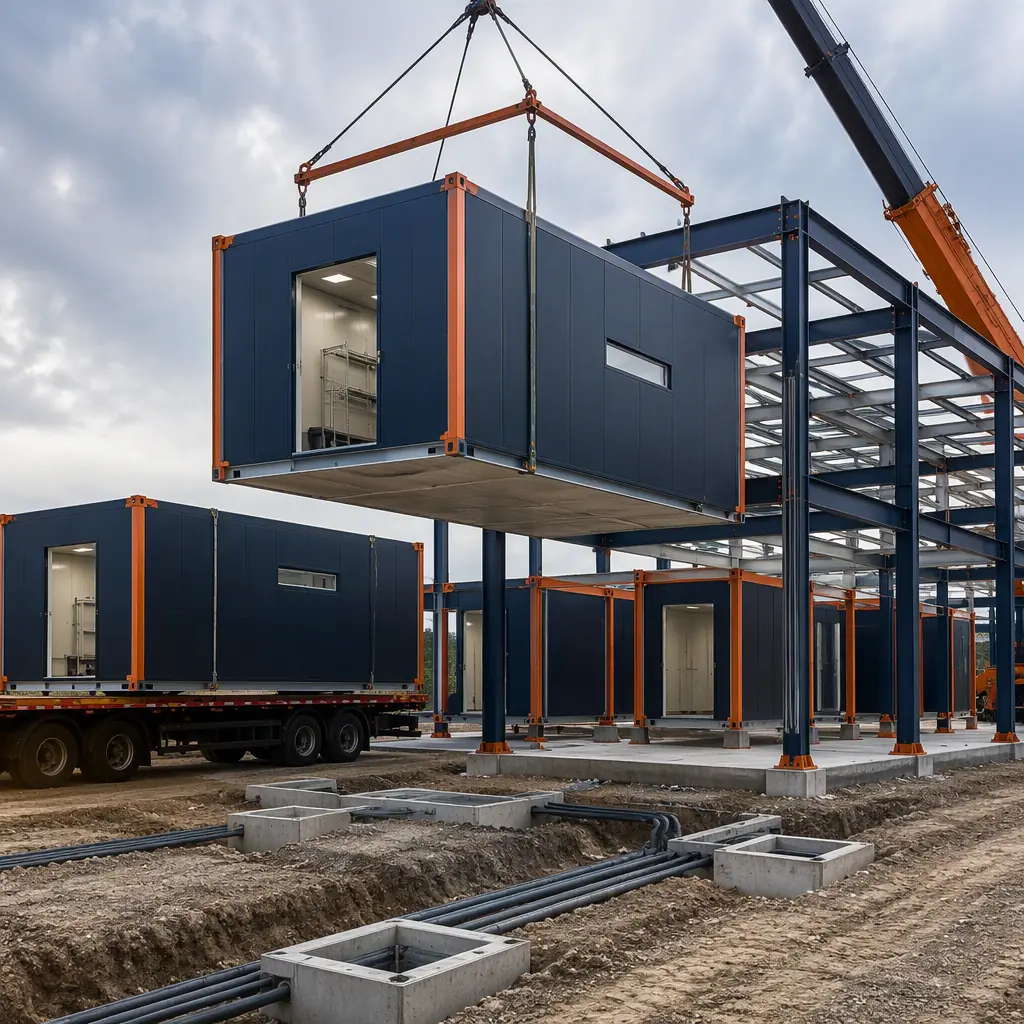
The global mushroom market is growing at roughly 7% a year, and the production model is shifting from converted barns and retrofitted warehouses to purpose-built, climate-controlled growing facilities. Mushrooms are among the most environmentally sensitive crops in agriculture: button mushrooms fruit at 57–62°F with 85–95% relative humidity and elevated CO2 that is vented at the right moment to trigger pinning, while exotic varieties like oyster and shiitake need their own temperature, humidity and light regimes. A commercial mushroom farm is therefore a precision HVAC building as much as a farm: every growing room needs its own climate control, the substrate preparation area needs steam pasteurization infrastructure, and the harvest and packing rooms need temperature control and washdown finishes. Site-built mushroom farms typically take 12–20 months to deliver because the HVAC, refrigeration, steam and insulation systems are installed by different trades in sequence. Modular prefabricated construction collapses that schedule: the growing room modules arrive from the factory with insulated envelopes, HVAC systems, shelving structure and environmental controls pre-installed, then the modules are connected on site in weeks. A 10,000–30,000 sq ft growing facility can be delivered 40% faster than site-built construction, using the same factory-built agricultural facility model we document for modular agricultural and food processing buildings and the temperature-controlled engineering we document for modular cold storage construction. This guide covers the mushroom farm program, climate control engineering, substrate and process flow, phasing and cost structure.
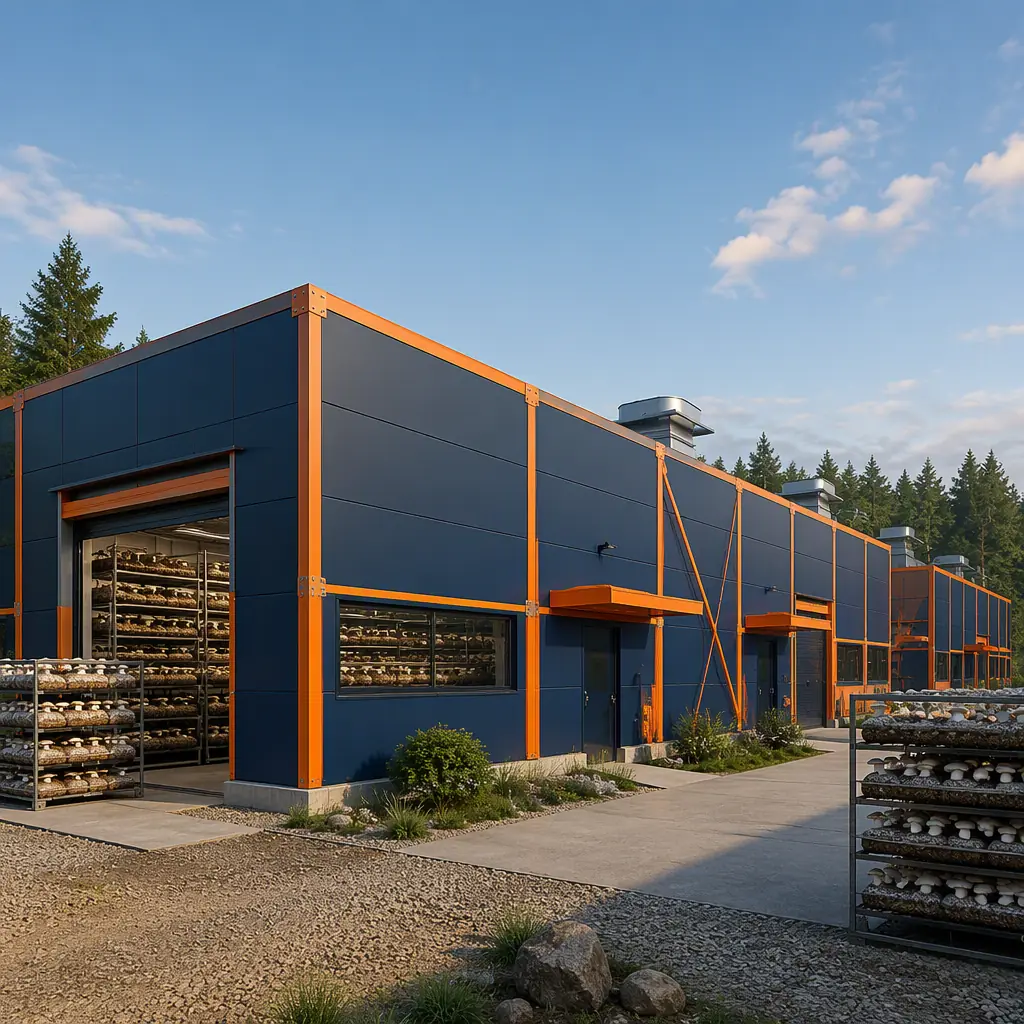
What a Mushroom Farm Program Builds
A mushroom farm is a controlled-environment production facility with distinct process zones. The substrate program includes the composting and pasteurization area where the growing medium is prepared, steam-pasteurized and inoculated with spawn. The spawn run rooms hold the inoculated substrate at 72–77°F for button mushrooms while the mycelium colonizes the medium. The fruiting rooms are the heart of the farm: climate-controlled rooms where temperature, humidity and CO2 are managed through the pinning and cropping cycle. The harvest and packing program includes the picking area, the grading and packing room, and the cold storage for finished product. The support program includes the boiler and steam plant, the HVAC plant, the washdown room and the staff facilities. What makes the program modular is that every room is a factory-built steel-frame module with its insulated envelope, HVAC system, shelving and controls pre-installed — the same room-level engineering discipline we document for modular MEP systems integration, applied to the most climate-sensitive production environment in agriculture.
Climate Control & Growing Room Engineering
The growing room is where modular construction delivers its biggest advantage. Each fruiting room needs independent temperature control (57–62°F for button mushrooms, 55–75°F depending on variety), humidity control (85–95% RH), and CO2 management with fresh-air intake and exhaust that can be cycled to trigger pinning — the moment when CO2 is dropped to around 1,000 ppm to initiate mushroom formation. The HVAC system for a growing room is substantial: a 2,000 sq ft fruiting room typically needs 10–20 tons of cooling capacity, plus humidification, fresh-air handling and exhaust. Modular delivery pre-installs the entire climate system in the factory: the fan coil units, humidifiers, ducting, sensors and the room controller that manages the cropping cycle are factory-wired and tested, so the grower connects the power and water and dials in the environment instead of commissioning a field-built system. The HVAC engineering — capacity, airflow distribution and control — is the discipline we document for modular HVAC and indoor air quality, and the energy-efficient envelope follows the performance standards we document for modular building energy efficiency.
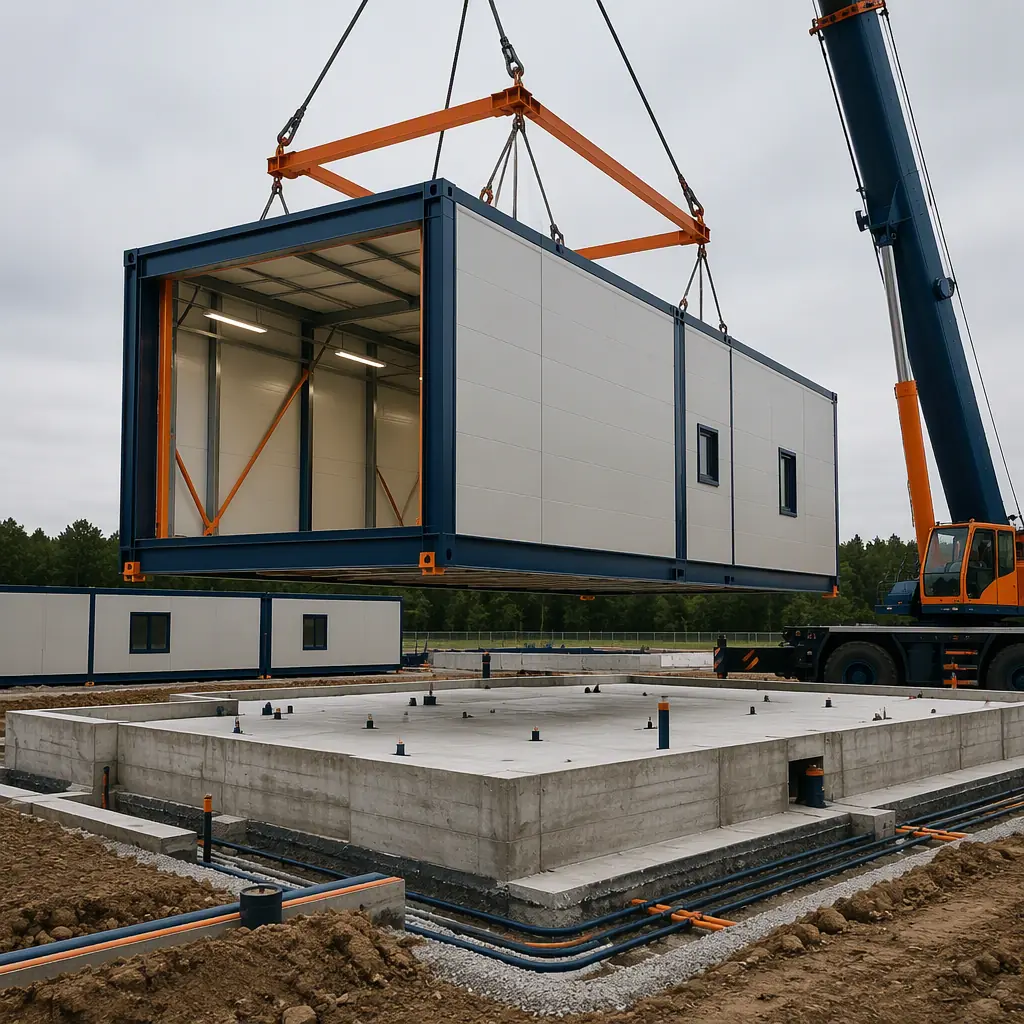
Substrate Preparation & Steam Plant
The substrate program turns raw agricultural materials into the growing medium, and it is a thermal process. Composted substrate is pasteurized at 140–160°F to kill competing organisms, then cooled and spawned. The pasteurization area needs the boiler and steam plant — typically 100–500 boiler horsepower depending on facility size — plus the phase tunnels or bunkers where the substrate is heated, the cooling floor where it is brought down to spawn-run temperature, and the spawning and filling equipment. Modular delivery packages the steam plant as a factory-built boiler room module with the boilers, feedwater treatment, condensate return and controls pre-piped, and the substrate processing hall as a module set with the thermal envelope, drainage and ventilation factory-installed. The process engineering — steam capacity, thermal insulation and ventilation — is the same discipline we document for modular heavy industrial construction, where process plants are engineered as factory-built modules rather than field-assembled systems.
Harvest, Packing & Cold Chain
The harvest and packing program protects the crop after it leaves the growing room. Mushrooms are highly perishable: shelf life is measured in days, and the crop must move from harvest to cold storage quickly to preserve quality. The harvest and packing room is held at 55–60°F with washdown finishes, the packing line is laid out for a straight flow from picking baskets to clamshells, and the cold storage module holds packed product at 34–38°F with high humidity to prevent drying. The cold-chain engineering — rapid pull-down, temperature maintenance and door seals — follows the discipline we document in modular cold storage construction, and the washdown and sanitation finishes in the packing room follow the food-grade standards we document for pharmaceutical GMP facilities. For farms supplying retail programs, the packing room module includes the grading tables, the clamshell and tray filling stations and the label and code printing area, all factory-finished so the farm opens operating rather than opening under construction.
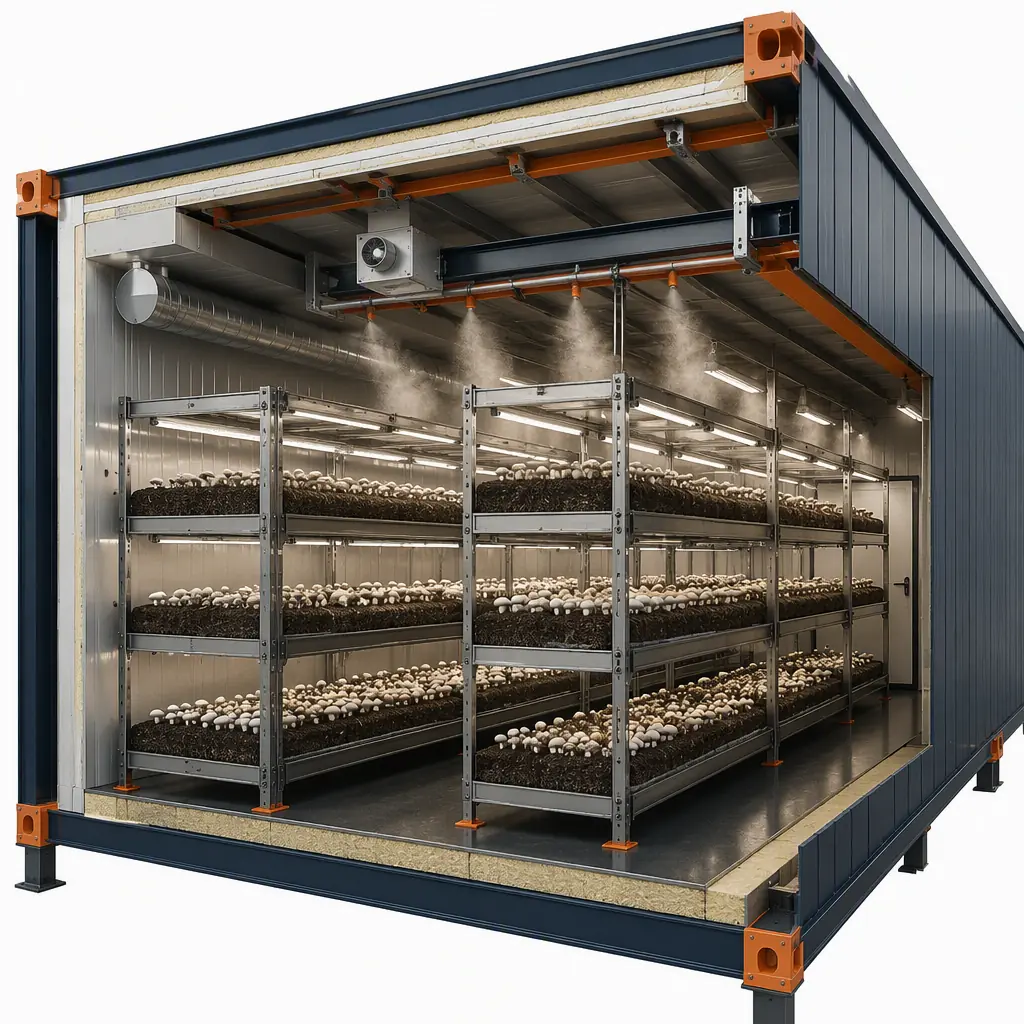
Cost Structure — Modular vs. Site-Built Mushroom Farms
| Facility Type | Site-Built | Modular |
|---|---|---|
| Button mushroom farm, 20,000 sq ft, 12 growing rooms | $7–11M / 14–20 months | $6.2–9.8M / 8–12 months |
| Specialty mushroom facility (oyster/shiitake), 12,000 sq ft | $4.5–7M / 12–18 months | $4–6.2M / 7–11 months |
| Growing room addition, 4,000 sq ft (4 rooms) | $1.8–2.8M / 8–12 months | $1.6–2.4M / 5–7 months |
The 10–15% capital saving is secondary to the production math: a mushroom farm that opens 6–9 months earlier starts cropping sooner, locks in retail and foodservice supply contracts, and begins generating revenue while a site-built competitor is still under construction. For the full cost methodology, see our 2026 modular construction cost guide.
Phasing, Permitting & Delivery
The mushroom farm schedule is driven by the site, the HVAC and steam plant and the crop plan. Modular delivery front-loads the climate and process engineering into the factory while the pad, power, water and gas services are installed on site, and the installation sequence is coordinated around the critical connections: the HVAC plant, the steam line and the process water supply are verified before the modules arrive so the farm connects in days, not weeks. The critical-path discipline — factory slots, module sequencing and site readiness — is the scheduling methodology we document in modular construction scheduling, and the permitting strategy for agricultural facilities follows the accelerated path we document for modular construction permitting and zoning, where factory-built structures often qualify for expedited review because the design is documented and repeatable. Because growing rooms can be delivered and commissioned in phases, farms can start production in the first phase while later growing rooms are still being installed — the phased-expansion model we document for modular agricultural facilities.
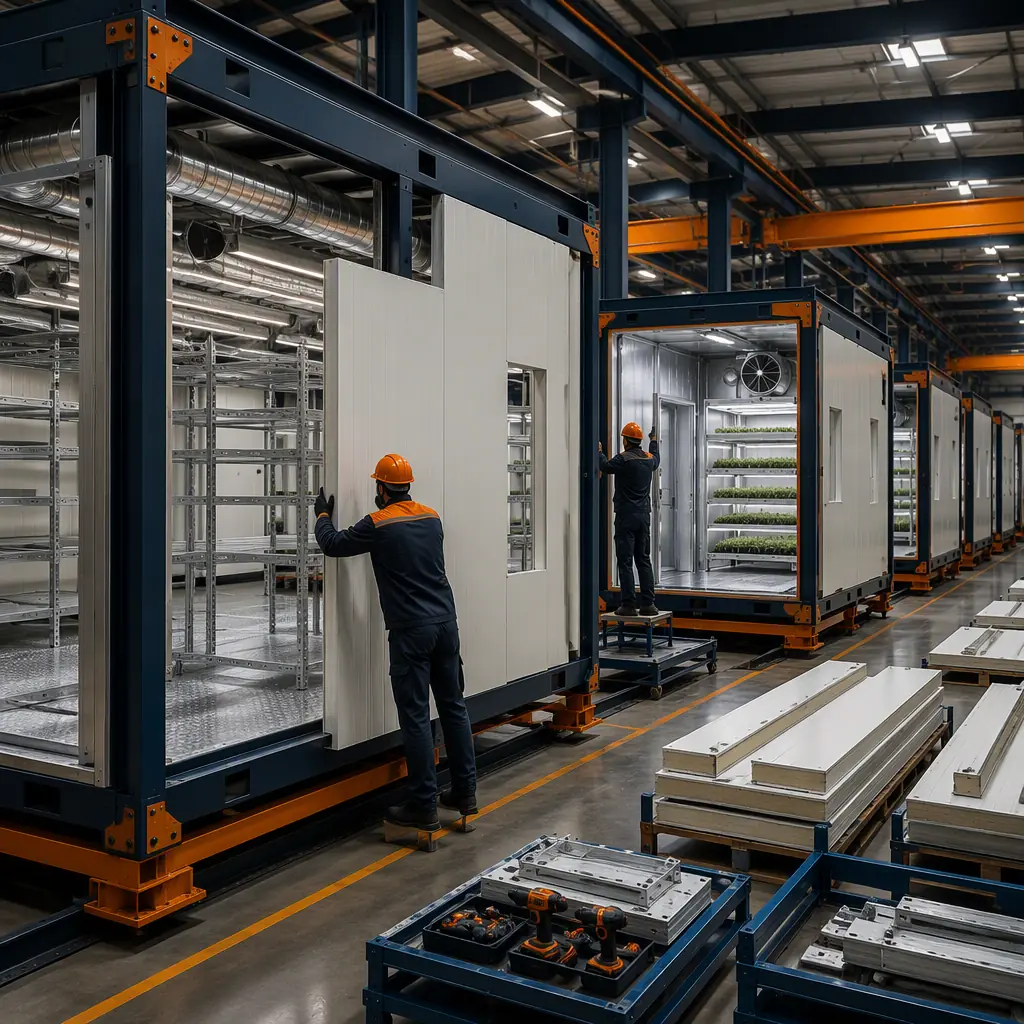
Is Modular Right for Your Mushroom Farm Project?
Modular delivery creates the strongest value for growers building a new facility on a tight schedule, expanding an existing farm with additional growing rooms, or standardizing a facility design across multiple sites. The same factory-built model serves 4,000 sq ft growing room additions, 12,000–30,000 sq ft standalone farms and full substrate-to-packaging facilities — and because the growing rooms, substrate hall and cold storage arrive factory-built with climate systems tested, the farm is ready for its first crop the day the modules are connected and commissioned.
Planning a mushroom farm or controlled-environment growing facility? Request our agricultural facility documentation package — growing room climate specifications, substrate and steam plant layouts, and installation schedules. Contact the MODURA engineering team.