Modular construction has a schedule problem that the industry rarely states plainly. A modular programme is genuinely faster than a conventional one from the moment steel starts to be erected, and considerably slower than a conventional one in the fourteen to twenty weeks before that, when the design has to be frozen far earlier and far harder than a site-built project requires. Buyers who compare only the construction phase conclude that the method saves half the time. Buyers who compare the whole programme from decision to occupation get a smaller and more reliable number, and they get it without a surprise at the end.
This is an examination of both timelines side by side, with the gates that control each one, the float each phase actually has, and the five decisions that compress a modular programme without buying schedule risk. The date the modules arrive on site is set by the engineering release date, not by the factory's production speed, and that single fact is the most useful thing a buyer can know before programme discussions begin.

The Two Programmes Side by Side
The comparison below is a 120-unit, five-storey apartment building, from board decision to practical completion, with the module count and building type held constant between the two columns. The modular column assumes a factory nominated at week 4 and a site within 500 km. Every duration is one we would put in a tender programme rather than a brochure.
| Phase | Conventional programme | Modular programme | What sets the duration |
|---|---|---|---|
| Feasibility and concept design | Weeks 0–10 | Weeks 0–8 | Site appraisal and massing, with the module grid decided early in the modular case |
| Design development and coordination | Weeks 10–26 | Weeks 8–16 | Modular front-loads this work, so it is shorter and far denser than the conventional equivalent |
| Engineering release and shop drawings | Weeks 26–32 | Weeks 16–24 | Module-level drawings issued to factory tolerance, plus the interface schedule |
| Permit approval | Weeks 26–38, in parallel | Weeks 20–32, in parallel | Authority timeline, which does not compress because the building is modular |
| Foundation and site works | Weeks 34–48 | Weeks 24–34 | Shorter modular scope, since the site is assembling rather than building |
| Factory production | — | Weeks 24–40 | Takt time multiplied by module count divided by parallel lines, and this overlaps foundation work entirely |
| Superstructure and envelope | Weeks 48–72 | Weeks 34–38 | Setting and connections, at 10 to 16 modules per set day on a rectangular block |
| Fit-out and services | Weeks 60–82 | Weeks 38–44 | Mostly complete before dispatch, so the site scope is connection and finishing only |
| Commissioning and handover | Weeks 82–90 | Weeks 42–48 | Integrated testing across module boundaries, which cannot start before all modules are set |
| Decision to practical completion | 90 weeks | 48 weeks | 47% shorter overall, with the saving concentrated after week 34 |
The table is honest about the front end: the modular programme saves 8 weeks of the first 26, which is real but modest, and it saves 6 weeks at engineering release and 14 weeks at foundation because the site scope collapses. Everything after week 34 is compressed by a factor of four. The reason the overall saving lands at 47 percent rather than 70 is that the first third of both programmes is dominated by design and permits, and neither is faster because the building is made in a factory.
The overlap structure is what makes the number work. Foundation work and factory production run simultaneously in the modular case over weeks 24 to 40, which never happens conventionally because the superstructure cannot start before the frame below it exists. A buyer who takes only one idea from this comparison should take that one: in modular, the programme is a set of parallel tracks joined at a small number of gates, and the gates are where the risk lives. Our modular project timeline guide gives the phase-by-phase version for smaller projects and modular construction scheduling covers the resource leveling behind these durations.
Design Freeze: The Gate That Governs Everything
The modular programme has one hard gate that a conventional project does not: design freeze at engineering release, which in this example falls at week 24. After that point, every change costs a factory slot and a reworked module rather than a change order to a trade who has not started yet.
The table sets out what is frozen at each gate, what a change after that gate does to the programme, and the unit cost of the change. The pattern is not linear: a change at week 20 is an inconvenience and a change at week 34 is a commercial event.
| Gate | What is frozen | What a change after the gate costs | Typical cost of one change |
|---|---|---|---|
| Week 8: Module grid | Module widths, wet wall positions and the repetition rate | Re-work of the module breakdown, no factory impact yet | Design hours only, 1–3 days |
| Week 16: Coordination model | Clash-resolved services routes and the interface schedule | Re-coordination of the affected modules and their neighbours | 1–2 weeks of engineering, no production impact |
| Week 24: Engineering release | Structural connections, shop drawings, module count, finishes schedule | Factory slot re-booked, generally the next cycle | 3–4 weeks of programme on a 120-unit project |
| Week 30: Frame start | Everything that affects the frame, the openings and the lifting points | Frame rework inside a live production line, which disrupts the module behind it | 2–3 weeks plus a plant disruption charge |
| Week 36: Rough-in complete | Services positions, panel schedules, fixture selections | Reopen a finished module: services, finishes, and re-testing | 3 to 5 times the pre-release change rate |
| Week 40: Dispatch | Everything | Site modification of work designed for a plant, with a crane and a weather exposure | 5 to 8 times the pre-release change rate, plus schedule |
The practical consequence is that a modular project needs a client organisation capable of stopping design changes at week 24, and this is a governance property rather than a technical one. The most common cause of a slipped modular programme is not a factory failure; it is an owner with three stakeholders and no single decision-maker, who approves finishes in week 30. Where that governance does not exist, the programme will slip and no amount of factory capacity recovers the time. It is worth stating plainly at business case stage because it is the one modular risk the supplier cannot manage on the client's behalf. The contract mechanisms that price these gates are covered in change order management.
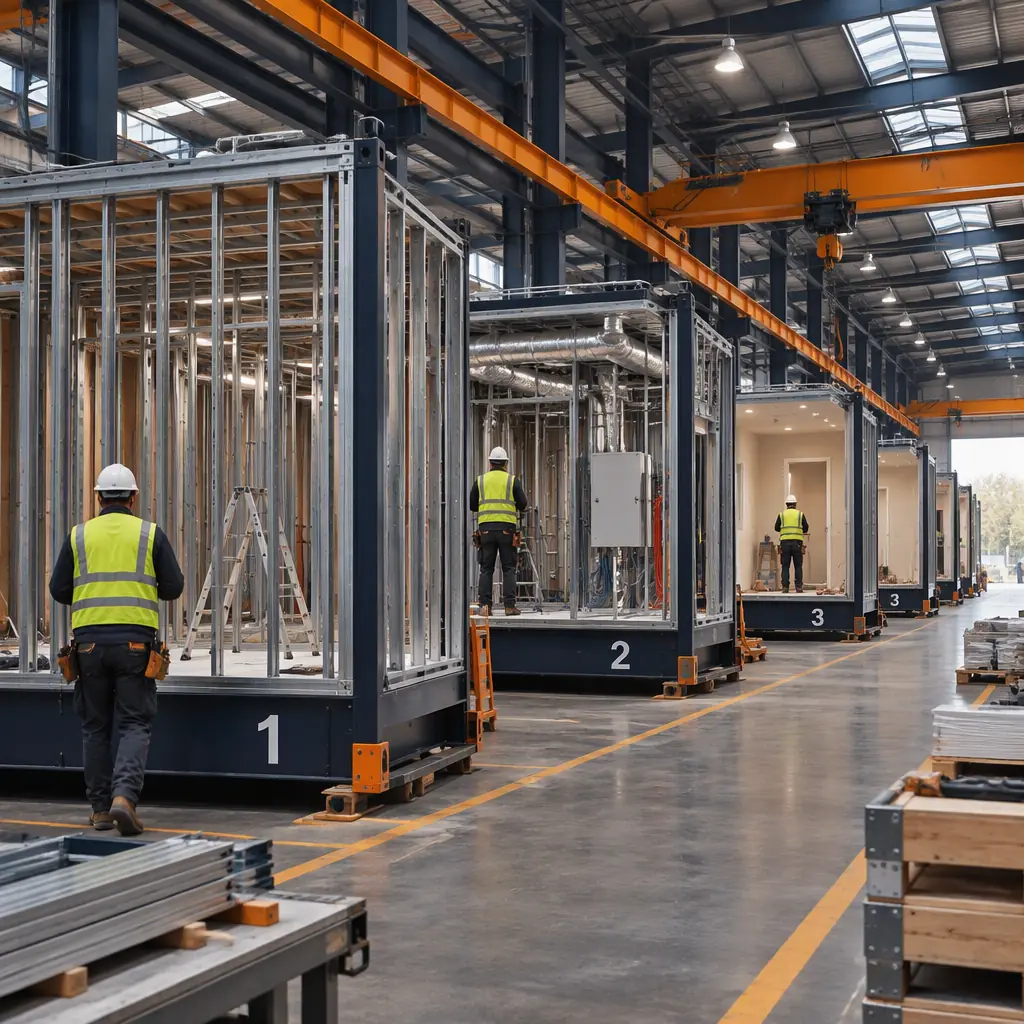
Where Retail and Hospitality Programmes Gain Differently
Two sectors get more from a modular programme than the apartment example shows, and one gets less, and the difference is worth understanding before the method is chosen on a generic basis.
Restaurant and retail rollouts gain disproportionate value because the programme saving compounds across sites. A chain opening twelve locations does not simply save fifteen weeks per site; it opens the first unit fifteen weeks earlier, which starts the learning curve, the marketing and the revenue four months sooner, and it then repeats a validated design across the remaining eleven. In a rollout the second unit is faster than the first by design, not by luck, and the twelve-site programme compresses into a campaign rather than a sequence. That compounding is the real argument, and it is set out in modular restaurant construction and franchise chain rollout construction.
Healthcare gains on disruption rather than duration. A hospital expansion built conventionally requires decanting departments, shutting corridors and managing noise and infection control for over a year. A modular ward set onto an existing site does most of that work in a factory and confines site activity to a lift programme measured in days. The programme saving matters, but the operational saving matters more, and it is the reason healthcare clients who have done one modular project tend to do a second. See modular hospital expansion on active facilities.
Public sector projects often gain least, not because the buildings are unsuitable but because procurement runs on a fixed fiscal calendar and a fixed approval chain, and a programme that finishes in week 48 rather than week 90 releases value only if somebody can occupy earlier. Where the approval, funding and occupancy calendar is fixed regardless of build speed, the modular programme buys flexibility that may not be used. That is not a reason to build conventionally, but it is a reason to expect the schedule benefit to convert into cost less reliably in this sector than the table above implies.
The Five Decisions That Compress a Modular Programme
Five decisions are available to a buyer at the start of a modular programme, and each removes time without converting it into risk elsewhere. Together they account for most of the difference between a modular project that delivers on its schedule and one that arrives four months late quoting the factory.
One, nominate the factory before design development, not after. A factory nominated at week 16 designs to that plant's module dimensions, lifting limits and station sequence. A factory nominated at week 24, after drawings are complete, pays for a redesign and loses a production cycle. This single decision is worth four to six weeks and costs nothing but a procurement sequence.
Two, fix the module grid in the first design iteration. Module width and wet wall position determine the repetition rate, the jig amortisation, the services design and the transport envelope in one decision. Every week the grid stays open, the design develops on an assumption that may later be invalidated, and invalidation at week 20 is expensive.
Three, appoint the crane and transport contractor during engineering. Crane windows and oversize permits are external resources with their own lead times, and booking them from a confirmed lift plan rather than a provisional one is the difference between a setting programme that holds and one that waits for availability.
Four, run the authority conversation in parallel, from week 8. The permit timeline does not compress and cannot be compressed. Starting it earlier is the only lever, and it requires a permit set earlier than a conventional project would produce. Where the jurisdiction is unfamiliar with modular, the inspection sequence should be agreed in the same conversation, because a site authority discovering factory-completed modules at inspection time is a delay of weeks rather than days.
Five, put one person in charge of the brief. This is the decision that costs nothing and is most often missed. A single named individual authorised to approve or reject changes, with a written change-control procedure, is worth more programme than any factory improvement available to a buyer. Where the client cannot name that person, the programme risk is theirs and should be priced as such.
What We Decline to Promise on Programme
We will not promise a completion date before engineering release. Everything before week 24 is design and permits, and we influence it but do not control it. A date given at week 8 is a hope with a schedule attached. A date given at week 24, with a frozen drawing set and a booked factory slot, is one we will contract to.
We will not compress the factory production period by adding shifts without saying what it does to quality. Two-shift production is available on most lines and shortens the programme by 20 to 30 percent, and the quality argument for modular is that inspection happens at a controlled pace. Where a client wants the compression we will take it, with additional inspection hold points, and we will say what it costs rather than presenting it as free time.
We will not absorb the consequence of a late design change into the delivery date. A change after engineering release consumes a factory slot that another buyer has booked. The programme moves by the cycle, not by the labour hours involved, and that distinction should be in the contract rather than discovered at the first variation.
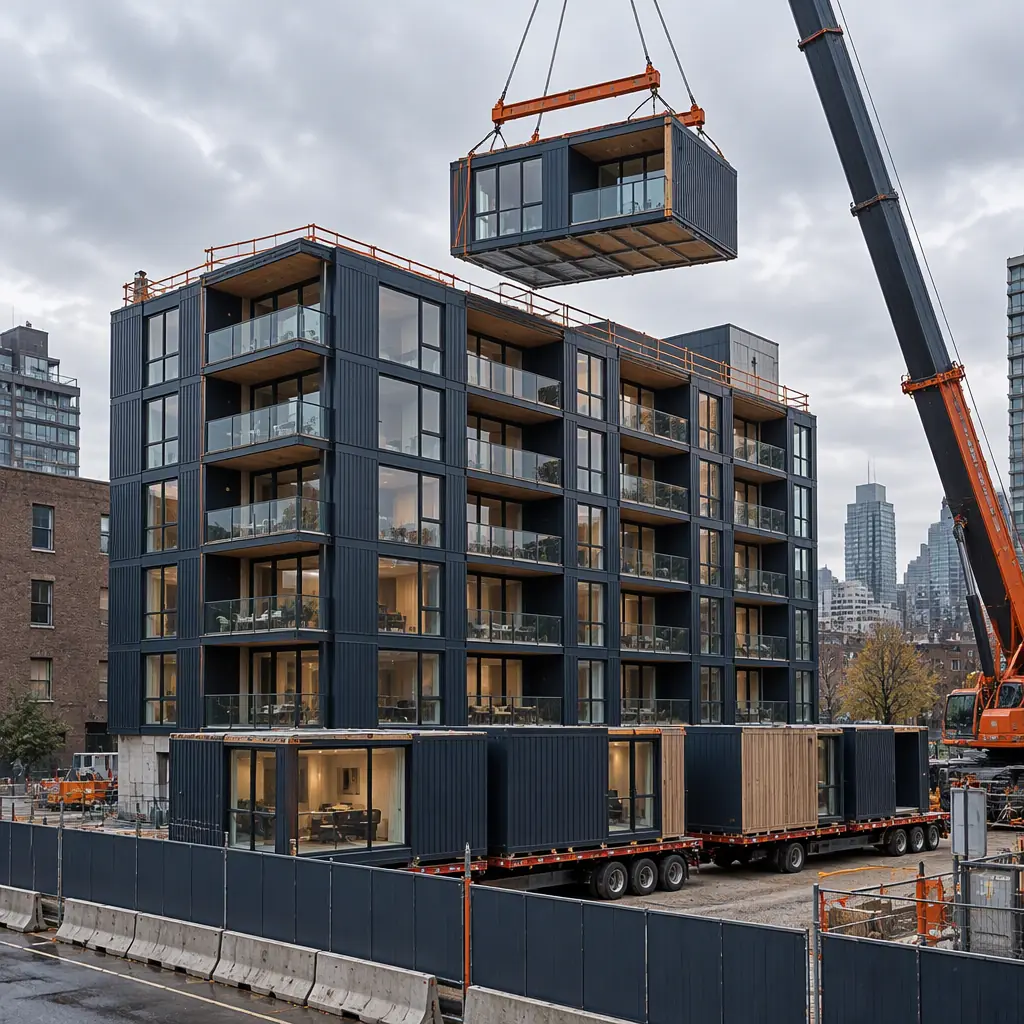
We will not present the lift programme as the risk. Setting 120 modules takes eight to fourteen days and it is the visible part of the schedule, so it attracts the attention. The risk is in the fourteen weeks before it, in decisions taken by people who will not be on site when the crane arrives.
Questions Asked Before Every Modular Programme
| Question | What we answer |
|---|---|
| Is a modular programme really twice as fast? | No. On a 120-unit apartment building it is about 47 percent faster from board decision to occupation, because the first third of both programmes is design and permits. From steel erection to practical completion it is roughly four times faster. Be clear which comparison is being made. |
| When must our design be final? | At engineering release, which should fall about 16 weeks before the first module is set. Everything structural and everything affecting the frame, openings and lifting points must be frozen there. Finishes can sometimes move later at a price, and the price rises steeply with each week. |
| What happens if the permit is late? | The foundation slips, the modules are produced and stored, and the programme saves the foundation weeks but loses the overlap. Past about four weeks of delay the storage cost and the lost crane window begin to consume the saving, and beyond eight weeks the modular programme and the conventional one finish at similar dates. |
| Can production start before the building permit is issued? | In most jurisdictions yes, on a limited notice to proceed covering engineering and long-lead materials, with production released against the permit. It is a contract structure rather than a technical capability, and it is worth roughly 4 weeks where the authority permits it. |
| How much float does a modular programme have? | Very little between week 24 and week 40, because production is a sequence of booked slots. Float exists before engineering release and after setting. A programme that shows float during production is a programme that assumes somebody else's module can be moved out of the way. |
| What is the single biggest schedule risk? | Late design change by the client, which is a governance risk rather than a construction one. It accounts for more slipped modular programmes in our experience than factory capacity, transport or weather combined. |
How to Build a Programme You Can Hold
A modular programme that holds has four properties, and they are visible in the document rather than described in a covering letter.
The gates are dated and assigned. Each freeze point has a date and a named person who signs it, on both sides. A programme with an undated design freeze is a programme that will slip without anybody being able to say when it slipped.
Production and site work are shown as parallel tracks. If the programme shows foundation work following production rather than running alongside it, the overlap has been lost before the first module is built, and the schedule has reverted to a sequential logic dressed in modular language.
Every external resource has a booking date. Crane, transport permits, factory slot and third-party inspection all appear with dates, because each is a lead time rather than a task. A programme without them is a plan for the work the supplier controls only.
The change procedure is attached. Not referenced, attached, with the cost and programme impact of a change at each gate. Where the procedure is absent, the first variation becomes the negotiation that determines the rest of the project. The procurement route that produces a programme with these four properties is set out in turnkey modular construction and modular bid comparison.
Planning against a fixed occupation date? Send us the building type and unit count and we will return a programme with dated freeze gates, the production slot identified and the lift window booked.