Automotive manufacturing is a capital-intensive, speed-obsessed business. A modern assembly plant is a 500,000–2,000,000 sq ft facility with a body-in-white shop, a paint shop, a final assembly line, a stamping or metal-forming area, and dense process infrastructure, all scheduled around a launch date that rarely moves. When a new model program or a battery-electric conversion goes to a site-build, the owner typically waits 24–36 months from groundbreaking to first vehicle, negotiating weather, multi-trade sequencing and a compressed commissioning window against a fixed product-launch date. Modular prefabricated construction changes that arithmetic. A factory-built module set arrives from the factory with its structural steel, process utilities, robotic cell foundations, HVAC, fire suppression and conveying rough-ins pre-installed, then is connected on site in weeks. For a 200,000 sq ft assembly or manufacturing hall, modular delivery can compress the schedule to roughly half of site-built construction, using the same factory-built heavy-industry model we document for modular heavy industrial construction and the same controlled-envelope discipline we apply to modular cleanrooms and semiconductor facilities. This guide covers the automotive plant program, the body/paint/assembly module sets, process engineering, safety and environmental compliance, cost structure and delivery phasing.
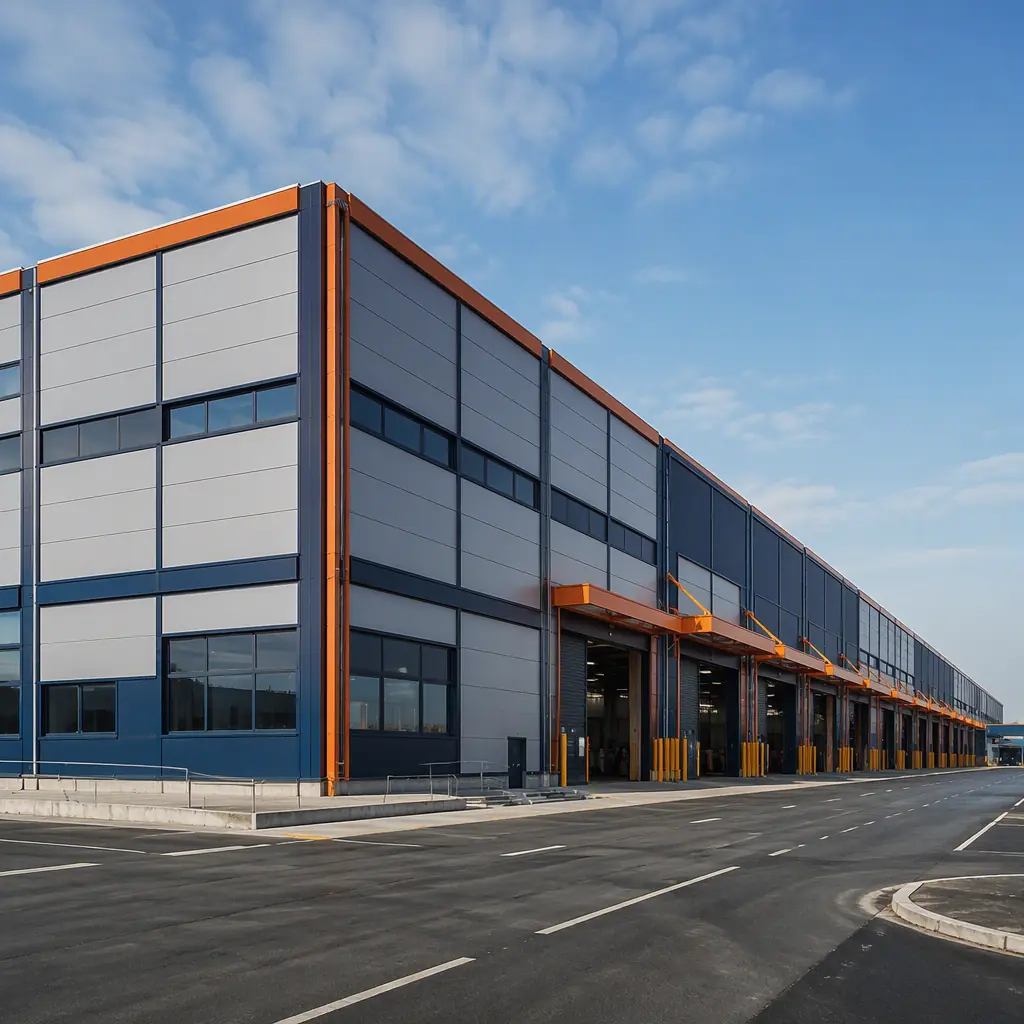
Why Automotive Plants Are Turning to Modular Construction
The trigger is rarely a desire for modular, it is a launch date. OEMs and Tier-1 suppliers plan a new model, a platform conversion or an EV retooling on a fixed product schedule, and the building becomes the long pole in the critical path. Site-built plants are sequence-bound: foundations, then structure, then envelope, then MEP, then process equipment, each trade waiting on the one before it, with little overlap and a commissioning period measured in months. Factory fabrication inverts the model. The structural frame, envelope panels, HVAC, compressed-air, power distribution, fire protection and process piping are fabricated in parallel while the site is being prepared, so the module arrives with its systems already roughed in and tested. The schedule engineering, factory slots, module sequencing and site readiness, is the scheduling methodology we document for modular construction scheduling, and the procurement, bid and partner selection work follows the RFP and procurement process we document for industrial owners. For an OEM converting from combustion to battery-electric production, the building retrofit is often the most schedule-sensitive item, and modular delivery lets the owner stage a new body or assembly hall while the existing line keeps running.
What an Automotive Manufacturing Facility Program Builds
An automotive plant is a set of process families under one roof, each with its own structural, environmental and utility demands. The body-in-white (BIW) shop needs high-clearance steel framing, heavy weld-and-cure fume extraction and a stable thermal environment for panel fit-up. The paint shop is the most controlled environment in the facility, a sealed, dust-controlled, temperature- and humidity-stable oven and booth zone with explosion-risk airflow. The final assembly area needs a large clear-span floor with an overhead conveyor or under-floor skid system, high bay capacity and broad daylighting. The sub-assembly, stamping and metal-forming areas need high bay structure, heavy crane capacity and dense utility distribution. Prefabricated module sets divide this into manageable, factory-documented units: the BIW module, the paint module, the assembly module, the sub-assembly modules and the utility backbone module. The room-level engineering discipline, factory-installed process infrastructure rather than field-built, is the methodology we document for modular MEP systems integration, where a field-heavy build becomes a plug-and-play connection.
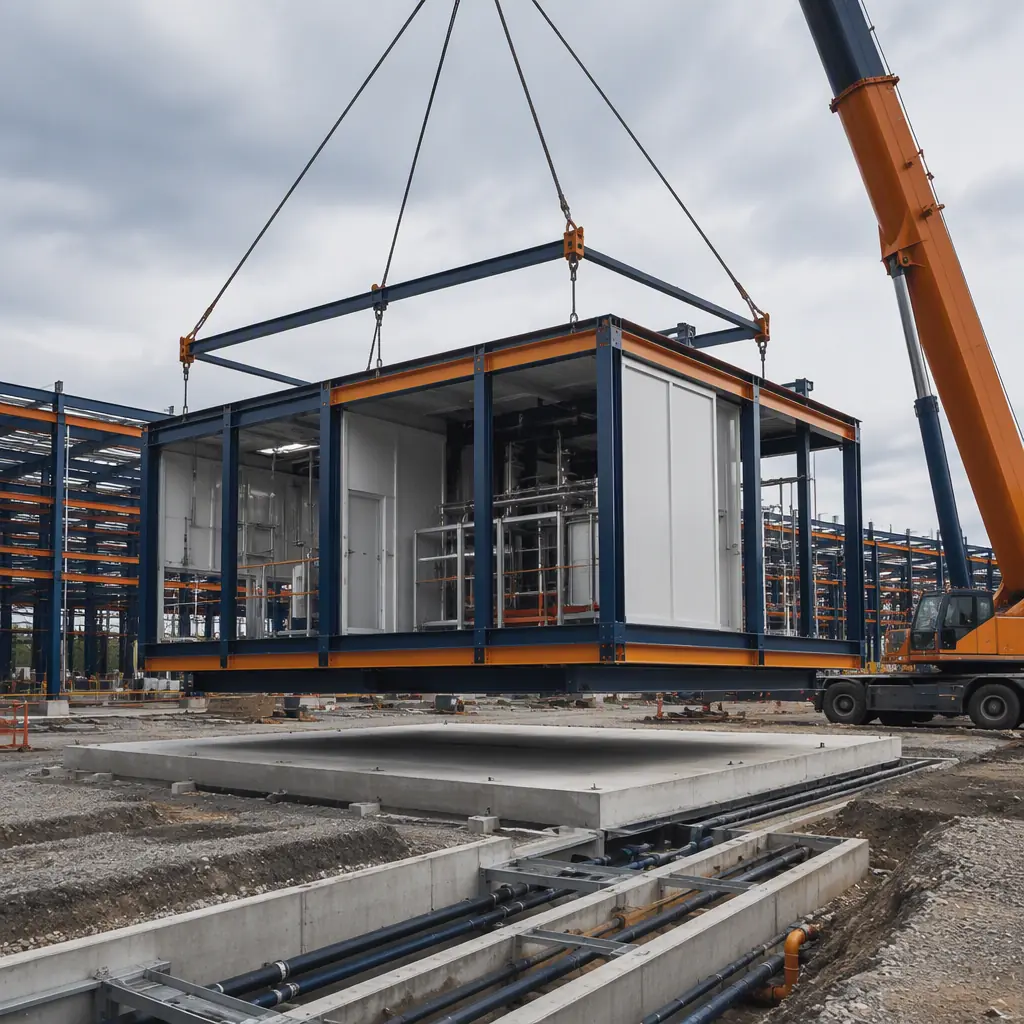
Body Shop, Paint Shop & Final Assembly Modules
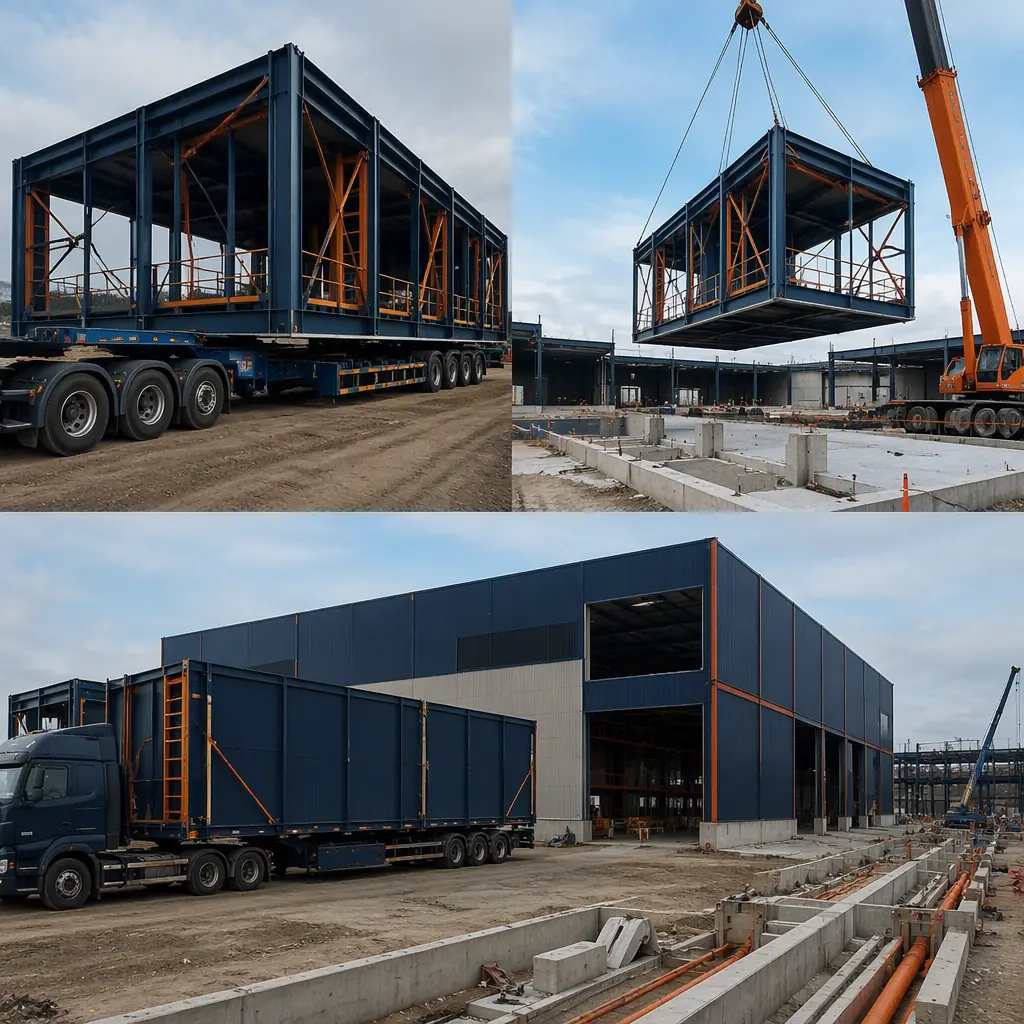
Each process family carries distinct dimensional and environmental requirements, and modular delivery maps each to its own module set. A BIW shop module is typically a high-bay steel frame with clear heights of 24–36 ft, roof-level weld fume extraction plenums, and a vibration-resistant floor slab designed for welding robots and clinch machinery. The paint shop module is the most demanding: a sealed envelope with positive-pressure airflow, controlled temperature and humidity (often 68–77°F and 55–65% RH), a spray booth with certified airflow and overspray abatement, and bake ovens with fired process equipment. The final assembly module is the largest clear-span unit, a column-free bay of 60–120 ft span carrying an overhead conveyor and assembly access platforms. Each module carries its process foundation (machine cell footings, robot pedestals, conveyor anchor points) factory-installed to a documented tolerance, an approach that aligns with the factory quality-control discipline we document for modular factory QA/QC systems. Because the module arrives with its structural frame, envelope and process fabrication tolerance already set, the on-site critical path collapses to connection and commissioning.
Process Engineering: Robotics, Conveyors & Utility Integration
Automotive plants live on process utility density. A modern body shop can draw 1–3 megawatts of power across robots, welder cells, conveyors and pneumatics, plus compressed air at 7–10 bar, plus high-efficiency fume extraction and a waste-heat recovery system. In a site-built plant these systems are distributed across trades and connected in a long, error-prone commissioning phase. In a modular build, the utility backbone, electrical switchgear, compressed-air headers, chilled water, fire suppression, exhaust ductwork and data wiring, is factory-mounted in the utility module and pre-tested before shipment, so the contractor connects the mains and commissions rather than builds the plant room from scratch. The cleanroom discipline for paint and battery-electrode areas uses ISO 7 and ISO 8 controlled environments, the same standard we document for modular semiconductor and cleanroom facilities, and the MEP integration, ductwork and control philosophy follows our modular HVAC and indoor air quality guidance. The result is a plant that powers up and produces parts in a fraction of the customary commissioning window.
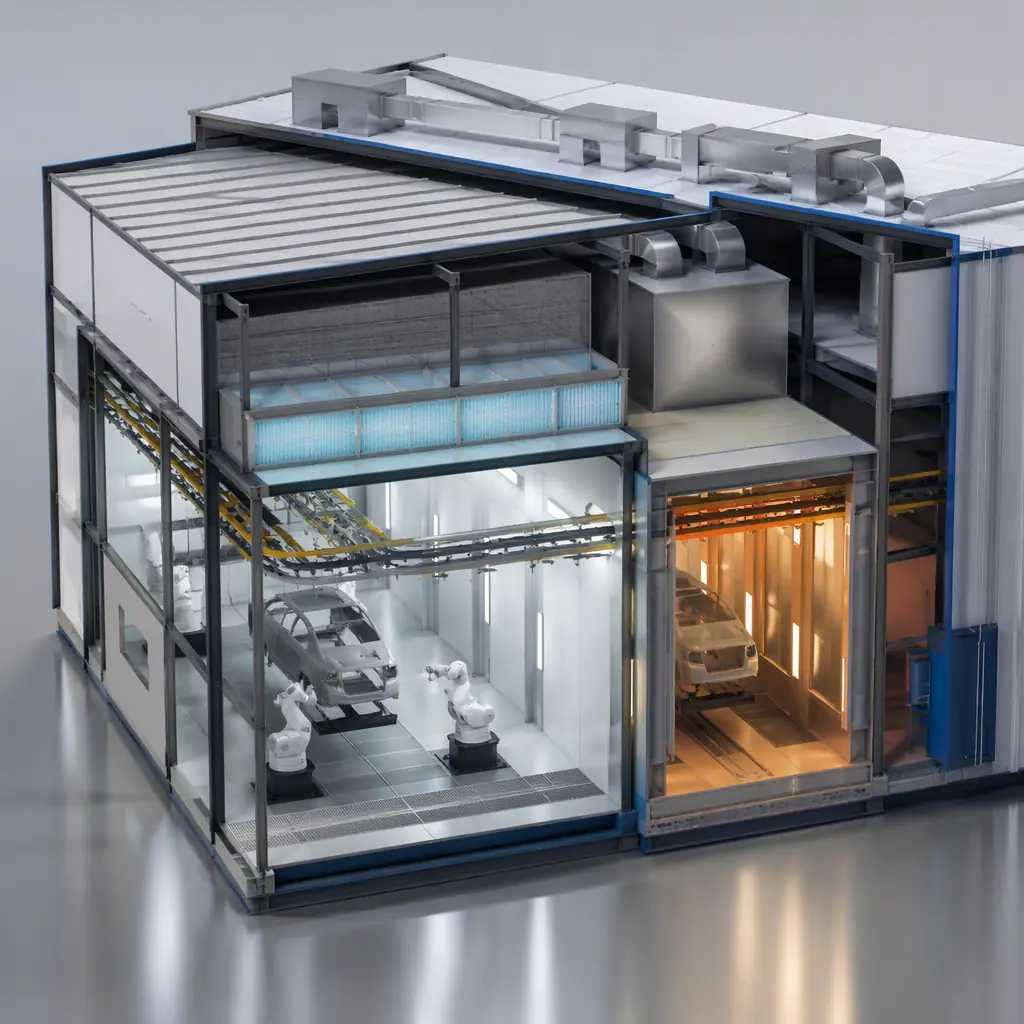
High-Bay, Gantry & Envelope Systems for Heavy Floors
The building enclosure is where modular delivers its clearest structural win. A high-bay automotive hall needs clear heights of 30–50 ft, column spacing of 40–80 ft and the ability to carry an overhead gantry crane or process bridge at capacity. Modular steel frame modules achieve this with a bolted, repeatable grid, the same high-bay structural approach we use for modular industrial warehouse and distribution buildings and the heavy floor and foundation engineering we document for modular building foundation systems. The envelope panels arrive with insulation, glazing, fire-rated assemblies and utility penetrations already cut, so a 100,000 sq ft high-bay envelope can be closed in weeks rather than a season. The structural wind, snow and seismic design follows the load engineering we document for modular seismic design, and the insulated envelope performance aligns with the modular building envelope systems strategy. Additions are equally modular: a new body shop, paint booth block or battery module hall can be craned in beside an operating plant without stopping production.
Safety, Fire & Environmental Compliance
Automotive plants carry NFPA, OSHA and EPA obligations that shape the building. Fire-rated structural assemblies, sprinkler and detection coverage, and safe egress must be designed in from the first module; paint booths and solvent storage carry special hazard and explosion-risk rules (NFPA 33 for finishing processes); and fume, VOC and process-waste handling must comply with air-permitting and waste rules. Factory fabrication lets these systems arrive pre-engineered and documented, the fire-rated assemblies, the painted steel and the process fire suppression are part of the module rather than added afterward, and the safety engineering follows the passive fire protection we document for modular fire safety construction. The permitting path for a factory-documented, repeatable structure often qualifies for expedited review, the strategy we cover in modular construction permitting and zoning, where the design is documented and repeatable rather than bespoke. For battery and EV plants, the explosion-proof zone, gas detection and thermal-runaway handling follow the same rigor that governs modular EV battery gigafactory construction.
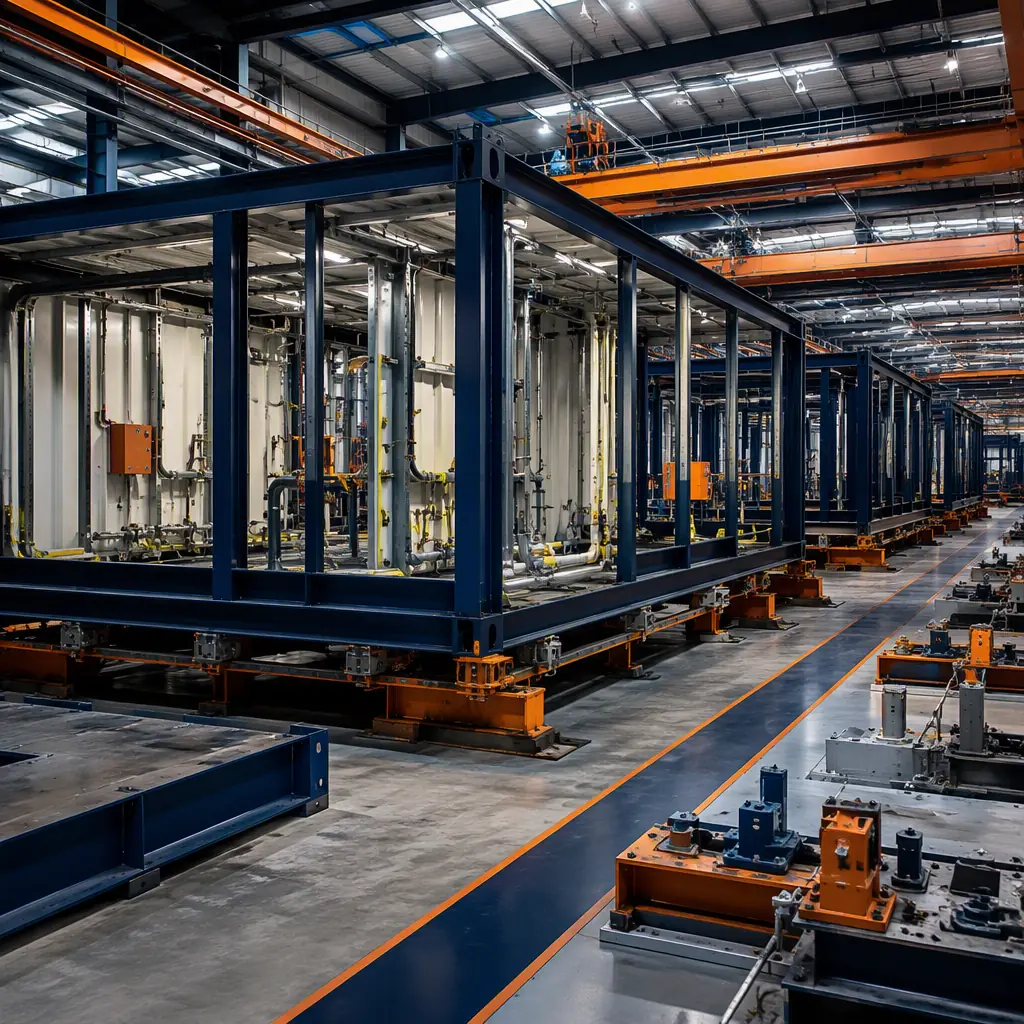
Cost Structure, Modular vs. Site-Built Automotive Plants
| Facility Type | Site-Built | Modular |
|---|---|---|
| Assembly hall, 150,000–200,000 sq ft | $45–70M / 24–30 months | $38–58M / 13–18 months |
| Body shop + paint module set, 80,000 sq ft | $28–45M / 22–28 months | $24–38M / 12–16 months |
| EV conversion / battery hall addition, 100,000 sq ft | $30–50M / 20–26 months | $26–42M / 10–14 months |
The 12–20% capital saving is secondary to the revenue math: a plant that opens 8–12 months earlier starts producing and delivering vehicles sooner, locks in launch timing and begins amortizing the investment while a site-built competitor is still erecting steel. For the full cost methodology, see our 2026 modular construction cost guide.
Phasing, Permitting & Delivery
The automotive plant schedule is driven by the pad, the process utility connections and the commissioning window. Modular delivery front-loads the structural and process engineering into the factory while the slab, utility mains and site infrastructure are installed on site, and the installation sequence is coordinated around the critical connections: the electrical switchgear, compressed-air and process-water mains, and the fume exhaust are verified before the modules arrive so the plant connects in days, not weeks. The critical-path discipline, factory slots, module sequencing and site readiness, is the scheduling methodology in modular construction scheduling, and the module logistics, oversized high-bay units, gantry sections and multi-axle transport, follow the transport planning we document for modular construction transportation and logistics. Permitting for a factory-documented, repeatable structure often moves faster, the accelerated path we cover in modular construction permitting and zoning. Because the module arrives with its process foundations and utilities pre-installed, the remainder of the schedule is connection, commissioning and the first prototype run.
Is Modular Right for Your Automotive Project?
Modular delivery creates the strongest value for OEMs and Tier-1 suppliers building a new assembly or manufacturing hall against a fixed launch date, converting an existing plant to battery-electric production without stopping the line, or standardizing a facility across multiple plants or geographies. The same factory-built model serves a 50,000 sq ft sub-assembly addition, a 200,000 sq ft standalone assembly plant and a full body-paint-assembly facility. And because the modules arrive with process utilities, robotic cell foundations and controlled-environment envelope pre-installed, the plant is ready for its first production run the day the modules are connected and commissioned.
Planning an automotive manufacturing or assembly plant? Request our industrial-facility documentation package, structural and high-bay drawings, process MEP specifications, paint and cleanroom envelope engineering, and installation schedules. Contact the MODURA engineering team.