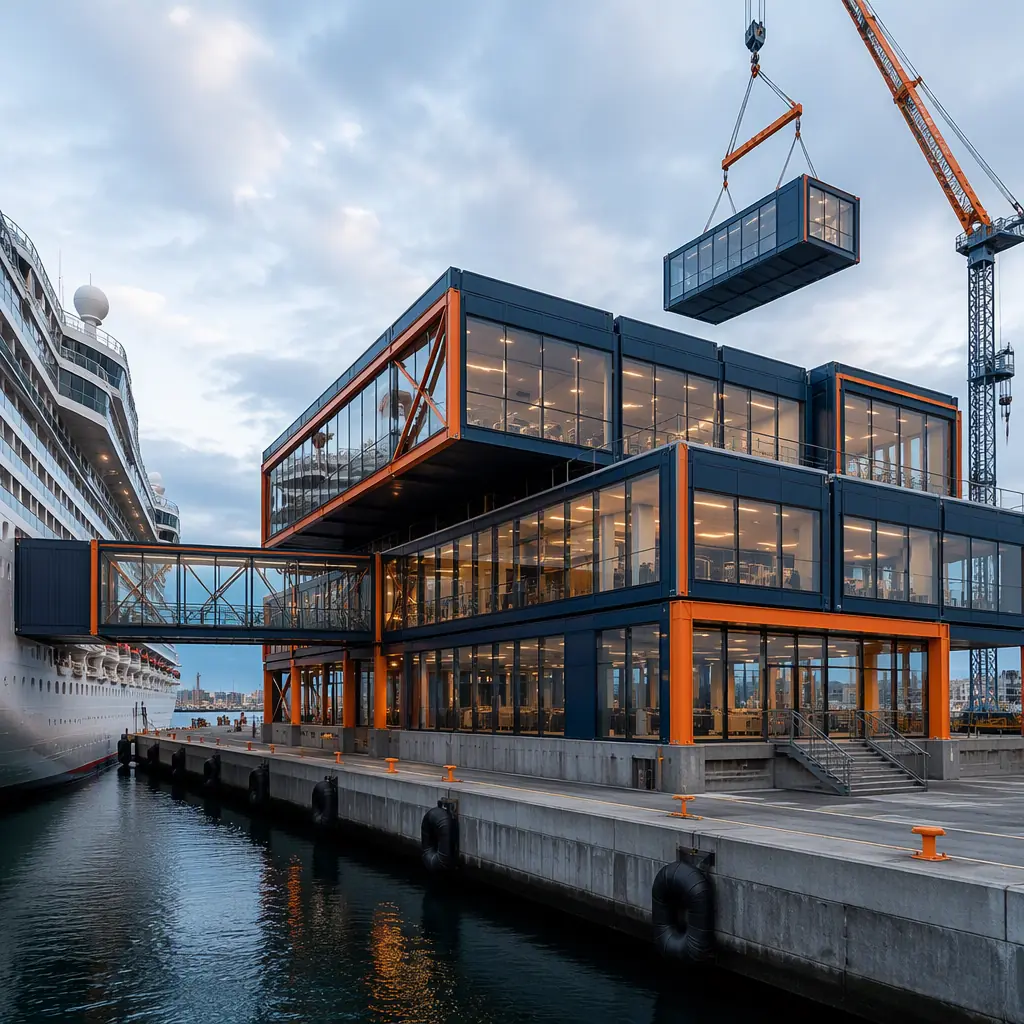
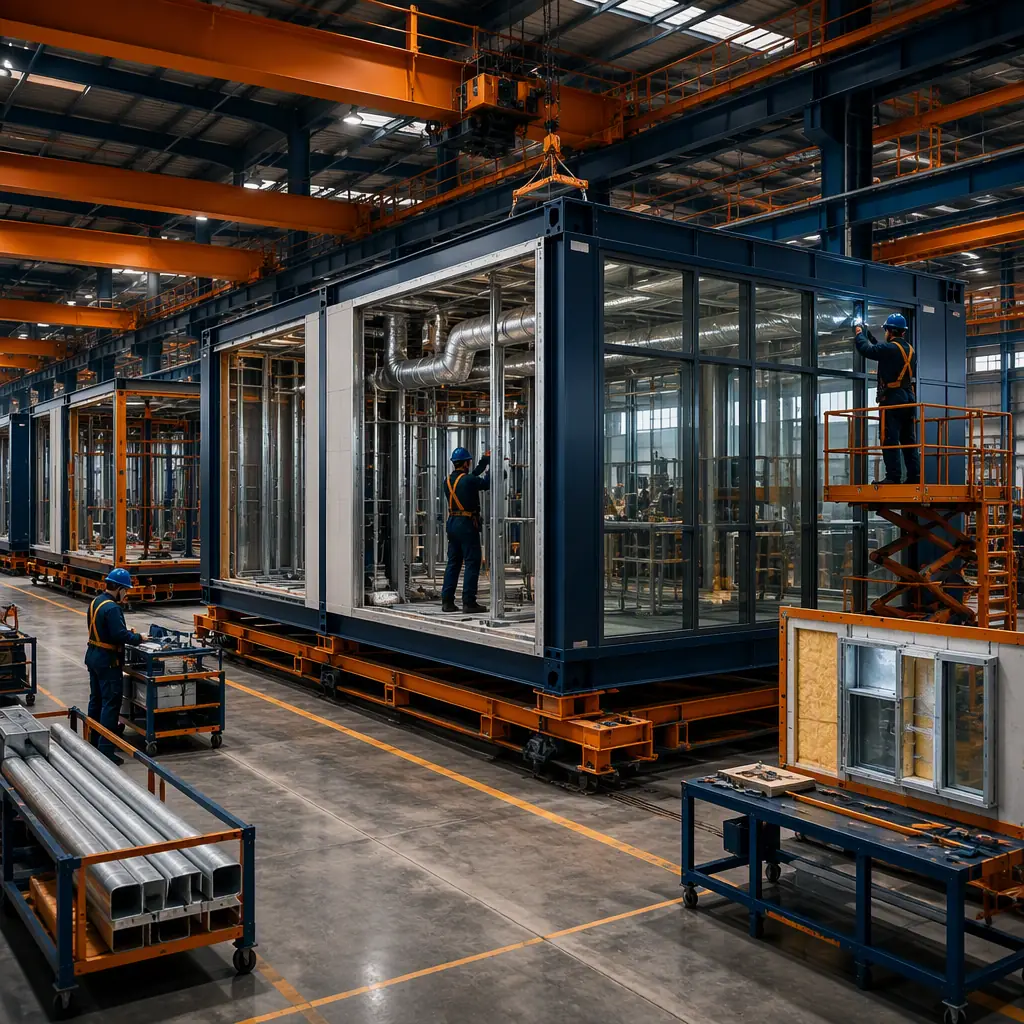
A cruise terminal is a passenger processing machine with a hard deadline: it must be operational by the first ship of the season, or the port forfeits berth revenue for the entire deployment window. The building program, check-in hall, security screening, customs and border protection (CBP) inspection zones, baggage handling, lounges and the boarding bridge interface, is dense with MEP systems, security infrastructure and queuing logic, and it must be delivered on a waterfront site with tidal, seismic and corrosion constraints that make conventional construction slow and expensive. Modular prefabricated construction moves the bulk of that work into a factory, so the terminal arrives at the pier as tested modules and is set, connected and commissioned in weeks rather than seasons. This guide covers why cruise terminals are ideal modular candidates, the passenger processing program, waterfront and marine engineering, shore power and MEP integration, schedule and cost structure, and the delivery model that protects the berth window. The same high-volume passenger processing logic we document for modular airport and aviation construction and modular transit facilities scales directly to the waterfront.
Why Cruise Terminals Are Ideal Modular Candidates
Cruise terminals combine every characteristic that makes factory-built delivery win. The building program is highly repeatable: a modern terminal processes 3,000–6,000 passengers per turn-around, and the functional zones, check-in, security, CBP primary and secondary inspection, baggage, lounges, follow the same standardized layouts across ports, which means the design can be industrialized and replicated the way modular franchise rollout construction industrializes retail prototypes. The schedule is unforgiving: most ports have a defined cruise season, and construction must fit between the end of one season and the first arrival of the next, a window of 6–9 months that conventional steel-and-concrete construction routinely misses. And the site is hostile to long build-outs: waterfront land is expensive, pile foundations are needed over soft marine soils, and tidal constraints limit crane and material access. Factory-built modules shrink the on-site work to foundations, module setting and tie-ins, which is exactly the delivery model we document in turnkey modular construction. Ports that build modularly also gain the option to relocate or expand the terminal as cruise traffic grows, the relocation logic of modular building relocation applies to waterfront assets too.
The Passenger Processing Program
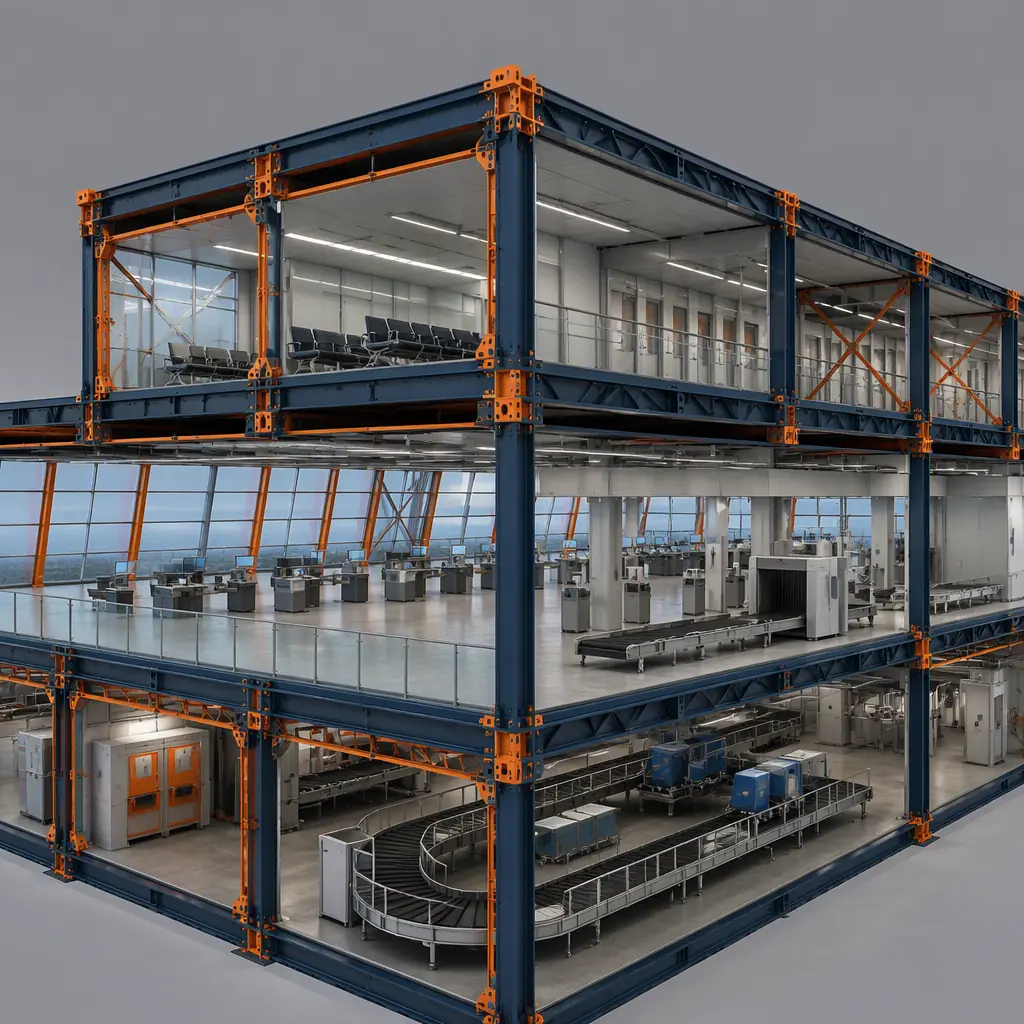
The functional heart of a cruise terminal is the passenger flow. On embarkation day, passengers arrive by car, taxi or bus and move through a defined sequence: check-in and document verification, security screening, CBP inspection for international itineraries, and boarding through the gangway. On debarkation, the flow reverses with baggage reclaim and CBP processing. Each zone has distinct design requirements. The check-in hall needs high ceilings, generous queuing space and IT infrastructure for cruise line systems. The security screening area needs X-ray and magnetometer infrastructure, CCTV coverage and controlled circulation. The CBP inspection zone, required for international sailings under U.S. federal regulations, needs primary inspection booths, secondary inspection rooms and holding areas meeting CBP design standards. The baggage hall needs conveyor interfaces and heavy floor loading. Because these zones are MEP- and security-dense, they are ideal for factory fabrication: modules arrive with the CCTV, access control, power distribution, HVAC and data infrastructure installed and tested, the same mission-critical discipline we document for modular police stations and law enforcement facilities. The queuing and circulation design follows the passenger-processing methodology in our modular airport terminal construction guide, scaled to the cruise turn-around rhythm.
Waterfront & Marine Engineering
A waterfront site changes the engineering assumptions. Cruise terminals are typically built on pile foundations over soft marine sediments, with the building floor elevated above design flood and storm-surge levels, a coastal resilience requirement we document in modular coastal and flood-resistant construction. Wind loads are higher at the waterfront, and the structure must resist corrosion from salt-laden air, which favors the hot-dip galvanized steel frames and marine-grade cladding systems used in modular construction. Seismic design is often mandatory in cruise homeports on the West Coast and Caribbean; the ductile steel connections of modular seismic design are inherently suited to that requirement. The terminal also interfaces with the berth: the boarding bridge, shore power connection and mooring infrastructure must align with the module layout, which is why the terminal design and the marine works must be coordinated on a single model, the same BIM-to-factory coordination we document in modular BIM and digital workflow. Factory fabrication removes most of the weather-dependent concrete and steel work from the waterfront, where tidal windows and marine construction access would otherwise dictate the schedule.
Shore Power & MEP Integration
Modern cruise terminals are electrification projects as much as buildings. International Maritime Organization (IMO) and California Air Resources Board (CARB) regulations increasingly require shore power, or cold ironing, so berthed ships can shut down their engines and plug into the grid. The shore power substation, cable management system and the terminal's own electrical distribution must be engineered together, and the terminal's HVAC must handle the extreme internal loads of a building packed with thousands of passengers on turnaround day. Factory-built modules arrive with these systems pre-installed: the electrical rooms, mechanical spaces and plumbing chases are fabricated and tested in the factory, compressing the MEP commissioning that dominates conventional terminal schedules. This is the same factory-installed systems approach we document in modular MEP systems integration, applied to the higher loads and redundancy of a passenger terminal. The shore power interface itself follows the electrical infrastructure logic of modular substations and switchgear buildings, delivered as a factory-built enclosure that the utility connects to on site.
Schedule & Cost Structure
| Terminal Program | Conventional Site-Built | Modular Factory-Built |
|---|---|---|
| Mid-size terminal (60,000 sq ft, one berth) | $45–70M / 20–30 months | $36–56M / 26–38 weeks |
| Turnaround capacity (passengers/day) | 3,000–4,000 | 3,000–6,000 with modular expansion |
| CBP & security fit-out | 6–9 months on site | Factory-installed, tested before delivery |
| Waterfront disruption | Full season at risk | 8–12 weeks of module setting |
The 20–25% capital saving is meaningful, but the decisive number is the season: a modular terminal can be delivered inside a single off-season window, protecting berth revenue of $5–15M per cruise call depending on ship size and itinerary. For the full cost methodology, see our 2026 modular construction cost guide and modular cost planning guide.
The Delivery Model
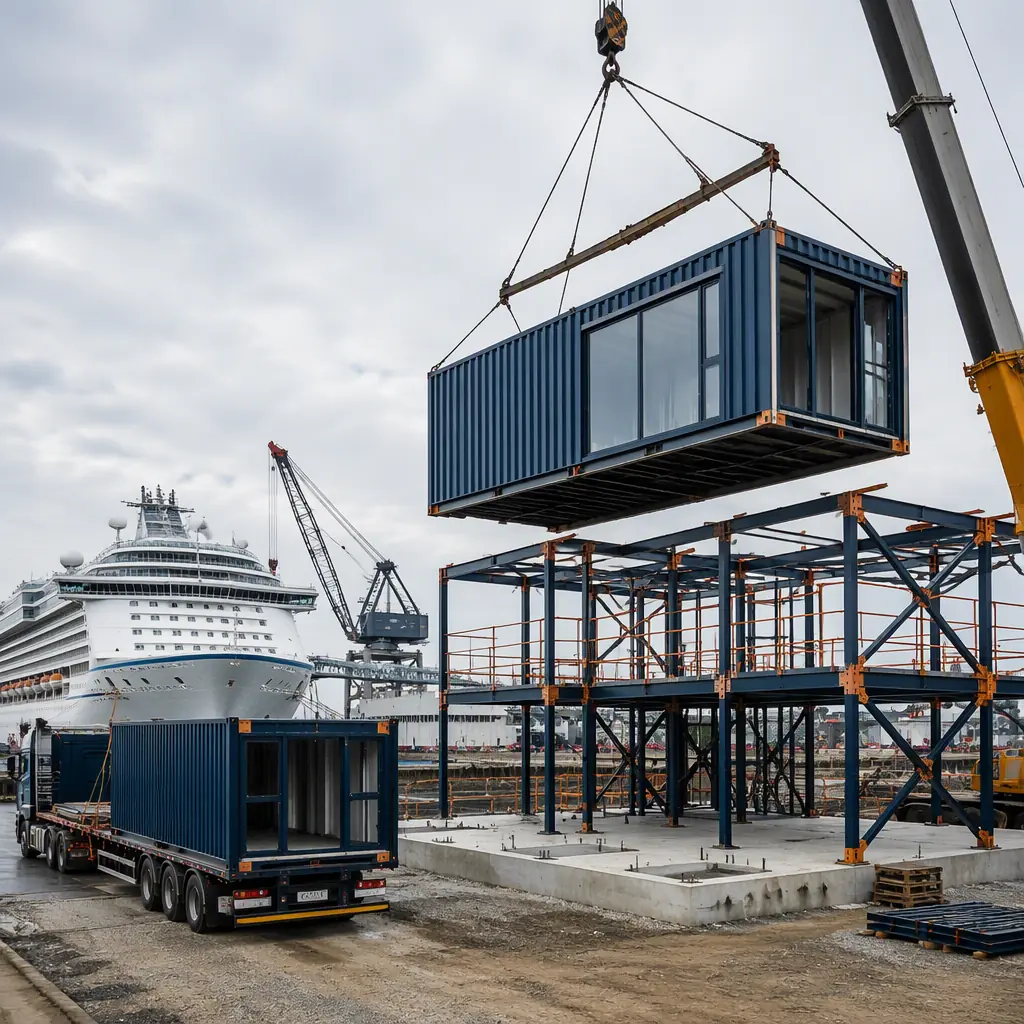
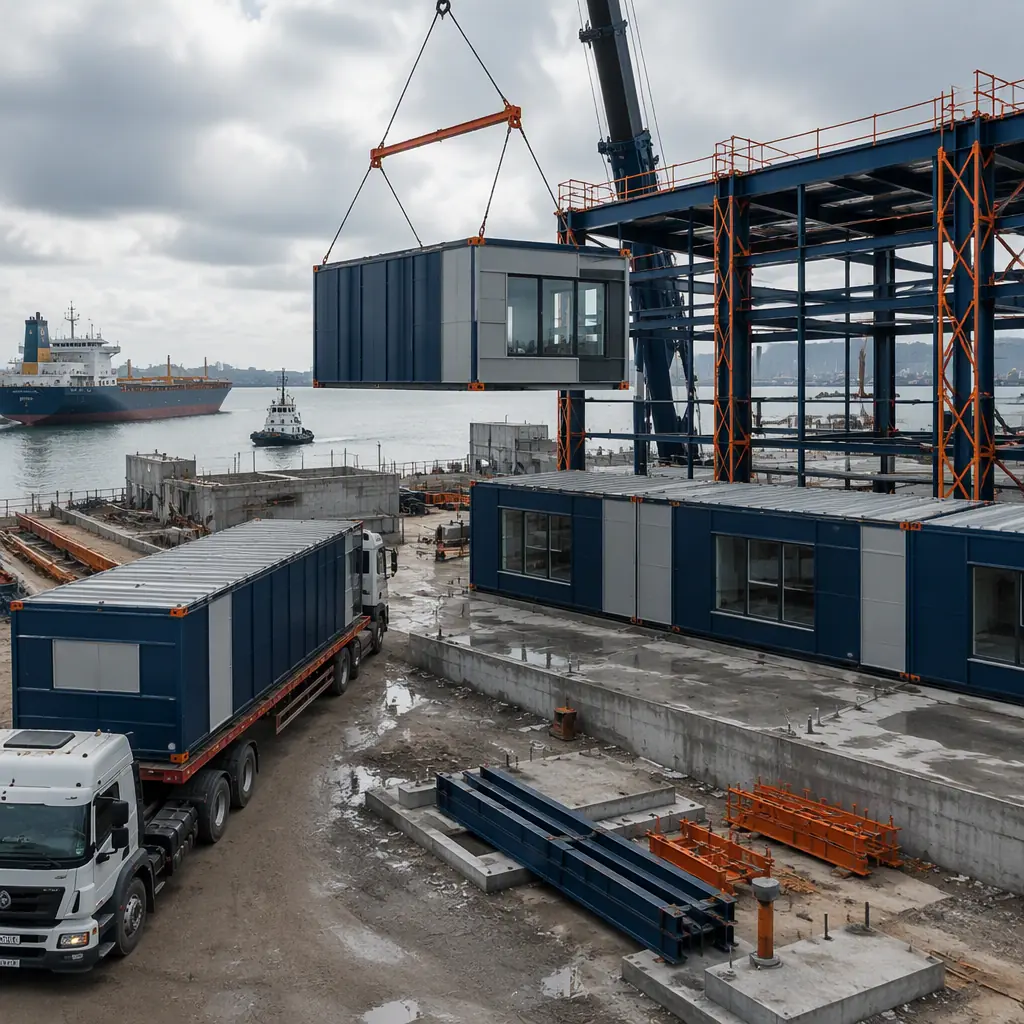
The proven delivery model for modular cruise terminals is design-build, with a single supplier responsible for the terminal design, factory fabrication, marine coordination and site installation, the delivery framework we document in turnkey modular construction and modular construction contract types. The factory produces the terminal modules in parallel with the marine works, piles, fenders, shore power and boarding bridge foundations, so the berth and the building converge at the same moment instead of sequencing 20 months of construction. On arrival, modules are lifted from flatbed or barge directly onto the foundations, connected, and commissioned zone by zone, so the first berths can open while later modules are still being set. For ports planning multiple berths or phased expansion, the same validated terminal design repeats across phases, the repetition logic of modular construction scheduling and modular project timeline planning . Each phase faster and lower-risk than the last.
Is Modular Right for Your Port?
Modular cruise terminal construction creates the strongest value for ports with a fixed season start date, waterfront sites where marine works constrain the schedule, terminals that must meet CBP and security requirements on a documented schedule, and ports planning phased or multi-berth expansion. The same logic applies to ferry terminals, expedition cruise bases and waterfront event venues, where the passenger-processing core is identical even if the ship type differs. For the broader waterfront program: including floating structures and marina facilities, our modular floating and marine construction guide covers the marine-side engineering, and our modular ROI guide covers the investment case for port authorities and private terminal operators.
Planning a cruise, ferry or waterfront passenger terminal? Request our terminal building package, passenger flow layouts, CBP and security design standards, shore power integration details and season-window schedule data. Contact the MODURA engineering team.