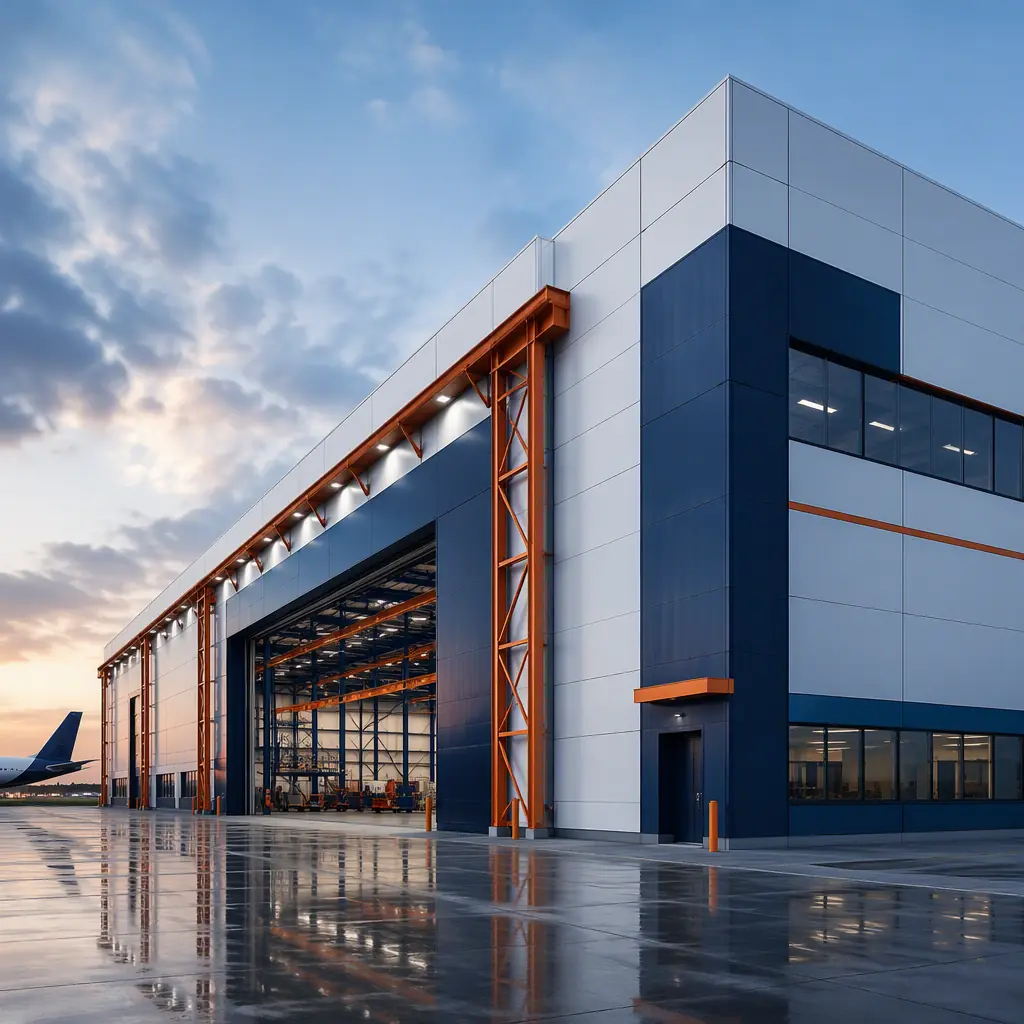
Aerospace manufacturing is defined by controlled environments. Avionics production requires electrostatic discharge (ESD) protection, precise temperature and humidity control, and contamination-free assembly; composite fabrication needs dust-controlled layup rooms with curing ovens; component machining needs vibration-stable, thermally stable floors; and the finished product must be assembled and tested in bays with overhead crane capacity and stringent quality documentation. These requirements make aerospace production space expensive to build and slow to deliver with conventional construction — but they also make it an ideal modular candidate, because the environmental controls, clean room panels, ESD flooring, utilities and quality systems can be factory-installed and verified before the module ever reaches the site. This guide covers why aerospace production facilities are ideal for modular delivery, the production building program, clean room and ESD engineering, vibration and thermal stability, security and ITAR compliance, schedule and cost, and the delivery model for OEMs and Tier 1 suppliers. The precision-environment engineering we document for modular clean rooms and semiconductor facilities and modular light manufacturing facilities scales directly to aerospace production.
Why Aerospace Production Demands a Different Building Approach
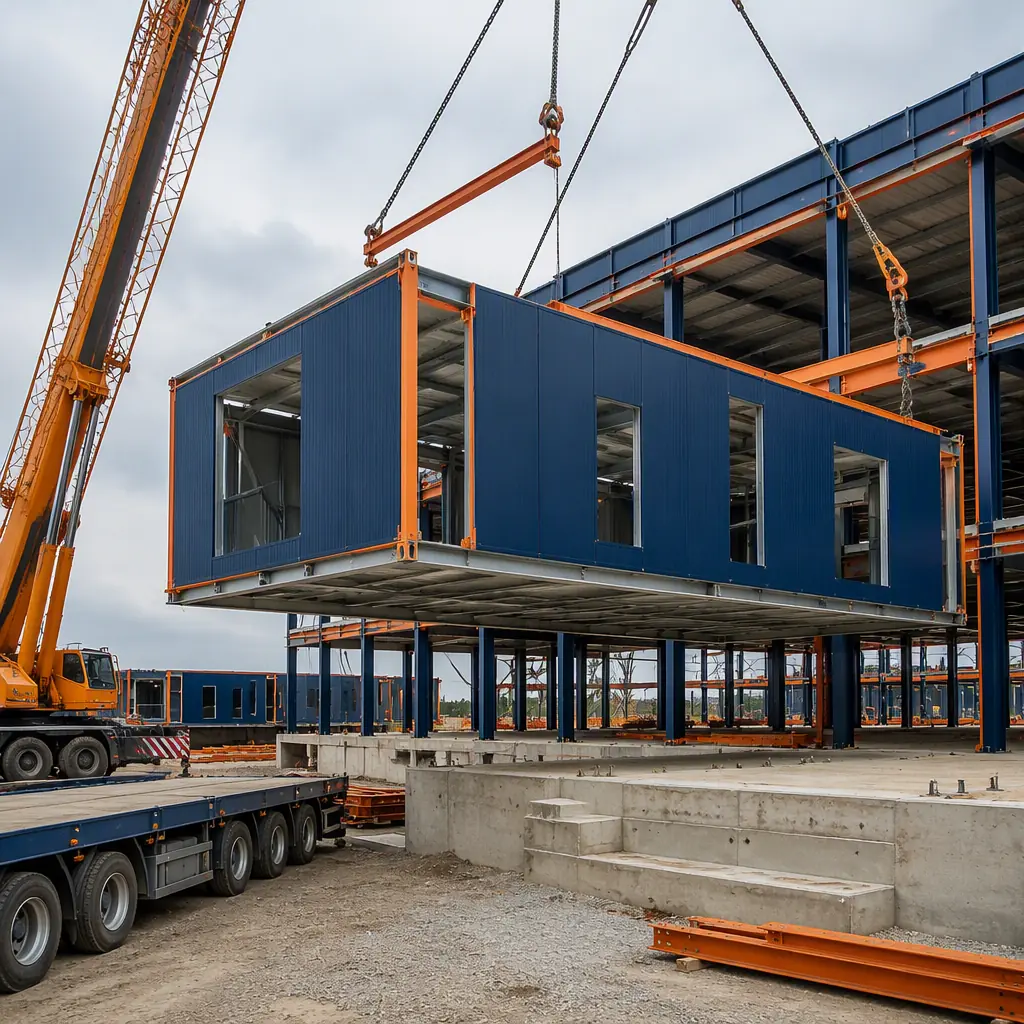
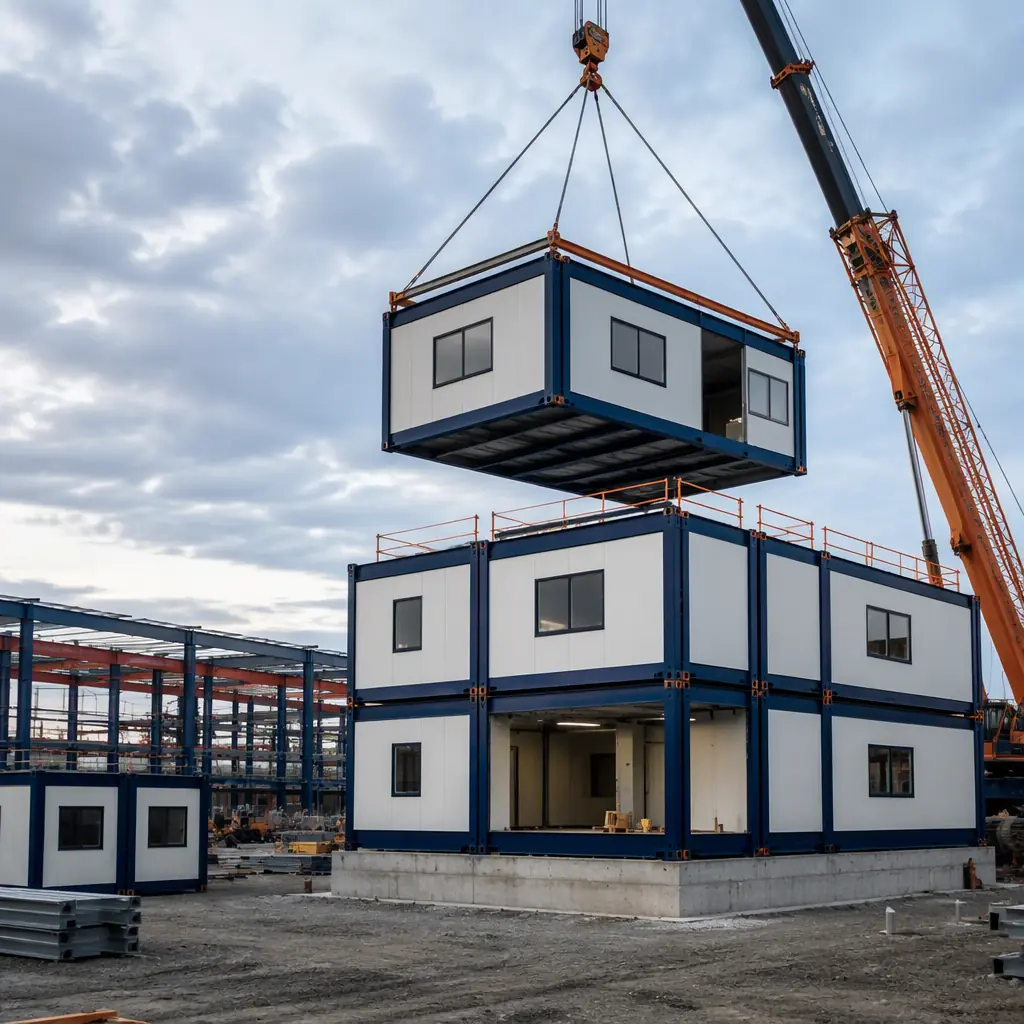
Aerospace facilities fail on schedule more often than on design. A new production line for avionics, composite structures or aircraft components typically needs 18–30 months to design and build conventionally, but program timelines — a new aircraft program, a defense contract, a satellite production award — rarely wait that long. The building program is also unusually MEP-dense: clean room air handling, ESD grounding, process utilities, specialty gases, compressed air, and the redundant power and cooling that production continuity requires. Every one of these systems is faster and more reliable to install in a factory, where the work happens in parallel with site foundations and where commissioning can begin before the building is enclosed. The same parallel-production logic we document for modular data center construction — the building arriving as tested infrastructure rather than an empty shell — applies to aerospace plants, where the "payload" is a precision production line instead of server racks. And because aerospace programs scale in phases, the modular building can expand with the production ramp — the expansion logic of modular building additions and expansions.
The Production Building Program
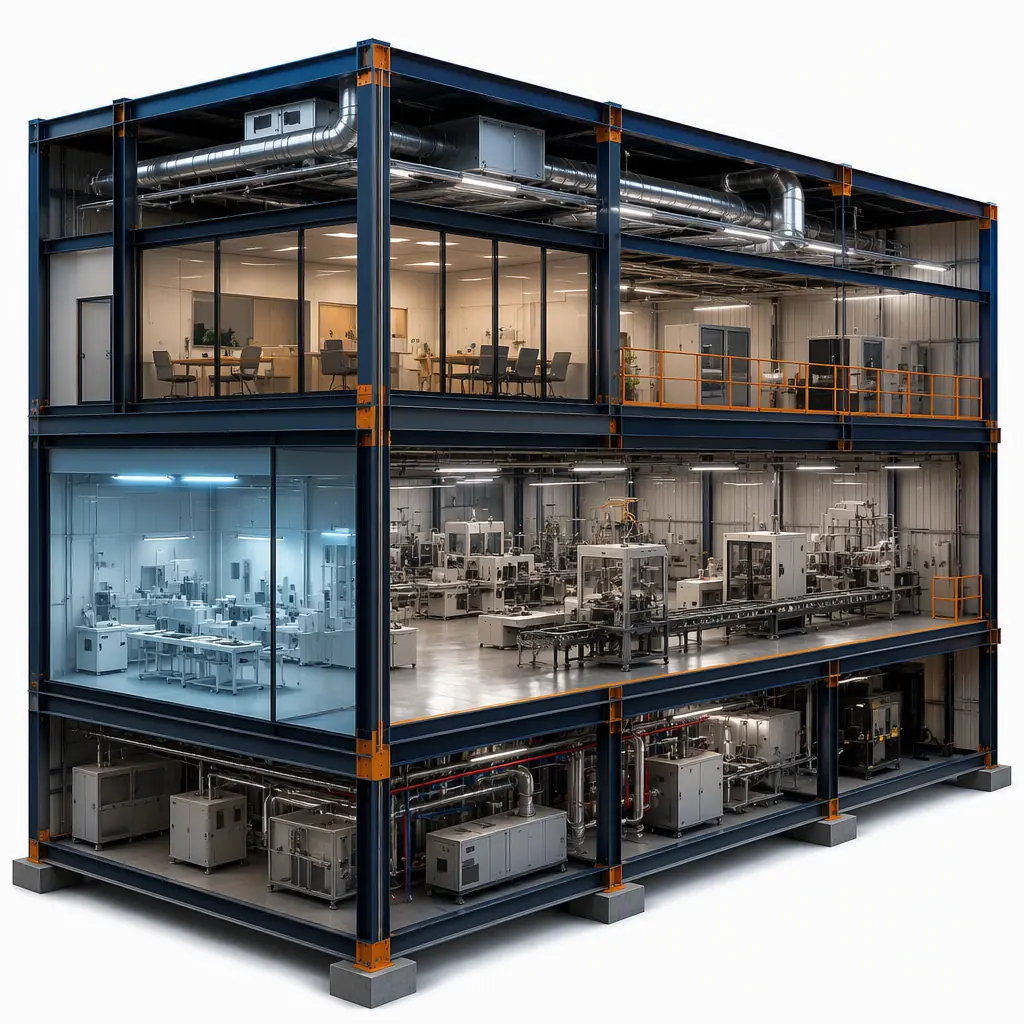
Aerospace manufacturing campuses combine several distinct building types. The avionics production building houses ESD-protected assembly and test lines for electronic components; the composites building contains climate-controlled layup rooms, curing ovens and trim cells; the machining and fabrication building holds CNC equipment on vibration-isolated, thermally stable floors; the assembly building provides high-bay space with overhead cranes for final assembly; and the test and inspection building contains environmental test chambers, X-ray and non-destructive testing (NDT) equipment. Around these sit the support buildings: temperature-controlled warehouses for raw materials and finished goods, engineering and office space, and the utility buildings housing compressors, generators and process gas systems. Because each building type has a distinct environmental profile, the campus maps cleanly onto a modular program — the campus-delivery logic we document in modular heavy industrial construction and modular pharmaceutical GMP facilities, where each production function is delivered as a validated, self-contained module.
Clean Room & ESD Engineering
The environmental core of aerospace manufacturing is the controlled space. Avionics assembly and test areas need ESD protection throughout — conductive flooring, grounding systems, ionizers and humidity control to prevent static discharge damage to sensitive electronics — and the assembly areas typically require clean room conditions from ISO 8 (general assembly) down to ISO 5 (sensor and optics assembly), with HEPA filtration, positive pressure and strict particle control. These are exactly the systems we deliver in modular clean room construction: factory-built panels, filtration and air handling installed and certified before delivery. The temperature and humidity tolerances — often ±1°C and ±5% RH in metrology and composites areas — demand the precision HVAC design we document in modular HVAC and indoor air quality, with the redundancy that production continuity requires. Because the clean room panels, ESD flooring and environmental controls are fabricated in the factory, the certification and validation data trail is complete on day one — the quality documentation discipline of modular factory QA/QC systems.
Vibration, Acoustics & Thermal Stability
Precision manufacturing fails silently when the building moves. CNC machining, coordinate measuring machines and metrology equipment require floors with tightly controlled vibration, which means deep foundations or isolation systems and structural stiffness that conventional steel buildings often lack. Modular steel frames, with their dense connection patterns and high stiffness-to-weight ratio, perform well under vibration criteria, and factory fabrication allows the structure to be tuned and the isolation systems installed before delivery. Thermal stability matters equally: machining tolerances in the micron range drift when the building temperature changes, so the envelope must be tight and the HVAC controlled — the thermal performance we document in modular building thermal insulation and energy code. Acoustics also matter in aerospace plants, both to protect test operations and to contain the noise of machining and curing — the acoustic engineering of modular building acoustics and soundproofing, applied to industrial sound levels. The structural design follows the clear-span engineering of modular industrial and warehouse construction, with the floor and foundation systems tailored to precision equipment.
Security & ITAR Compliance
Aerospace production is a controlled environment in the regulatory sense as well as the physical one. Defense and space programs operate under export control regimes — ITAR in the United States, equivalent regimes in other jurisdictions — which impose physical security requirements on facilities handling controlled technical data and articles: access control, segregation of work areas, visitor control, and documented security procedures. Modular construction handles these requirements the same way it handles other hardening: the access-control systems, security doors, CCTV and segregated circulation are factory-installed and tested, and the facility can be delivered with a documented security architecture from day one. The security design follows the hardened-facility discipline we document in modular embassy and consulate construction and modular blast-resistant construction, scaled to industrial campus scale. For programs with classified aspects, the same factory-controlled environment that produces the quality documentation also produces the access and handling records that compliance programs require.
Schedule & Cost Structure
| Facility Program | Conventional Site-Built | Modular Factory-Built |
|---|---|---|
| Avionics production building (60,000 sq ft, ISO 7) | $35–55M / 20–28 months | $28–44M / 30–42 weeks |
| Composite fabrication building (40,000 sq ft) | $22–34M / 16–24 months | $17.6–27M / 24–34 weeks |
| Assembly & test building (80,000 sq ft, 20-ton cranes) | $30–46M / 18–26 months | $24–37M / 28–40 weeks |
| Environmental test & NDT building (25,000 sq ft) | $18–28M / 16–22 months | $14.4–22M / 22–32 weeks |
The 20–25% capital saving matters, but for aerospace programs the decisive number is time-to-production: a modular facility can be delivering product 12–18 months earlier than a conventional build, which is often the difference between winning and losing a production award. For the full cost methodology, see our 2026 modular construction cost guide and modular cost planning guide.
The Delivery Model
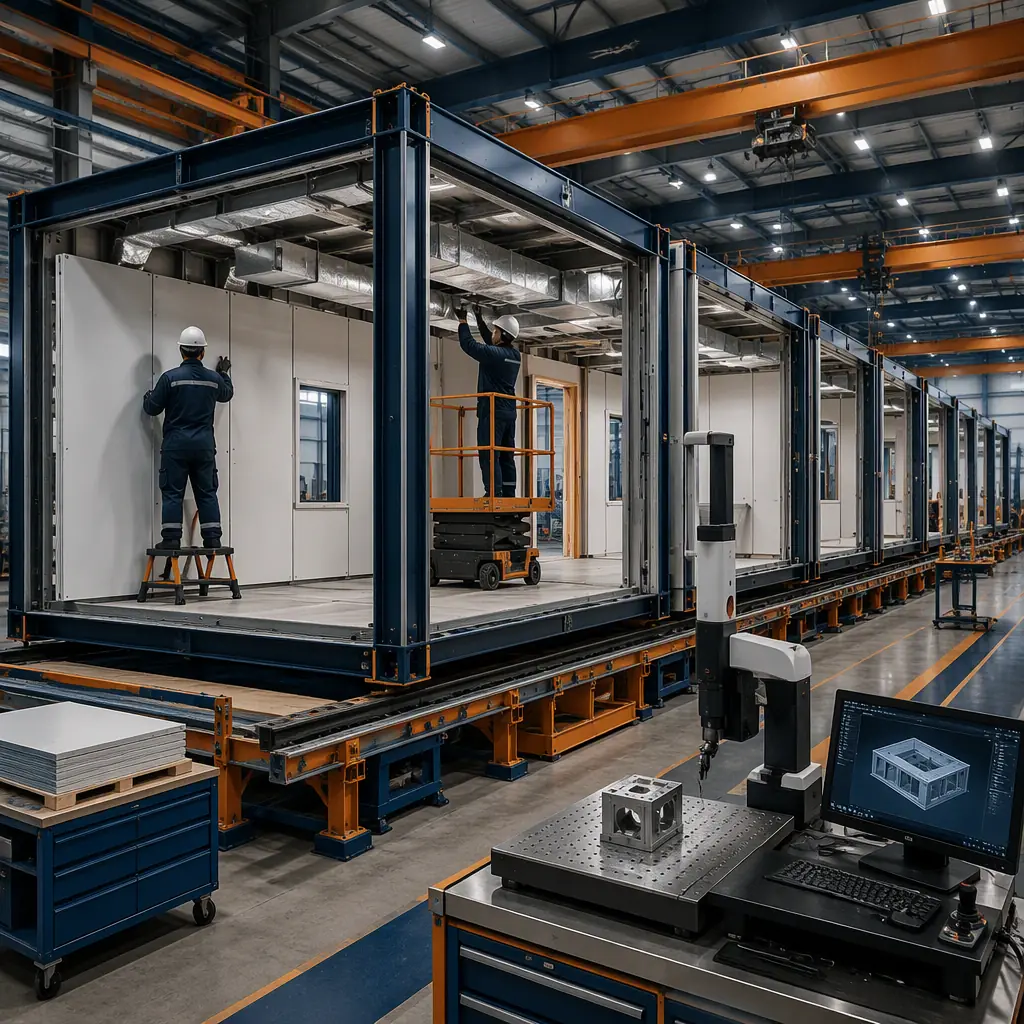
Aerospace production facilities are typically delivered through a design-build model with a single supplier accountable for the environmental performance of the finished building — the delivery framework we document in turnkey modular construction and modular construction contract types. The factory produces the modules while the site team prepares foundations, utilities and the equipment pad work, and the building arrives with its clean rooms, ESD systems, process utilities and test infrastructure installed and verified. Commissioning is compressed because the systems have already been factory-tested — the commissioning discipline of modular building commissioning and handover — and the production line can move in behind the construction crews. For OEMs scaling production across sites, the validated facility design repeats — the repetition logic of modular construction scheduling and modular project timeline planning — each plant faster and lower-risk than the last. The BIM coordination that makes this possible is documented in modular BIM and digital workflow.
Is Modular Right for Your Production Program?
Modular aerospace manufacturing facilities create the strongest value for OEMs and Tier 1 suppliers on fixed program timelines, production ramps that arrive in phases, sites where construction labor is scarce, and any facility where environmental control and quality documentation are core requirements. The same factory-built logic applies to defense electronics, space hardware, and adjacent precision industries — the program family we document in modular spaceport and launch facilities and modular aircraft hangar construction. For the full production campus — including the office and engineering space that supports the plant — our modular office buildings guide and modular ROI guide cover the broader program.
Planning an aerospace production facility? Request our manufacturing facility package — clean room and ESD design specifications, vibration and thermal stability data, ITAR compliance architecture and production-ramp schedule models. Contact the MODURA engineering team.